Cannabis was already fragmented. State-by-state regulations, medical vs. adult-use splits, Schedule I federal status. The category never had a unified market. But in 2026, AI just made fragmentation exponential.
The problem isn't that AI can't find cannabis brands. It's that it finds them *differently* depending on which AI engine you ask, which state you're in, what exact words you use, and when the model was last trained.
5W's Cannabis AI Visibility Index tracked 50+ consumer-intent prompts across ChatGPT, Claude, Perplexity, Gemini, and Google AI Overviews. The results reveal a market where AI is becoming a major discovery layer, and most cannabis operators haven't realized it.
The Citation Tier System
AI citation share no longer correlates neatly with retail footprint. Three companies own the conversation.
Curaleaf, Trulieve, and Green Thumb Industries together account for 17.5% of all cannabis-category AI citations. But here's the uncomfortable part: that dominance is primarily driven by existing retail scale, not by AI-optimized content strategy. They're winning because they've been around longer and have more data points for AI engines to reference.
This is the new moat. Not dispensary count. Not brand awareness among cannabis consumers. Mainstream cultural relevance that AI engines can find and cite.
The State Fragmentation Problem
The same prompt ("best cannabis dispensary near me") produces dramatically different results in California, Florida, and Massachusetts.
In Florida, Trulieve dominates because of the state's 800,000+ medical cannabis patients and Trulieve's 150+ location count there. Ask the same question in California, and Weedmaps becomes the primary citation. Ask it on the East Coast, and Leafly rises.
This means a national cannabis brand needs not just a national strategy. It needs state-by-state AI optimization. Which sounds achievable until you add the complexity: each AI engine weights sources differently.
Perplexity often values recency and citations. Gemini is tightly connected to Google's ecosystem. ChatGPT and Claude may combine training data, retrieval, and safety behavior differently.
The brand that ranks #1 on ChatGPT might not crack the top 5 on Perplexity.
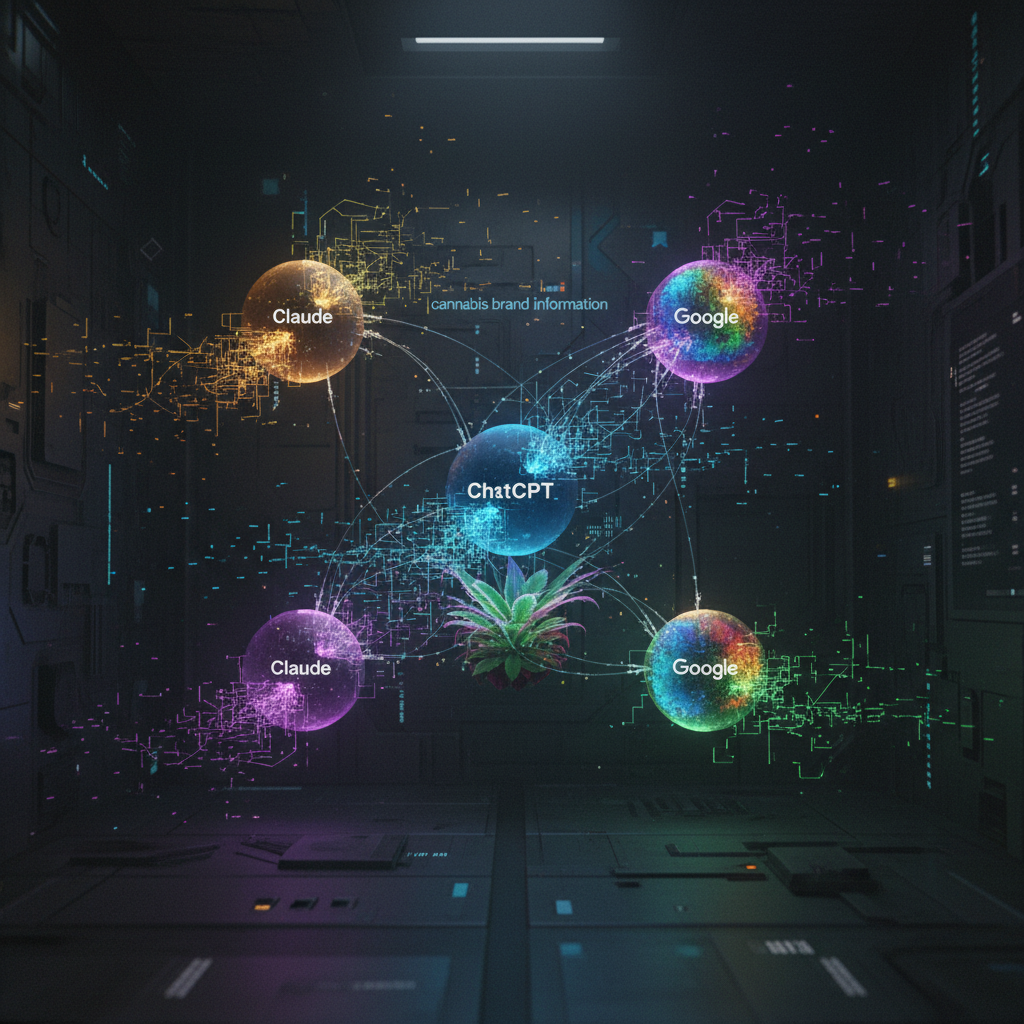
Each AI engine surfaces cannabis brands differently based on its own training and citation preferences.
The Refusal Rate Nobody's Talking About
28% of cannabis prompts produced AI engine refusals, hedges, or prominent disclaimers.
That's nearly 1-in-3 consumer queries about cannabis getting a non-answer, a "I can't provide that," or a heavily caveated response. For comparison, no other category 5W measured came close to that rate.
Why? Federal Schedule I status creates legal uncertainty at the AI engine level. OpenAI, Google, Anthropic, and others are conservative about cannabis content. Some refuse medical claims. Others hedge on product recommendations. A few outright decline to rank cannabis brands.
This creates a strange dynamic: the brands that win are the ones that can get cited *despite* the engine's caution. CBD brands win this game because hemp-derived products have less regulatory friction.
Charlotte's Web dominates the CBD space not just because of market presence, but because its founder's origin story (the girl Charlotte who inspired the brand name) provides such rich, citation-worthy narrative that AI engines feel safer surfacing it.
The Aggregator Advantage
Leafly and Weedmaps capture more aggregator citations than every individual MSO except Curaleaf.
This matters because AI engines cite sources that already synthesize information. Leafly's strain database, dispensary finder, and consumer education content get pulled into AI answers. Weedmaps' dispensary aggregation does the same. They become part of the citation infrastructure.
For a cannabis brand, this creates a distribution paradox: you need to be on these aggregators to be discoverable via AI, but the aggregators become the authority that AI engines default to rather than citing you directly.
What Happens to the Brands Nobody's Citing
The remaining 45% of cannabis brands and MSOs split the leftover citation share.
For mid-tier operators and emerging brands, this is a visibility crisis disguised as normal market competition. If your brand doesn't crack the top-citation tier within the next 12 months, you're not losing retail share slowly. You're being deprioritized by the algorithms that now determine consumer discovery.
Retail expansion still matters. But AI citation share now compounds faster than new dispensary locations. A brand can open 50 new stores and *still* lose ground if a competitor's cultural footprint grows faster in the AI-citation ecosystem.
The math is brutal: your brand awareness used to compound with retail presence. Now it compounds with AI engine mentions, which are driven by content richness, mainstream cultural presence, and narrative differentiation (not just dispensary count).
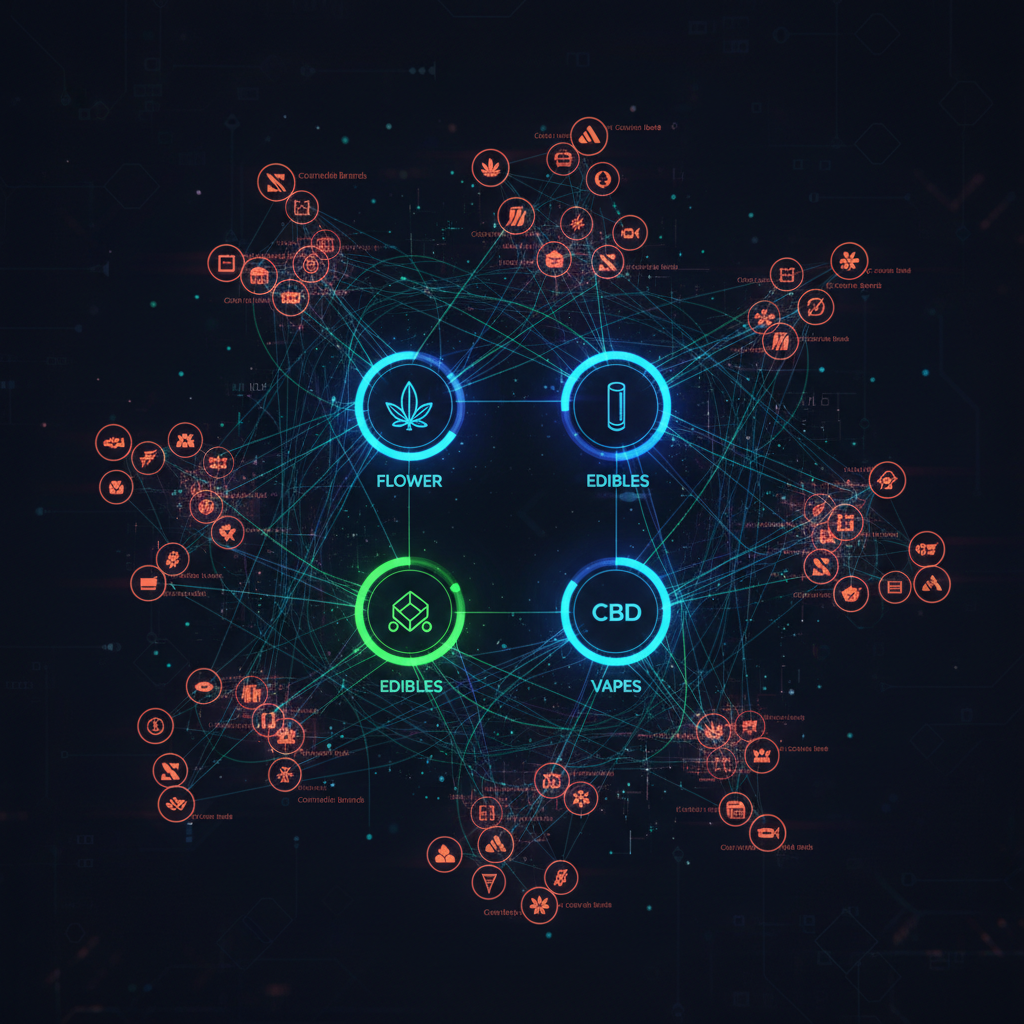
Building new retail locations is slower than building AI discoverability through content and cultural presence.
The Rescheduling Wildcard
All of this assumes federal uncertainty continues. It might not forever, but it has not disappeared yet.
As of June 27, 2026, federal marijuana rescheduling remains a proposed process, not a final rule. The DEA's rescheduling process is still the legal backdrop for platform caution, advertising risk, and AI refusal behavior. If a future Schedule III rule is finalized, the AI citation landscape could shift, but not overnight and not without state-level compliance constraints.
Brands that have been building cultural footprint and narrative depth in the AI ecosystem will compound that advantage if platform policies loosen. Brands that haven't been tracking their citation share, optimizing their content for AI discovery, and building mainstream cultural presence will find themselves playing catch-up in a more open but still regulated market.
The brands that win the next 12 months aren't winning dispensary turf wars. They're winning the AI visibility war that determines who gets discovered first.
The future of cannabis retail lives at the intersection of physical retail and AI-mediated discovery.
The Competitive Reframe
If you're running a cannabis brand in 2026, your KPIs should include:
- AI citation share across the top 5 engines (ChatGPT, Claude, Perplexity, Gemini, Google)
- State-specific citation ranking by AI engine
- Aggregator presence and ranking (Leafly, Weedmaps)
- Narrative richness and mainstream press mentions (because AI engines cite them)
- Content ecosystem depth (blog, educational, origin story, founder narrative)
The brands crushing it understand that AI search is now the primary funnel. Retail expansion is the execution. But discovery is determined by how many times and in what contexts your brand gets cited in the AI ecosystem.
Cookies isn't winning because it has the most dispensaries. It's winning because Berner's cultural narrative, the brand's premium positioning, and its lifestyle footprint create a citation moat that AI engines default to when consumers ask about premium cannabis.
Charlotte's Web isn't leading CBD because it's the biggest. It's leading because its founder story is so narratively rich that AI engines cite it reflexively, even when the regulatory environment makes them cautious about other brands.
The 2026 cannabis visibility battle isn't at retail. It's in the AI citation ecosystem. And most operators are still playing the old game.
2026 evidence and control update
The more useful 2026 question is not whether how ai is fragmenting cannabis brand discovery is possible. It is whether regulated cannabis retail and marketing teams can prove what happened after the system made, shaped, ranked, routed, or explained a customer-facing decision.
The less obvious issue is that the hidden record is not only the customer-facing answer, it is the product data, state rule, age gate, claim boundary, and human owner behind that answer. That record is what separates a working AI pilot from a defensible operating system.
For source alignment, the public claim language should stay consistent with California Department of Cannabis Control retail guidance and FTC guidance on AI claims. Those sources do not remove the need for local legal review, but they give the article a better evidence spine than vendor screenshots or unsupported performance claims.
This also connects to related operating risk, AI measurement gap, compliance workflow, because the same pattern keeps repeating: AI systems look clean in the dashboard while the proof, ownership, and customer context live somewhere else.
| Control layer | What to verify | Evidence to keep |
|---|---|---|
| Source data | Which approved source fed the answer, recommendation, ranking, or claim | Source URL, vendor field, timestamp, and owner |
| Decision boundary | Where the AI is allowed to help and where it must stop | Allowed use case, blocked topics, and confidence threshold |
| Human review | Who owns the exception, correction, or escalation | Reviewer role, handoff note, and approval record |
| Monitoring | How the team catches drift, complaints, or weak signals | Review cadence, sampled outputs, and customer feedback themes |


Frequently asked questions
It is the way AI answer engines identify, summarize, and cite cannabis brands when users ask category, product, location, or recommendation questions.
Cannabis is regulated state by state, and each AI system uses a different mix of sources, safety policies, retrieval methods, and citation habits. A brand can be visible in one engine and absent in another.
No. Retail footprint helps create source material, but AI systems also reward structured data, mainstream coverage, cultural relevance, reviews, and state-specific context.
No. A future rescheduling change could reduce some platform caution, but brands would still need citation-worthy content, clean entity data, and compliance-safe state-level information.
Start with the prompts that matter most: brand, category, state, local, and product-adjacent questions. Track which engines cite the brand, which sources they use, and where they refuse or hedge.