The gap is getting wider
Artificial intelligence is now part of the marketing production line. It writes first drafts, generates images, trims video, builds audience variants, and helps teams move from brief to campaign faster. The problem is that speed has become easier to measure than trust.
The latest research from the Interactive Advertising Bureau (IAB) shows why that matters. In its January 2026 study of more than 500 younger consumers and 100 advertising executives, 83% of ad executives said their companies had deployed artificial intelligence in the creative process.
Only 45% of consumers said they felt positive about artificial intelligence-generated advertising, while 82% of executives believed consumers felt positive.
That is not a small perception gap. It is a planning problem. The people approving the work are often more excited about the production method than the people expected to believe the message.
The IAB study also found that 71% of Generation Z and Millennial respondents believed they had already seen an AI-generated ad. Exposure is no longer hypothetical. Audiences are forming opinions from the work brands are publishing right now.
AI is not the villain
The lazy response is to ban artificial intelligence from customer-facing marketing. That misses the useful distinction.
Artificial intelligence can help a team research a market, explore concepts, translate a rough idea into multiple formats, or find the weak point in a campaign before money is spent. It can make a small team faster without pretending to be the brand’s taste.
The trouble starts when efficiency becomes the creative brief. If the only success condition is more assets at a lower cost, the system will optimize for volume. It will produce work that is technically polished, strategically familiar, and emotionally empty.
That is the same pattern behind the AI Content Trust Tax. The cost does not appear in the content production report. It appears later, as weaker attention, lower confidence, and a harder conversion.
The risk is not that artificial intelligence makes bad marketing. The risk is that it makes average marketing cheap enough to flood every channel.
The IAB research gives marketers a better route. Consumers were more open to AI use when brands explained how it was used, especially for video and images. Disclosure is not a magic trust button, but silence can make the audience feel managed rather than respected.
Show the hand, not the machine
Disclosure should be specific enough to be useful. A vague label that says “made with AI” tells a customer very little. Was artificial intelligence used for background cleanup, voice generation, a fictional performer, or the entire scene?
The answer should match the material. If a synthetic person is speaking, say that. If a real product image was altered, explain the meaningful change. If artificial intelligence helped with ideation but a human team produced the final work, do not imply the campaign was generated end to end.
The Federal Trade Commission’s guidance on artificial intelligence keeps returning to the same basic advertising standard: companies remain responsible for claims they make, even when a tool helped create the claim. That principle matters for marketers because creative automation can hide who checked the work and who approved the risk.
Google’s current documentation for ads in AI Overviews makes a related point from the distribution side. Advertising is increasingly being placed inside experiences where the system summarizes, compares, and routes a user toward a decision. Your creative is not only competing for attention. It may be interpreted by another model before the customer sees the next step.
That makes provenance more valuable. Teams need to know which claim came from a source, which image was generated, which statement was approved, and which version reached the audience.

The moment of doubt is part of the customer journey now, not a creative footnote.
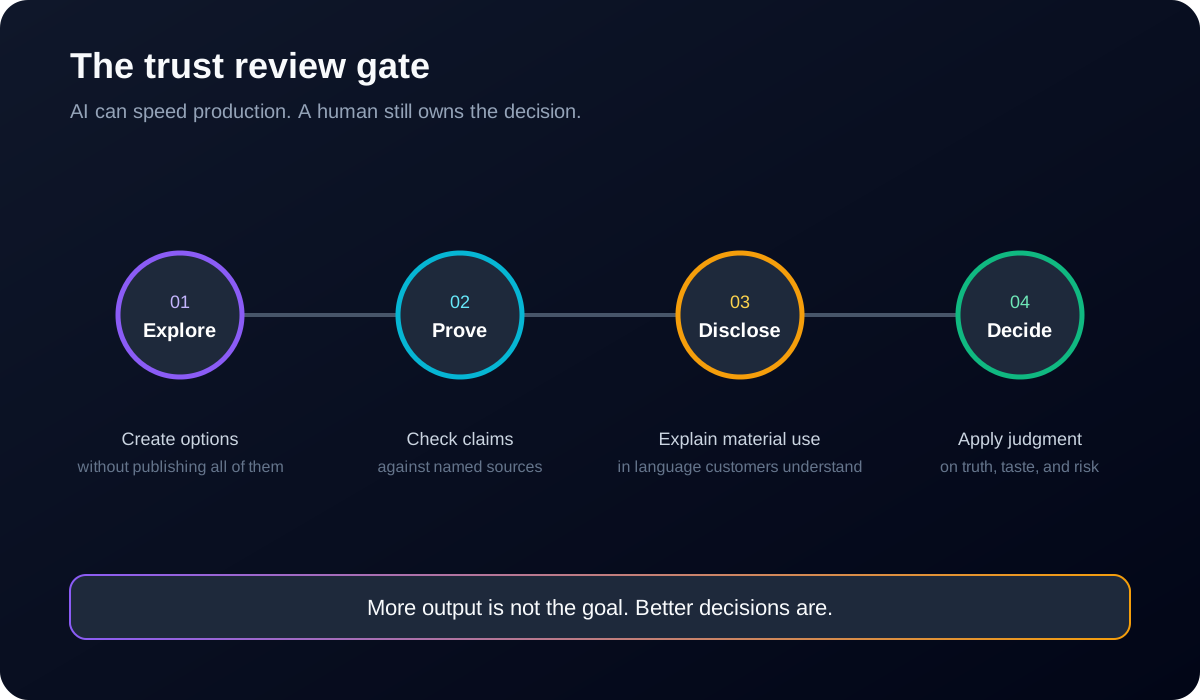
Build a human review gate
Most AI marketing workflows have a prompt step and a publish step. They need a judgment step in between.
A useful review gate asks five questions:
- Is the claim supported by a source we can name?
- Does the creative make the product look or sound different from reality?
- Would a reasonable customer understand where artificial intelligence was used?
- Does the work sound like this brand, or like the default settings of a model?
- What happens if the asset is copied, clipped, or summarized without its original context?
The fourth question is where many teams get uncomfortable. Brand voice is not a list of adjectives. It is a set of decisions about what the company notices, refuses, jokes about, and takes seriously. A model can imitate the surface of that voice only if the organization has already made the underlying choices explicit.
The personalization trap in AI marketing is built on the same weakness. Better targeting cannot rescue a brand that has outsourced its point of view.

Human review is not a brake on AI production. It is the part that gives the output a point of view.
Measure trust before conversion
A campaign can hit its click target and still damage the next campaign. That is why trust needs a place in the measurement plan before launch, not a postmortem after complaints arrive.
Track the normal performance signals, then add a small set of perception checks:
- Can customers identify the main claim after seeing the ad once?
- Do they understand what the product actually does?
- Does disclosure change their confidence, purchase intent, or willingness to share?
- Do comments mention sameness, fakery, confusion, or manipulation?
- Does the asset perform differently when the human contribution is made visible?
The goal is not to turn sentiment into a perfect score. It is to catch a tradeoff that media metrics cannot see. A cheaper asset with a lower trust response is not automatically efficient.
This is also where the AI marketing attribution model becomes relevant. If a model gets credit for every downstream interaction, the team may mistake correlation for confidence. Keep a record of creative versions, disclosure choices, review decisions, and audience feedback so the next test is based on more than last-click behavior.
The operating rule
Use artificial intelligence to widen the team’s options. Do not use it to remove the team’s responsibility.
That rule changes the workflow. The brief defines the customer tension before a prompt is written. The source file sits beside the claim. Human reviewers decide what is true, distinctive, safe, and worth publishing. Disclosure is chosen by the audience’s need to understand, not by a legal team trying to hide in the smallest possible label.
It also changes the creative ambition. If the machine makes five hundred variations, the answer is not to publish five hundred variations. The answer is to find the two or three that contain a real idea, then make them better.
The SEO shift after AI Overviews points in the same direction. In search, being visible is no longer enough. A brand has to be clear enough to be quoted, trusted enough to be cited, and useful enough to deserve the next click. Marketing creative is heading toward the same test.
Common questions
Does using artificial intelligence automatically hurt brand trust?
No. The IAB research suggests that audience reaction depends on how artificial intelligence is used and whether the brand is clear about it. Artificial intelligence can support useful work, but visible shortcuts, misleading synthetic people, and generic output can make a brand feel less authentic.
Should every AI-generated ad include a disclosure?
The disclosure should reflect the material use and the expectations of the audience. If artificial intelligence creates a synthetic person, voice, scene, or meaningful product alteration, a clear explanation is the safer standard. Teams should also check the rules of the platform, jurisdiction, and category before launch.
Can artificial intelligence write on-brand marketing copy?
It can draft copy that matches a documented voice, but it cannot replace the judgment that created the voice. Give the system real examples, boundaries, customer language, and approved claims, then require a human reviewer to make the final call.
What should marketers measure besides clicks and conversions?
Measure comprehension, confidence, disclosure response, negative quality signals, and whether customers can repeat the main claim accurately. These checks help identify trust damage that may not appear until a later purchase or renewal decision.
How can a small marketing team add a review gate?
Create a short pre-publish checklist with claim support, disclosure, brand distinctiveness, customer impact, and approval ownership. One accountable reviewer is better than an abstract policy nobody uses. Save the decision with the asset so the team can learn from it later.
Is the answer to stop using artificial intelligence in marketing?
No. The better answer is to stop treating cheaper production as the whole value proposition. Use artificial intelligence for exploration and execution, then spend human attention on the parts customers actually judge: truth, taste, relevance, and respect.
The marketing teams that win this shift will not be the ones with the most generated assets. They will be the ones that know which assets should never have been generated in the first place.