Canva gaming ads make a new media channel easier to buy. Before moving a design into a game, decide whether you're paying for someone to recognize your brand in the scenery or interrupt their play and visit your site. Those situations need different creative, reporting, and expectations.
Livewire announced its Canva integration on September 8, 2026. Its launch release lists in-game billboards and interstitial banners as the initial formats.
Canva's app listing advertises campaigns starting at US$500. That lowers the entry cost enough to put gaming on a small team's shortlist.
The practical work starts with the placement. A design that reads well in Canva can become a tiny surface beside a fast-moving game. A click report can tell you little about that surface, while a large impression count can leave the business question unanswered.
Know which placement you're buying
Ask to see the exact format, device, and available game inventory for your proposed audience and budget. Get a placement preview showing how the ad appears during play. An isolated rectangle on a design canvas doesn't show enough.
The release describes choosing format, audience, geography, and budget, with previews before committing. Use that opportunity to inspect the viewing conditions. Treat the provider's wider network reach as company context; your campaign's eligible inventory still needs confirmation.
For a billboard built into a game's environment, ask how large it appears on screen, whether the camera moves past it, and what reporting establishes that it was visible. Confirm whether the placement supports clicks. Don't put a button in the creative until you know it can do something.
For an interstitial, establish when it appears, how it closes, and what happens after a tap. Ask whether the destination opens inside the app or in a browser, then test that journey on the intended device. The creative has to explain why leaving the game is worth the interruption.
Design from the player's viewpoint
Imagine a fictional sparkling-water brand using an existing social ad. The design contains a can, several flavor names, a discount, a testimonial, and a call to action. It may be readable when someone stops scrolling. Put that same composition on a billboard beside a racing corner and the small copy may contribute nothing.
I'd start the billboard version with the recognizable package, one distinctive color, and a short message. Then review it at the size and angle shown in the placement preview. If the message only works after zooming in, revise the asset before buying the placement.

Judge the creative from the player's viewpoint. AI-generated editorial illustration.
A quick internal review can catch obvious legibility problems. Show the preview at a realistic display size, then ask colleagues what brand and message they remember without prompting them. Keep their answers. This is an informal creative check, with a small and biased sample, so don't present it as evidence that the campaign will improve recall.
For an interstitial, use the available space to make one offer understandable and the destination predictable. If the ad promises a flavor sampler, the landing page should open on that sampler. Sending the player to a homepage creates another navigation task before they can evaluate the offer.
Preserve the brand cues across both formats, but let the amount of copy and the action change with the placement. Our marketing brief guide covers the broader campaign decisions. Here, the additional work is judging the asset in the conditions where a player will encounter it.
Request the report before launch
Ask for a sample report for the specific format you're considering. Find out which fields arrive with the campaign, which require extra tracking, and which are unavailable at your budget.
The IAB's Gaming Measurement Framework separates baseline reporting from additional capabilities that depend on the implementation. It also distinguishes gaming formats.
Use that structure to question a provider's reporting; the framework doesn't establish what this particular integration includes.
I'd put the following questions into the media inquiry. These are proposed requirements, not a description of Livewire's dashboard.
| Question | Request from the provider | What it helps you assess |
|---|---|---|
| Where did the campaign run? | Placement, game or inventory grouping, device, and geography breakdowns | Whether delivery matched the approved audience and context |
| What counted as an exposure? | Impression and viewability definitions, measurement method, and available time-in-view data | Whether the delivery figures describe comparable events |
| How concentrated was delivery? | Reach definition and frequency reporting, with any reporting limitations | Whether repeated exposures to a narrow audience dominate the total |
| What happened after a click? | Click definitions, destination tracking support, and attribution window | Whether you can reconcile platform activity with your own site |
| Can we measure additional sales? | The proposed comparison method, required scale, cost, and limitations | Whether a causal outcome test is feasible |
Missing fields don't automatically disqualify a channel. They reduce the questions your experiment can answer. Record those limits before anyone prepares the results presentation.
Give each metric a clear meaning
An impression is evidence of delivery under the provider's counting rules. Viewability concerns whether an ad met the relevant visibility criteria. Neither establishes that a particular person noticed the message or later bought because of it.
Your own site can add evidence when a placement sends traffic. Use campaign tags that distinguish the format and creative, test that the parameters survive the click, and check that the intended action records correctly. A submitted lead needs a quality review; a loaded landing page isn't a qualified inquiry.

A tap asks the player to leave the game. AI-generated editorial illustration.
A billboard campaign may have a different job, such as building recognition. Don't force it into a click target just because clicks are easy to put in a spreadsheet. If you want a recall or sales-lift study, ask what research design and sample are required, and price those separately from the media.
Our digital marketing measurement plan explains how to assign a source of truth to each business result. For this campaign, write down what the platform reports, what your site records, and what neither can establish.
If the report credits sales to the campaign, review the limits of attribution before using those totals to justify a larger buy.
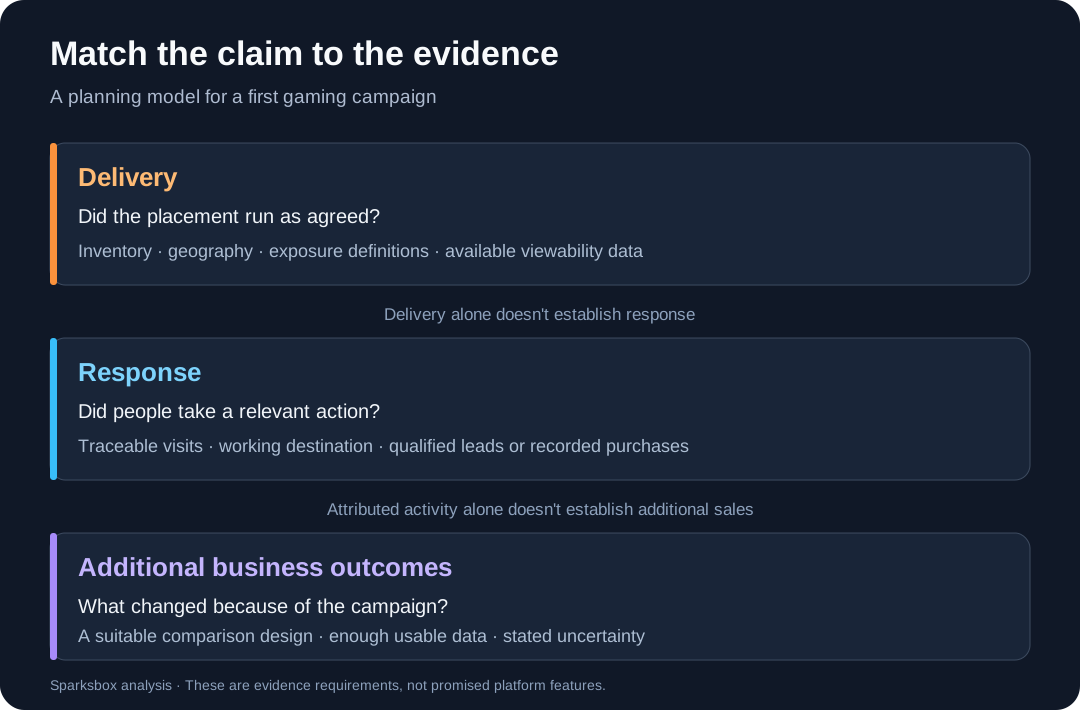
Keep the first test interpretable
A US$500 starting price is an entry point advertised by the provider. It isn't a promise that this spend will produce a reliable answer about sales. The answer depends on the audience, media delivery, response rate, tracking, and the size of the effect you're trying to detect.
For a small initial budget, I'd pick one format and one question. A useful first question might be whether the placement delivers in the intended context and produces traceable, relevant visits. If the business requires proof of incremental sales before considering any further spend, work out whether the proposed test can support that requirement before launching it.
Avoid splitting a small buy across two formats, several audiences, and a handful of creative variants. When little data arrives in each combination, it becomes hard to tell whether an apparent difference means anything.
Write the review rules in advance. For example, this fictional first campaign could use the following checks:
- Pause for a broken destination, lost campaign tags, or delivery outside the agreed geography.
- Review a report that combines incompatible formats without a breakdown.
- Assess relevant visits against a threshold set from the business's own economics and traffic quality, without treating it as proof of additional sales.
- Mark the result inconclusive if too little usable evidence arrives to answer the chosen question.
One awkward result deserves attention: the ad may generate clicks while few people meaningfully engage with the destination. Investigate the landing page, device experience, traffic quality, and placement before celebrating a low cost per click. The number alone won't identify the cause.
Save the evidence for the next buy
Keep the approved placement preview, final creative, targeting settings, report definitions, campaign tags, and landing-page version together. Add the actual delivery report and the decision made after review. Someone revisiting the test should be able to see what ran, what was measured, and why you continued or stopped.
Also record what would change next time. If the creative was unreadable at the intended scale, fix it before changing audiences. If tracking failed, repair and verify the journey before interpreting conversion totals. If the campaign delivered as agreed but the business result remains uncertain, decide whether a larger or differently designed test is justified.
FAQ
Ads by Livewire is a Canva integration for buying advertising in games. The September 2026 launch announcement names in-game billboards and interstitial banners. Check the current app and available campaign inventory before planning a buy.
Canva's listing advertises campaigns from US$500 as checked on September 10, 2026. Confirm the final cost and what it includes. Creative production, additional measurement, and the budget needed for a useful experiment are separate planning questions.
You can start with the brand assets, but inspect the composition in the actual placement preview. Small text and multiple messages may fail at billboard viewing distance. A clickable interstitial needs a clear offer and a working destination.
Only if the campaign includes measurement capable of supporting that conclusion. Delivery, clicks, and attributed conversions answer narrower questions. Ask how the proposed analysis separates additional sales from sales that would have happened anyway.
Choose one format and one question the available reporting can answer. Verify the placement, creative, and tracking before judging performance. Set the review rules in advance and allow an inconclusive outcome.