Healthcare marketing has a measurement problem that normal marketing advice does not solve.
The team still needs to know which campaigns create appointments, which pages help patients choose care, and which channels deserve budget. But the tools built for standard consumer marketing often collect more context than healthcare privacy teams are comfortable sending to ad platforms, analytics vendors, or chatbot providers.
That tension is now a board-level issue. Pixels, session replay, call tracking, forms, and AI chat can all become risky when they touch patient intent, appointment behavior, condition pages, or identifiable information.

Healthcare marketing measurement has to balance attribution, patient privacy, vendor contracts, and operational reality.
The bulletin was narrowed, but the risk did not vanish
HHS OCR's tracking technologies guidance pushed healthcare organizations to review how third-party tracking tools operate on websites and apps. The legal fight around parts of that guidance changed the enforcement picture, but it did not make tracking risk disappear.
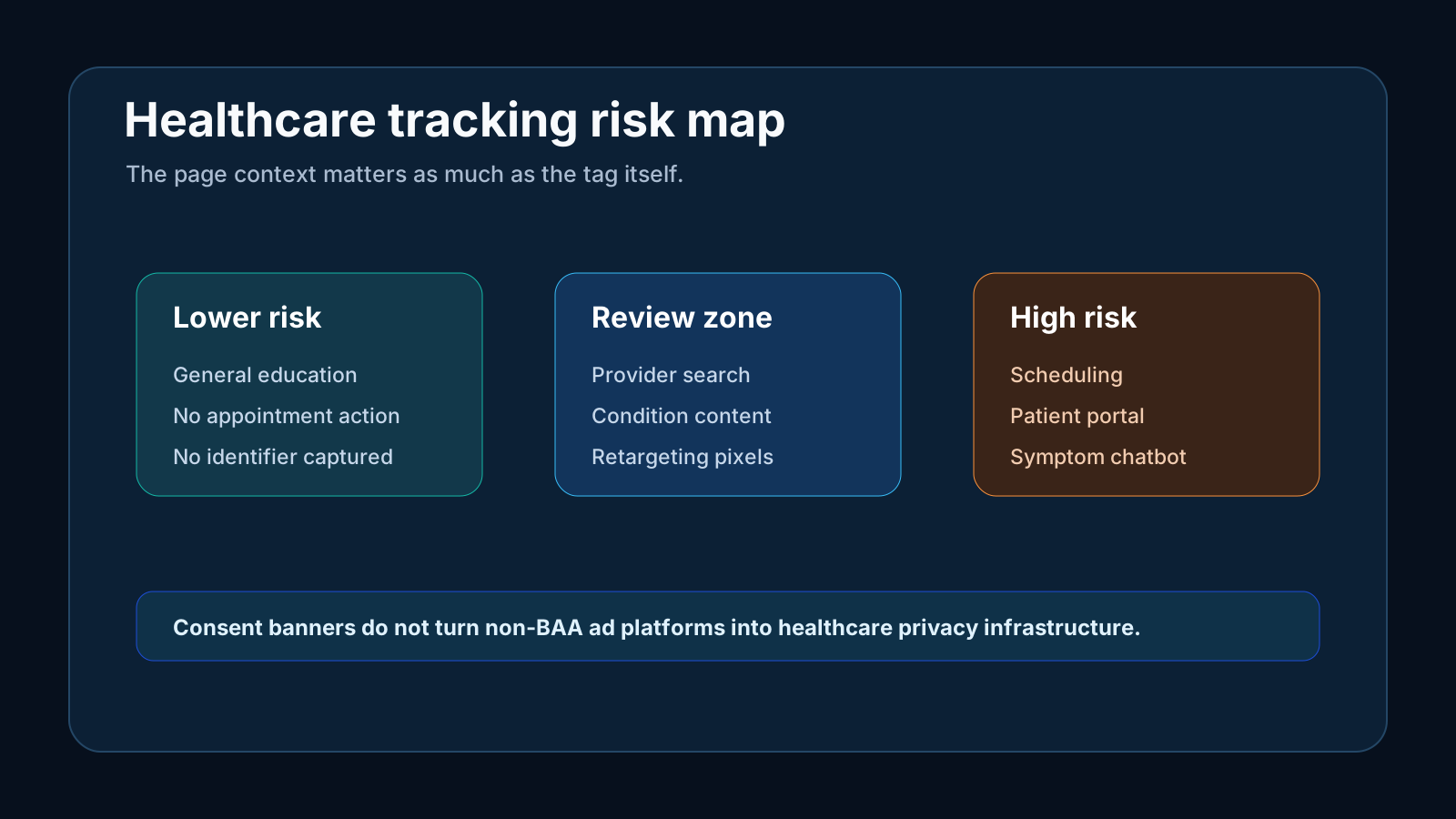
The key point for marketers is practical: a page visit can carry health context. A scheduling action can carry more. A symptom chatbot can carry even more. The more patient-specific the interaction becomes, the less safe it is to treat the page like a normal retail funnel.
Consent banners do not solve that by themselves. HIPAA authorization, state privacy law consent, and ad-cookie consent are not the same thing.
Why common analytics stacks create friction
The standard digital marketing stack assumes a simple pattern: collect events in the browser, attach identifiers, send them to analytics and ad platforms, then optimize campaigns based on conversions.
Healthcare breaks that pattern.
If a patient visits a condition page, searches for a provider, books an appointment, or enters symptoms into a tool, the context can become sensitive. If the organization sends that context to a platform without the right contractual and technical controls, marketing measurement becomes a privacy exposure.
That is why compliance teams often ask marketing to remove pixels from scheduling flows, portals, service-line pages, and chatbot experiences. Marketing hears, "We are losing attribution." Compliance hears, "We are reducing liability." Both are right.
Enforcement is broader than HIPAA
Healthcare marketers sometimes focus only on whether an organization is a covered entity under HIPAA. That is too narrow.
The FTC has taken action against health and wellness companies for sharing sensitive information with advertising platforms or making privacy promises they did not keep. The GoodRx enforcement action, BetterHelp enforcement action, and Cerebral enforcement action all show the same direction: health data privacy claims and ad-tech sharing are being scrutinized beyond traditional hospital compliance.
State laws add another layer. Washington's My Health My Data Act covers consumer health data more broadly than many teams expect. If your marketing footprint reaches multiple states, the privacy review should not stop at HIPAA.
The attribution loss is real
When healthcare organizations remove client-side pixels from sensitive pages, reported conversions often drop. That does not mean demand disappeared. It means the old measurement system can no longer observe every step.

Removing high-risk pixels can reduce visible conversions while actual patient demand continues.
This creates organizational tension:
| Role | What they need | What worries them |
|---|---|---|
| Marketing | Channel performance and budget defense | Losing campaign visibility |
| Compliance | Reduced disclosure risk | Unauthorized sharing or weak consent |
| IT | Stable systems and vendor control | Tags added outside review |
| Leadership | Growth with lower legal exposure | Spending without proof |
The answer is not to ignore attribution. The answer is to rebuild it around safer data flows.
What a safer stack looks like
A safer healthcare measurement stack changes where data is filtered. Instead of letting every browser tag send context directly to third parties, the organization collects less, filters earlier, and reports more at the aggregate level.
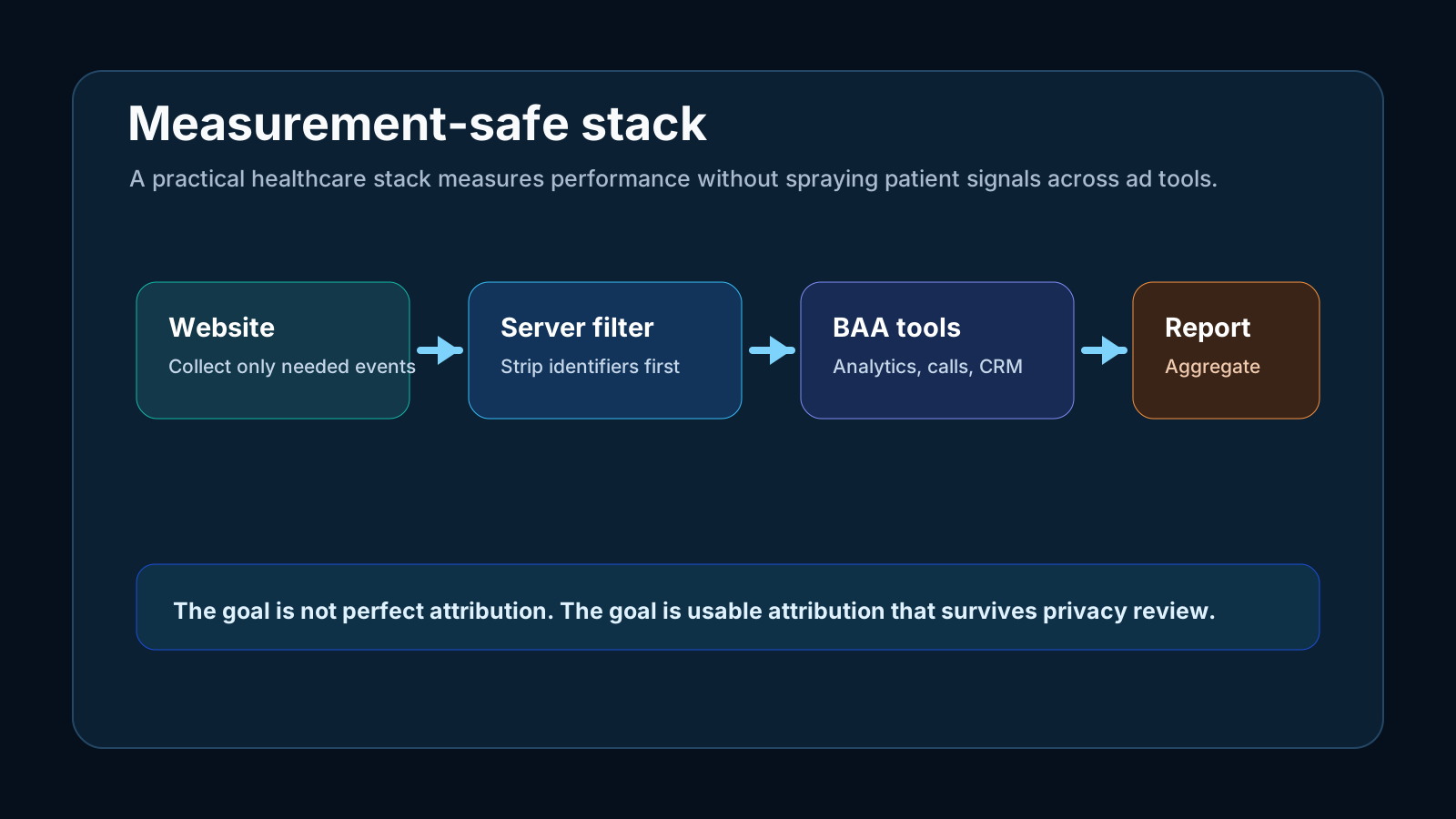
The practical architecture usually includes:
- Removing nonessential pixels from high-risk pages.
- Using server-side event collection where appropriate.
- Stripping identifiers before any ad-platform conversion signal is sent.
- Using BAA-covered analytics, call tracking, forms, and CRM tools where patient information may be involved.
- Separating education pages from appointment and portal flows.
- Documenting which pages can run which tags.
This stack is less convenient than standard ad-tech measurement. It is also more defensible.
Chatbots are the new tracking pixel
AI chat makes the problem sharper. A chatbot that only helps users move around a website may be low risk. A chatbot that asks about symptoms, appointment needs, medications, insurance, or identifying information is operating in a different category.
If the chatbot vendor processes sensitive health information, the organization needs to understand contracts, storage, model providers, logging, human review, retention, and whether the vendor will sign the right agreements. If a third-party model provider is involved, the review cannot stop at the chatbot wrapper.
This is where healthcare AI and marketing operations meet. A "find a doctor" assistant can become a privacy issue quickly if it invites patients to disclose too much.
The safest launch pattern is narrow. Start with routing, office hours, accepted insurance pages, provider directory links, and appointment options.
Block free-form clinical guidance unless the vendor, contract, and review process are built for it. Then review transcripts for the questions patients actually ask, because those questions reveal where the website, forms, and service-line content are unclear.
The page-level tag policy
Healthcare teams need a page-level tag policy, not an informal rule that says "marketing owns analytics."
Create a simple matrix:
| Page type | Example | Measurement rule |
|---|---|---|
| General awareness | Brand campaign page | Limited analytics, no sensitive form fields |
| Education | Condition overview | Review tags, avoid retargeting by condition |
| Provider search | Find a specialist | Server-side or privacy-reviewed analytics |
| Scheduling | Book appointment | No nonessential ad pixels |
| Portal | Patient account | Healthcare-approved tools only |
| Chat | Symptom or care navigation | Vendor and data review required |
The policy should be easy for marketing, web, compliance, and agencies to follow. If it is too complicated, teams will route around it.
Measurement still has a job
Privacy-safe measurement does not mean marketing gives up. It means marketing changes the proof model.
Useful alternatives include:
- Aggregate conversion reporting.
- Server-side conversion events with identifiers removed.
- Call tracking through healthcare-ready vendors.
- CRM-source reporting where contracts allow it.
- Geo-level lift tests.
- Content performance tied to downstream service-line demand.
- Incrementality tests instead of person-level retargeting.

The measurement goal is usable proof that survives legal, compliance, and patient trust review.
This is less precise than watching every user across every page. It is also more honest about the category.
What to fix first
Start with the highest-risk surfaces:
- 1Scheduling pages.
- 2Patient portals.
- 3Provider search and appointment request forms.
- 4Symptom checkers and chatbots.
- 5Condition pages with retargeting tags.
Then inventory every tag, vendor, destination, and data field. Do not rely on the tag manager UI alone. Inspect network behavior and confirm what actually leaves the browser.
For healthcare systems with multiple agencies or service-line teams, this inventory is often the first real discovery moment. The organization may find pixels, scripts, and form tools nobody currently owns.
FAQ
It depends on the page context, configuration, contracts, and legal review. Healthcare teams should be especially careful on pages tied to appointments, portals, provider search, or sensitive health context.
No. Cookie banners can help with certain privacy notice and consent workflows, but they are not the same as HIPAA authorization or a proper vendor contracting model.
It is high risk on scheduling, portal, and patient-intent pages. Many organizations remove ad pixels from sensitive pages and use safer server-side or aggregate measurement instead.
They can be if patients enter identifying or health-related information and the vendor is not covered by appropriate agreements and controls. Navigation-only chat is different from symptom or care guidance.
Use aggregate reporting, privacy-reviewed server-side events, BAA-covered tools where needed, call tracking with proper controls, CRM reporting, and incrementality testing.