When Verification Becomes Unreliable
In this postCollapse -Open +
Codoxo launched deepfake detection for healthcare payment integrity. The fact that this needs to exist, that insurance companies now need specialized tools to tell the difference between real verification evidence and synthetic media, marks a turning point in regulated industry compliance.
Healthcare, insurance, cannabis, and financial services all rely on identity verification as the foundation of their entire risk model. Video verification, voice calls, photo ID checks, these are the barriers that keep fraudsters out. But AI doesn't care about barriers. It cares about patterns.
A deepfake is just audio or video that's statistically indistinguishable from reality. That's not a technical problem anymore. That's a regulatory problem. Because once verification becomes unreliable, the entire legal framework of regulated industries breaks down.
In this postCollapse -Open +
Why Deepfakes Break the Compliance Contract
Regulated markets exist because bad outcomes are expensive, and somebody has to pay. Insurance pays for fraudulent claims. Cannabis operators can face penalties for selling to people they did not properly verify. Healthcare systems pay for medication errors caused by impersonation. Banks lose money to synthetic identity fraud.
The compliance playbook has always been simple: implement a verification process, document that you did it, and shift liability to the bad actor. If you can prove you verified the customer's identity using industry-standard tools, you're protected.
But deepfakes change the math. They change it because they don't violate a specific regulation. They violate the assumption that verification works.

*The moment when standard verification isn't enough anymore.*
A deepfake of a customer on a video call looks real. The liveness detection, the blinking, the head movement, all passes. Their voice matches their ID. The background looks like a home office. Everything checks the box. And then they commit fraud anyway.
The compliance department did their job. The technology did its job. The regulation did its job. And the fraudster still won because they used better technology.
The Liability Trap That Multiplies
If a cannabis retailer verifies a customer's age using a deepfake video, gets defrauded, and then sells to that deepfaked identity which turns out to be a minor, what happens?
The retailer followed its process. They used a liveness detection tool. They documented the verification. The technology passed. But the outcome still creates a regulatory problem.
The regulator could argue: you should have known deepfakes exist. You should have invested in anti-deepfake detection. The retailer could argue: the industry standard was liveness detection.
That's what everyone uses. We complied. The insurance company could argue: deepfake fraud is an uninsurable risk because the cost of detection is unknowable and verification itself is now unreliable.
And everyone's right. The liability doesn't resolve. It multiplies.
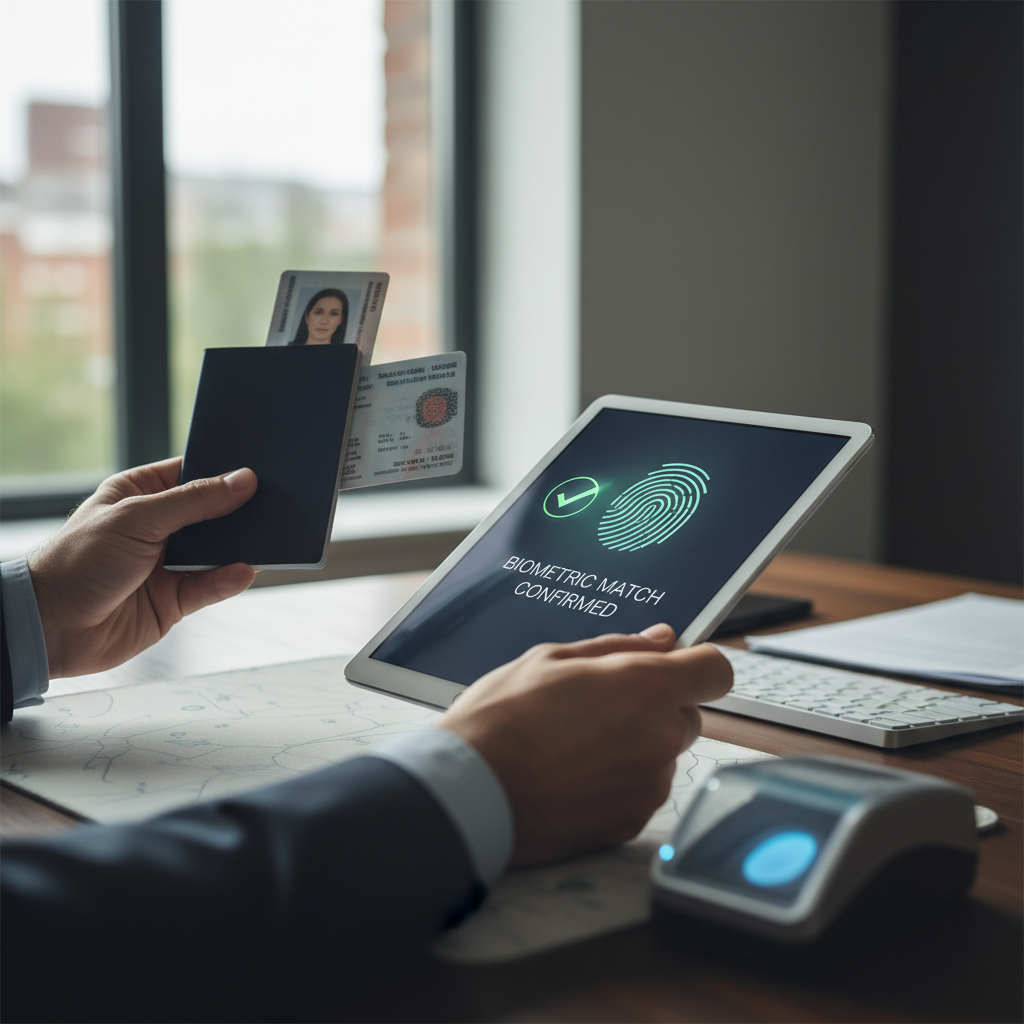
*Deepfakes force businesses to question verification processes that used to feel solid.*
Why Detection Creates a New Problem
The challenge isn't technical. Deepfake detection tools exist. Reality Defender and Codoxo are building them. But detection creates a paradox: false positives and false negatives both cost you.
If your deepfake detection tool flags a real customer as synthetic, you reject their application. They don't get insurance. They can't access healthcare. They can't buy legal cannabis. And if they're innocent, they have a legal claim against you.
So you calibrate the tool to be less sensitive. Fewer false positives means more real people get approved, but also more deepfakes slip through.
It's a precision-recall tradeoff, and in regulated markets, you pay either way. Over-detect and you lose customers. Under-detect and you lose compliance.
Insurance companies are already grappling with this. Codoxo's deepfake detection product exists precisely because insurers realized their existing verification pipelines don't work anymore. They're scrambling to add another layer to a process that was already fragile.
The Asymmetry: Detection Always Lags Creation
Deepfake generation gets better faster than detection. NVIDIA, Synthesia, and open-source tools like Stable Diffusion keep improving. Liveness detection improves too, but the attacker has an asymmetric advantage: they only need to fool detection once per fraud. Defenders need to stay ahead forever.
This is especially problematic in cannabis and healthcare, where verification is episodic. A patient verifies once. A customer verifies once. If detection was insufficient that day, the fraud succeeds and compounds.
Deepfake generation is getting cheaper and easier while fraud payouts remain large enough to justify repeated attempts. The economics are upside-down for the defender.
What's Actually Changing
Some cannabis operators are adding more manual review for higher-risk verification moments. That adds friction, but it can reduce reliance on a single digital check.
Insurance companies are layering detection: liveness + behavioral analysis + background checks + manual review. The cost of each claim investigation is rising, margins are shrinking, and premiums will follow.
Healthcare systems are implementing additional identity proofs: multiple biometrics, secondary verification from known contacts, and longer hold periods before procedures are scheduled. The patient experience is degrading in the name of fraud prevention.
Financial services are doing the same: added friction, more touchpoints, slower verification. The cost of compliance is being passed to the customer.
The common thread: nobody has a scalable solution. Everyone's adding process. Everyone's hoping the added friction is enough.
The Insurance Policy Exclusion Wave
If deepfake fraud becomes prevalent enough, do liability insurers drop coverage for verification failures? Some insurers are likely to ask sharper underwriting questions about detection capability, verification logs, fraud controls, and escalation processes.
This means the cost of compliance isn't just internal anymore. It's transferred to insurance. And insurance companies aren't going to absorb deepfake losses. They'll push it back to the regulated company, which will push it to customers through fees.
You should expect more pressure from cyber, fraud, and liability underwriters. Industries that cannot prove detection capability may face higher scrutiny, higher costs, or narrower coverage terms.
The Regulatory Response Nobody's Ready For
Here's the worst part: there's no regulation that prevents deepfake fraud because there was no deepfake fraud when the regulations were written.
GLBA for banking, HIPAA for healthcare, CAN-SPAM, and cannabis state regulations were not written around verification systems failing systematically. They assume good-faith verification attempts. They don't fully account for an attacker with technology that can replicate the behavior of a real person.
So regulators are going to do what they always do: add requirements. Proof of anti-deepfake detection. Mandatory disclosure that deepfakes exist and verification might fail. Liability standards that assume deepfake fraud could happen.
But the requirements will be written by people who don't understand the technology, implemented by companies running on margins that don't account for the cost, and audited by compliance teams that aren't equipped to judge if the detection is actually working.
The result: compliance theater. Boxes checked. Regulations followed. And deepfakes still slip through.
The Inevitable Shift
In regulated markets, when technology breaks trust, the market doesn't get fixed through better technology. It gets fixed through added friction and shifting liability.
You're going to see more manual verification, more customer friction, and higher costs for users. You're going to see insurance companies drop coverage for certain risk profiles. You're going to see regulations that require detection systems that don't actually work but make regulators feel safer.
The companies that adapt first, that invest in good detection, that build in the friction, that plan for insurance complications, will be better positioned. The ones that assume current verification is good enough won't.
But none of them will actually solve the problem. Because the problem isn't technical anymore. It's structural. Verification built on the assumption that real and synthetic are visibly different doesn't work when they're not.
The only real solution is to change how regulated markets think about risk. Instead of trying to verify identity perfectly, you build systems that work even when identity verification fails. You add behavioral monitoring. You use smaller transactions that make fraud less profitable. You design for the inevitable compromise.
But that requires thinking differently about regulated compliance, and that's slower and harder than just adding another verification layer.
So we'll get more deepfake detection tools. We'll get more friction. We'll get higher costs and more exclusions. And the asymmetry persists.
2026 evidence and control update
The more useful 2026 question is not whether deepfake fraud in regulated markets: why verification is breaking is possible. It is whether brands managing synthetic media, impersonation, reviews, and AI-generated trust signals can prove what happened after the system made, shaped, ranked, routed, or explained a customer-facing decision.
The less obvious issue is that the hidden record is the chain of custody for creation, approval, disclosure, monitoring, and takedown. That record is what separates a working AI pilot from a defensible operating system.
For source alignment, the public claim language should stay consistent with FTC fake reviews rule guidance and FTC guidance on AI claims. Those sources do not remove the need for local legal review, but they give the article a better evidence spine than vendor screenshots or unsupported performance claims.
This also connects to related operating risk, AI measurement gap, compliance workflow, because the same pattern keeps repeating: AI systems look clean in the dashboard while the proof, ownership, and customer context live somewhere else.
| Control layer | What to verify | Evidence to keep |
|---|---|---|
| Source data | Which approved source fed the answer, recommendation, ranking, or claim | Source URL, vendor field, timestamp, and owner |
| Decision boundary | Where the AI is allowed to help and where it must stop | Allowed use case, blocked topics, and confidence threshold |
| Human review | Who owns the exception, correction, or escalation | Reviewer role, handoff note, and approval record |
| Monitoring | How the team catches drift, complaints, or weak signals | Review cadence, sampled outputs, and customer feedback themes |


Frequently asked questions
Many regulated workflows assume that identity verification is reliable. Deepfakes weaken that assumption by making synthetic audio, video, or identity evidence look good enough to pass normal checks.
Healthcare, insurance, financial services, cannabis, and other age-gated or identity-gated markets are exposed because verification is tied directly to legal access, payment, claims, or eligibility.
Not by itself. Liveness detection can help, but deepfake fraud requires layered controls: device signals, behavioral checks, document validation, manual review, transaction limits, and escalation rules.
Review age verification, delivery handoff, online ordering, account recovery, loyalty access, and any workflow where a digital identity check unlocks a regulated transaction.
Use risk-based friction. Low-risk interactions can stay streamlined, but higher-risk transactions should trigger secondary checks, staff review, and stronger documentation.