Most brands see a trend and ask how quickly they can make a post about it.
That is usually the smallest possible response. It also explains why so much trend marketing feels disposable. The brand borrows a color, a phrase, or a format, then disappears before the audience has any reason to remember the connection.
KFC Australia is taking a more useful approach with Picklecore. Its September campaign turns a visible pickle obsession into a named world around a limited-time menu. The campaign reaches beyond a menu item into fashion-styled film, outdoor, social, and audio.
Whether it earns true mass virality is still too early to call. The more useful evidence is already there: a trend can become a campaign system when the brand gives it a product truth, a boundary, and a next decision.
The move is not to copy the trend. It is to give the trend somewhere useful to go.
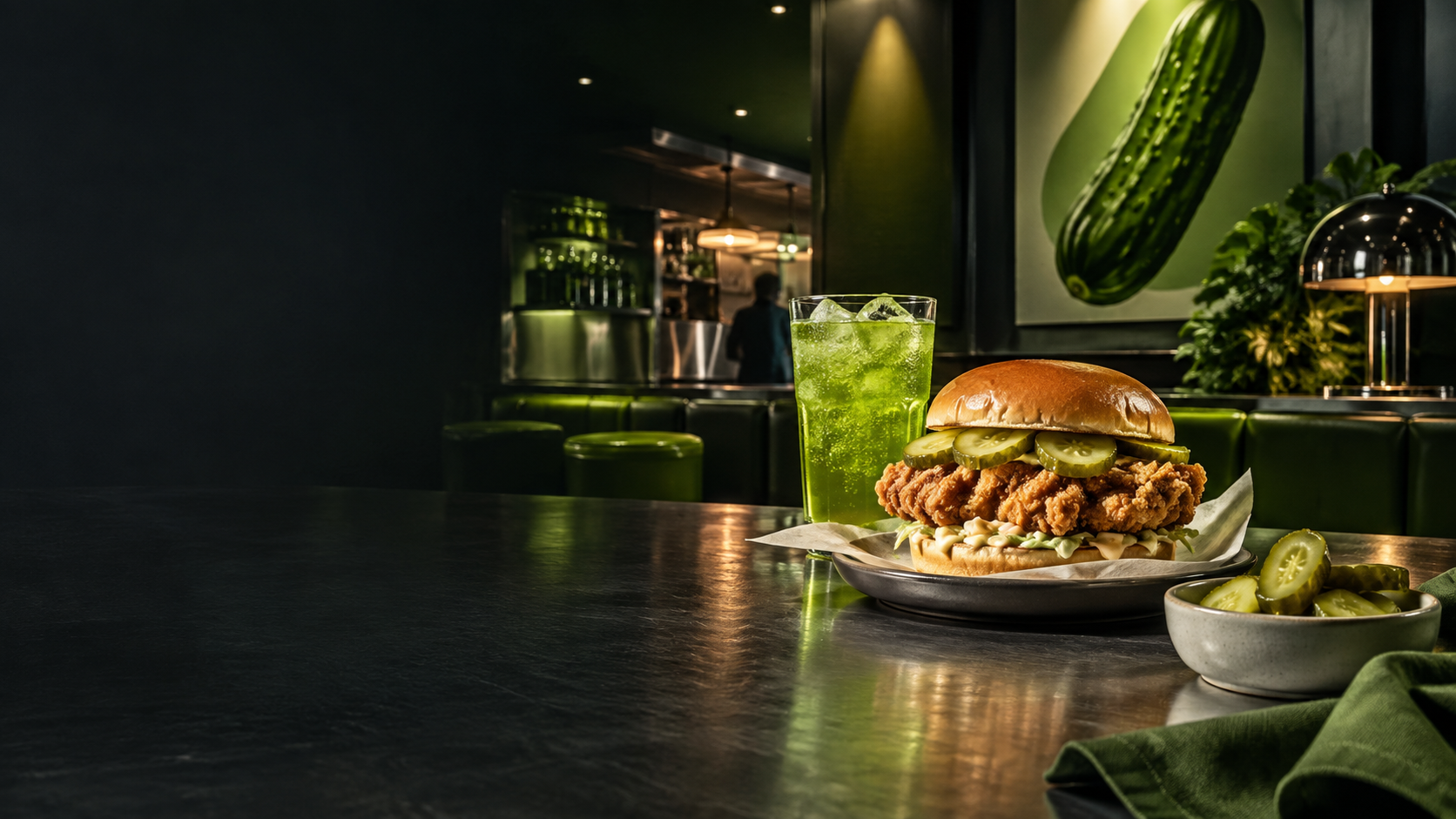
A trend becomes more useful when the product, visual world, and campaign boundary point in the same direction.
KFC did not just add pickles
The campaign is easy to reduce to a limited-time pickle menu. That version misses the strategy.
In its September 11 report, Campaign Brief described KFC Australia's Picklecore campaign as a move to turn a current pickle obsession into a subculture. The report names a Pickle Burger, Pickle Pepsi Max, Frickles, and Pickle Loaded Chips.
It also describes a 15-second hero film styled like a high-fashion campaign, supported by outdoor, social, and audio work.
The phrase used in the campaign, “It's not a garnish. It's a lifestyle,” does the strategic work. It gives the audience a frame for the menu. Pickles stop being an ingredient added to a familiar product and become the organizing idea for a short brand world.
KFC's own South Pacific company updates describe the launch as a limited-time loaded pickle menu and call out a fashion-forward television commercial. The live KFC Australia menu shows the idea spread across burgers, meals, sides, sauces, drinks, and a shared feast.
The Yum Brands campaign listing dates its KFC x Picklecore video to September 1, 2026.
That is a system, not a post. The audience can meet the idea in more than one place, and each meeting reinforces the same central association.
A trend is not a strategy
The word trend hides several different situations. A behavior might be a short-lived joke, a genuine shift in taste, a creator format, a community ritual, or a category signal that has not yet become a buying reason.
Treating all of those as permission to publish is how brands end up performing relevance instead of earning it.
Start with the behavior underneath the trend. Ask what people are repeating, showing, debating, or doing differently. Then ask whether the brand has a credible role in that behavior.
| Weak trend response | Better operator question | Evidence to collect |
|---|---|---|
| Copy the color or visual style | What behavior is the audience actually repeating? | Original posts, comments, search language, creator formats |
| Add the trend to one product | Can the product or service carry the idea without explanation? | Product truth, customer questions, staff or sales context |
| Publish one reactive post | What would make the idea recognizable next week? | A repeatable format, phrase, world, or ritual |
| Buy reach immediately | What decision will the attention help us make? | A defined audience action and a source of truth |
| Call the result viral | Did it travel beyond the original community? | Repetition, independent coverage, participation, and qualified action |
This is where a marketing brief earns its place. A live signal may arrive outside the planning calendar, but the response still needs an audience, a point of view, an owner, and a reason to exist.
Build the world before you build the media plan
Picklecore works because the idea repeats without becoming identical. The menu carries the flavor. The high-fashion treatment gives it a visual language. Outdoor makes the language public. Social gives people a place to react. Audio lets the campaign travel without the food in frame.
That does not mean every brand needs five channels. It means the channels should perform different jobs inside one world.
The useful planning question is not “How do we put this everywhere?” It is “What should the audience understand after seeing this in each place?”
- The first exposure should make the idea legible.
- The second should give the audience a reason to play with it, discuss it, or look closer.
- The product or service should make the association believable.
- The final step should make the next action obvious without turning the work into a hard sell.
The order can change by category. A business-to-business brand may start with a point of view and a useful tool. A restaurant may start with a visible product experience. A local service business may start with a customer behavior that already appears in reviews and search queries.
The principle stays the same: repetition creates memory only when the underlying idea remains intact.

The idea becomes a system when one cultural signal shows up consistently across the physical experience and the campaign work.
The product has to carry the joke
Trend marketing gets weak when the creative team has to do all the convincing.
KFC's product architecture gives Picklecore something concrete to carry. The current menu does not show one novelty item surrounded by the usual assortment. It shows the pickle idea across a burger, sides, sauces, drinks, and shared formats.
That range matters for two reasons.
First, it gives the audience multiple entry points. Someone can be curious about the drink, the side, the main item, or the whole combination. The campaign can create conversation without forcing every person into the same choice.
Second, it lets the brand make a stronger claim about the idea without relying on adjectives. The menu demonstrates commitment. The audience does not have to take the campaign's word for it that pickles are the point.
For a smaller brand, the lesson is not to create six new products. Use the smallest product truth that can carry the idea. A service business might turn a repeated customer question into one sharp diagnostic.
A skincare company might build a limited content series around a real routine problem it already solves. A software company might package one workflow rather than rename the entire platform around a meme.
If the connection requires a paragraph of explanation, the brand may be borrowing the trend rather than participating in it.
Put a hard edge around the experiment
The finite nature of a campaign is not a minor detail. It is what makes a trend response testable.
Set the end point before the first creative is approved. Decide what will happen to the offer, the landing page, the inventory, the paid media, and the reporting when the window closes. A limited-time idea without an end point is just a permanent operational problem wearing launch language.
Use the smallest version that can answer the question. If the question is whether an audience will try an unusual flavor, you do not need a national brand universe. If the question is whether a visual world can make an existing service easier to remember, you may not need a new offer at all.
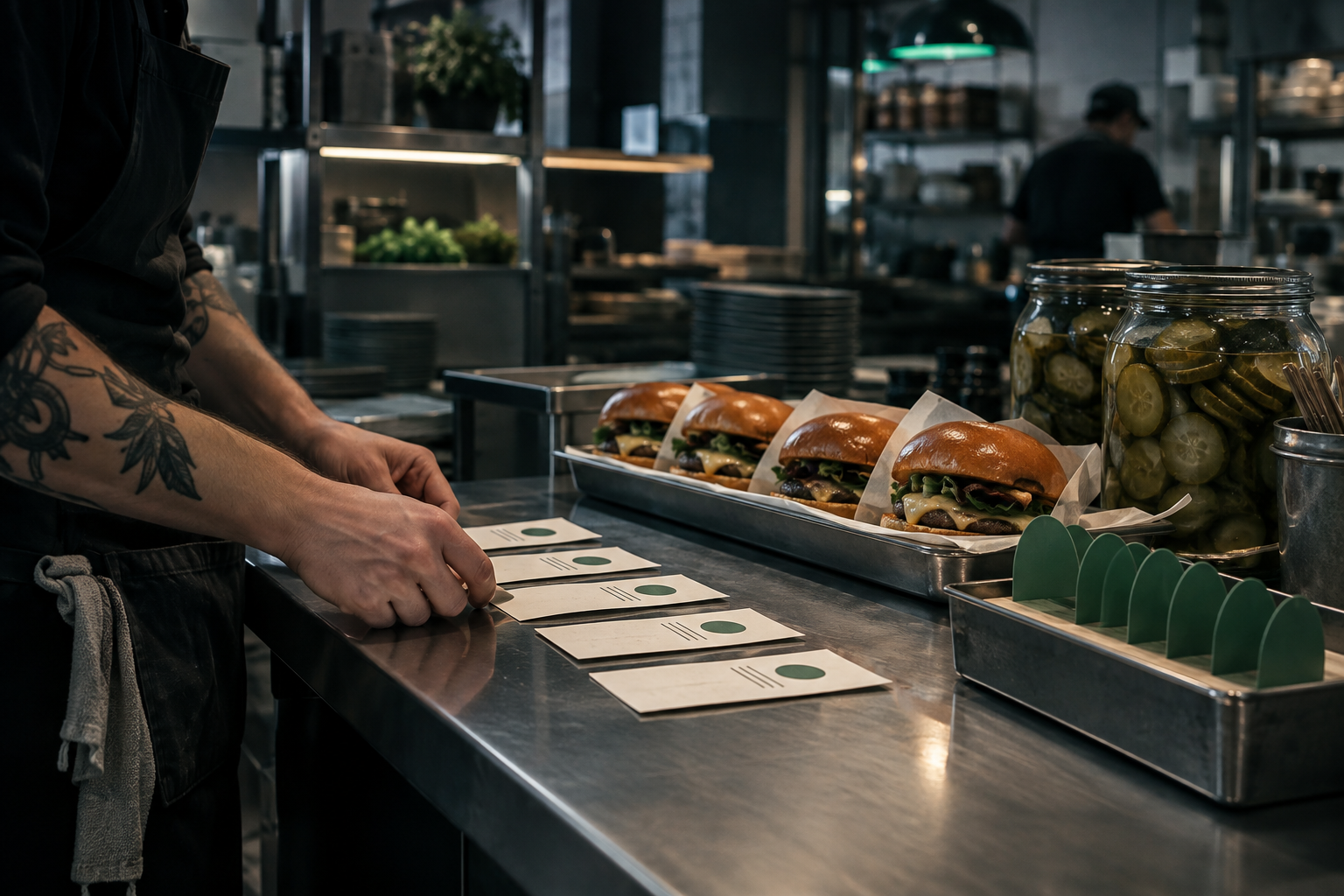
A bounded campaign gives the team a visible offer, a finite run, and a clear point at which to decide what happens next.
| Before launch | During the run | After the window |
|---|---|---|
| Name the audience question | Watch qualified reactions and objections | Compare the result with the original question |
| Set the end date and supply boundary | Keep the core idea consistent | Retire, revise, or repeat with a stated change |
| Assign an owner for creative and operations | Log what customers ask, not just what they click | Record what the test could and could not prove |
| Define the measurement source | Separate reach from useful behavior | Decide whether the idea earned another cycle |
The campaign planning cadence behind the work can stay lightweight. The point is not to recreate a quarterly planning process inside a trend response. The point is to prevent speed from deleting the decisions that make the work accountable.
Participation is part of the product
Some trends spread because people can add themselves to them. They can show a variation, argue about the best version, make a recommendation, or recognize the reference and pass it along.
That is different from asking people to create free advertising. Participation needs a clear reason and a clear boundary.
TikTok's Next 2026 trend report describes comment reactions, community, and co-creation as part of the platform's trend signals. The report also cites TikTok's 2025 Kantar study, which found that users were 1.6 times more likely to repurchase from brands when ads allowed interaction with the advertised brand, such as comments or co-creation.
That is platform-reported research, not a universal performance benchmark, so it should inform a test rather than replace one.
For operators, the practical takeaway is narrower:
- Give the audience a simple way to respond.
- Make the response visible enough that other people can understand it.
- Avoid requiring a high-effort submission before the idea has earned interest.
- Read the replies for language and objections that the original brief missed.
- Disclose paid partnerships and set usage terms before asking creators for work.
KFC's campaign appears to invite the pickle-curious into the idea rather than requiring them to become campaign producers. That is a healthier participation model for most brands. The audience can recognize itself in the world, then decide whether the product deserves a closer look.
Measure the next decision
A trend can produce a lot of visible activity without improving the business. A marketing team needs to keep the layers separate.
| Layer | What it can tell you | What it cannot prove on its own |
|---|---|---|
| Attention | Whether the idea earned initial notice | Whether the right audience noticed it |
| Participation | Whether people repeated, responded to, or adapted the idea | Whether they intended to buy |
| Qualified action | Whether people visited the relevant page, store, event, or inquiry path | Whether the campaign caused the whole action |
| Demand | Whether the defined business outcome changed during the test | Whether the result will repeat without the same conditions |
| Operations | Whether staff, supply, service, and fulfillment held up | Whether the creative was the only cause of the result |
Your digital marketing measurement plan should name the source of truth for each layer before launch. That might be a platform report, a product-page event, a location-level comparison, a structured customer question log, or a controlled offer test.
If all you can measure is impressions and comments, report impressions and comments. Do not promote them into demand because the campaign feels culturally important. The most honest output from a trend test may be “people noticed this, but we still need a better demand measure.” That is a useful result when it changes the next brief.
The brief I would hand an operator
If a brand brought a live trend into a Sparksbox working session, I would ask for five lines before approving the first creative:
- 1Signal: What exactly are people repeating, and where did it start?
- 2Fit: What can this brand do that makes the connection believable?
- 3Offer: What is the smallest product, service, or experience that can carry the idea?
- 4Boundary: When does the test end, who owns it, and what is not in scope?
- 5Decision: What evidence will make the team keep, revise, or stop?
That brief protects the brand from the two most common trend mistakes. The first is moving so fast that the campaign has no point beyond being current. The second is overbuilding the response until a simple cultural signal becomes a costly permanent program.
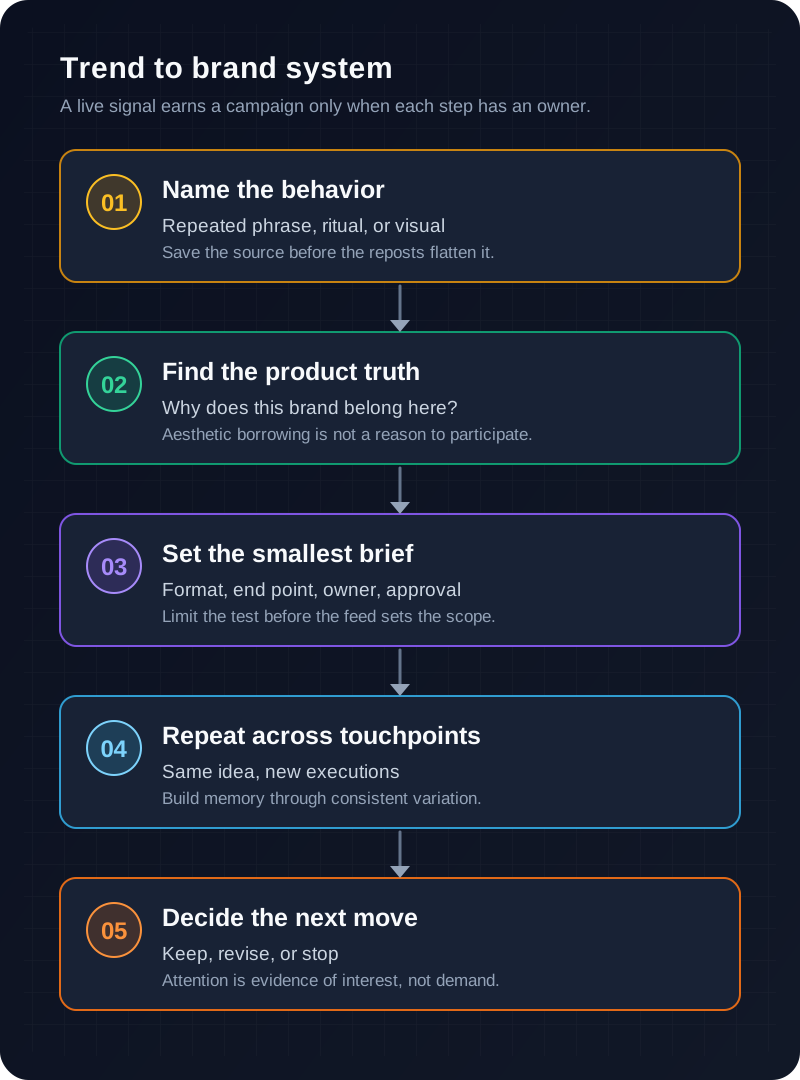
Where Picklecore stops being portable
KFC has advantages that most brands do not. It has a familiar product, a national operating system, menu-development capability, media resources, and enough recognition to make an exaggerated world legible quickly.
Those conditions matter. A smaller brand should not copy the green palette, the fashion parody, the menu breadth, or the media footprint and expect the same response. The portable part is the sequence underneath:
- Observe a real behavior.
- Find the credible brand connection.
- Make one offer or experience carry the idea.
- Repeat the world across the places that matter.
- End the test with a decision rule.
For regulated brands, add the compliance review before the idea reaches the audience. The creative still needs a real point of view, but the audience, placement, claims, imagery, and landing experience must survive the rules of the category and the channel. A trend is never a waiver.
The question is not whether your brand can look current. It is whether the trend helps the right audience understand something true about what you do.
FAQ
Picklecore marketing is KFC Australia's campaign approach of turning a pickle-focused limited-time menu into a named cultural world across product, fashion-styled creative, outdoor, social, and audio. The useful lesson is the system around the trend, not the ingredient itself.
Name the behavior underneath the trend, confirm the brand has a credible connection, choose the smallest offer that can carry the idea, set a finite test boundary, and define the next decision before launch. Then repeat the core idea across only the channels that serve a clear role.
No. Virality can show that an idea earned attention or participation in a particular context. It does not establish qualified demand, incremental sales, or repeatable performance. Keep attention, participation, business action, and operational results separate.
Use the smallest version that can answer one useful question. A small brand may need one strong service example, product experience, or customer behavior rather than a large campaign world. The brand connection matters more than the size of the response.
Measure the layer named in the brief: attention, participation, qualified action, demand, or operations. Assign each layer a source of truth, record what the metric can establish, and state what remains unknown. The result should lead to a keep, revise, or stop decision.