Most cannabis deal calendars get built backward. Someone starts with a discount idea, drops it onto every recognizable date, and hopes volume covers the mess.
That is how stores end up over-discounting on the wrong weekends, under-staffing on the real demand spikes, or pushing price-led messaging into channels that were never safe for cannabis in the first place.
The better calendar starts with customer intent. Some dates create category demand. Some create gift behavior. Some create stock-up behavior. Some only work because every competitor is shouting, which means the real win is cleaner planning and better timing.
BDSA's 2023 analysis of 4/20 framed April 20 as the industry's biggest sales holiday. Headset has also tracked Green Wednesday as a meaningful pre-Thanksgiving retail spike.
Dutchie's cannabis holiday guide groups April 20, July 10, and Green Wednesday as the core industry dates operators should plan around.
The list below is the practical version. Use it as a planning map, not a reason to discount everything.

The anchor days
These are the dates that deserve real campaign planning, not a last-minute email.
| Holiday | Timing | Why it matters | Best fit |
|---|---|---|---|
| 420 | April 20 | The main cannabis retail holiday, with category-wide awareness and heavy competitor activity | Storewide offers, bundles, loyalty previews, new product drops |
| 710 | July 10 | A concentrate-focused holiday because 710 reads as "oil" when flipped | Concentrates, vapes, accessories, education-led category pages |
| Green Wednesday | Wednesday before Thanksgiving | A stock-up moment before family travel, store closures, and long weekends | Loyalty offers, basket builders, pickup reminders |
| Black Friday weekend | Friday through Monday after Thanksgiving | Retail customers already expect offers, but cannabis needs tighter compliance and channel control | Existing customer offers, accessories, bundles, email and text-message campaigns |
April 20 is the one day most cannabis customers know without explanation. It should have the longest planning window. Treat it like a product launch with inventory forecasting, landing-page updates, local search checks, email segmentation, store labor planning, and a compliance review before any creative goes out.
July 10 is smaller, but sharper. It works best when the offer matches the date.
Concentrates, vaporizer products, oil-adjacent accessories, and educational content about formats usually make more sense than a generic storewide markdown. For operators building organic visibility, July 10 also gives you a reason to publish evergreen category pages that support dispensary search visibility after the holiday is over.
Green Wednesday is less about discovery and more about timing. Customers are preparing for a long weekend. That means reminders, pickup convenience, basket size, and loyalty segmentation matter more than loud creative. If your store has order-ahead, curbside, or pickup workflows, this is one of the best days to make those workflows obvious.
Black Friday weekend can work, but it is easy to overdo. Cannabis is not normal retail. You cannot copy a department-store playbook and push it everywhere. Use owned channels with age-verified audiences, keep the offer clean, and make sure the website can handle the traffic before sending everyone to the same page.
The second tier
The second tier can drive useful revenue, but these dates should not get the same budget as 420 or Green Wednesday. They are good for segmented offers, product education, customer appreciation, or local store traffic.
| Holiday | Timing | Good use | Watch-out |
|---|---|---|---|
| New Year's Eve and New Year's Day | December 31 and January 1 | Celebration prep, reset messaging, loyalty reactivation | Avoid wellness promises or health-adjacent claims |
| Valentine's Day | February 14 | Pairing accessories, chocolates where legal, premium flower, date-night bundles | Keep gifting language adult and compliant |
| Super Bowl weekend | February | Party planning and convenience messaging | Do not borrow team names, logos, or protected event marks |
| Presidents Day weekend | February | Long-weekend traffic and loyalty offers | Keep it modest unless past store data supports a bigger push |
| St. Patrick's Day | March 17 | A light seasonal theme for flower or accessories | Avoid novelty creative that feels juvenile |
| Memorial Day weekend | May | Summer kickoff, travel convenience, stock-up behavior | Respect the holiday and avoid cheap patriotic gimmicks |
| Father's Day | June | Accessories, premium flower, loyalty appreciation | Avoid implying cannabis is a universal gift |
| Independence Day | July 4 | Summer gatherings, pre-holiday pickup, accessories | Fireworks, alcohol, and cannabis messaging can get messy fast |
| National CBD Day | August 8 | Hemp, cannabidiol education, compliant wellness-adjacent content | Do not make therapeutic claims |
| Labor Day weekend | September | End-of-summer stock-up and loyalty activation | Watch inventory depth after summer demand |
| Croptober | October | Harvest storytelling, flower education, fresh drops | Do not overpromise quality or effects |
| Halloween | October 31 | Adult seasonal creative and accessories | Avoid cartoons, candy-forward creative, or anything attractive to minors |
| December holiday week | Late December | Existing customer appreciation, accessories, low-friction pickup | Gifting rules vary, so keep legal review close |
The pattern is simple. If the holiday naturally changes the customer's basket, plan around it. If the holiday only gives you a theme, keep the campaign smaller.
The mistake is treating every date like an excuse to cut price. That trains the customer to wait. Worse, it makes the calendar look desperate by October.
The overlooked part is operations
Holiday planning is not only a marketing problem. It touches the store floor.
A useful cannabis deal calendar should answer five operational questions before creative starts:
- 1What inventory can actually support the offer?
- 2Which products have margin room without training customers to expect permanent markdowns?
- 3Which audience segments should see the offer first?
- 4Which channels can legally and safely carry the message?
- 5What happens if pickup volume, phone calls, or online orders spike at the same time?
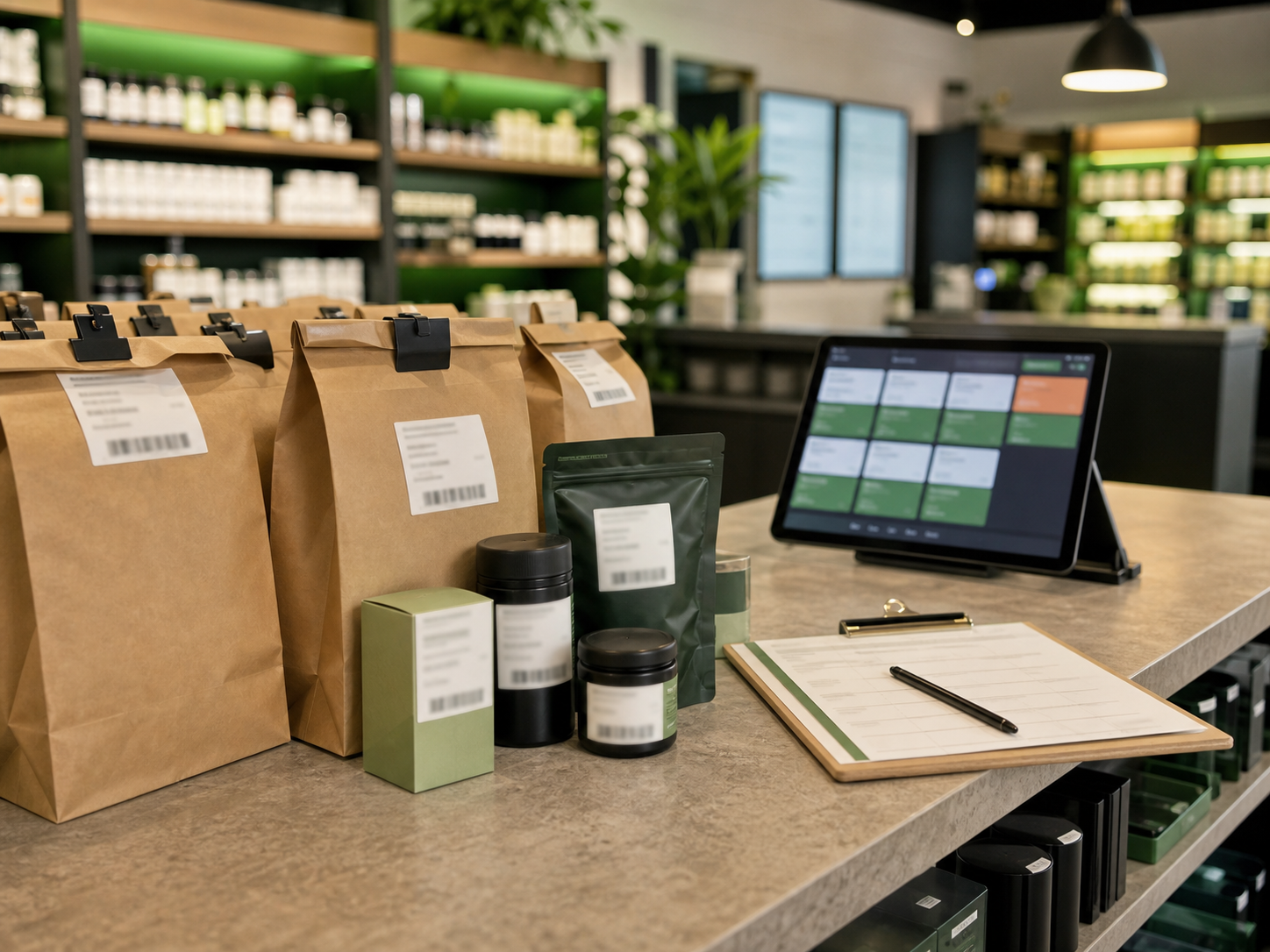
Holiday promotions become real at the pickup counter, where inventory, order timing, and staff capacity either hold together...
That last question matters. A strong Green Wednesday offer can become a bad customer experience if the order queue breaks. A good 420 landing page can still fail if store hours, menu embeds, and location pages are wrong.
This is where technical marketing work pays off. If your menu sits inside an iframe, search engines may not associate product content with your domain.
If your location pages are thin, Google has less reason to trust your store during "near me" spikes. Sparksbox has written separately about why cannabis marketing breaks when brands rely on workarounds instead of owned infrastructure.
For cannabis deal holidays, owned infrastructure means:
- A landing page that explains the offer without policy-triggering language
- Product or category pages Google can read
- Store hours and pickup instructions that are current
- Email and text-message lists built through real opt-in
- Loyalty segments based on actual purchase behavior
- A review and compliance workflow before anything goes live
The calendar is only useful if the system behind it can keep up.
How to build the calendar
Do this before January if you can. By the time April arrives, the best operators already know the offer structure, inventory targets, channel plan, and staffing model.
Start with four campaign tiers.
| Tier | Dates | Planning window | Goal |
|---|---|---|---|
| Tier 1 | 420, Green Wednesday, Black Friday weekend | 8 to 12 weeks | Major demand capture and customer retention |
| Tier 2 | 710, July 4, Labor Day, New Year's Eve | 4 to 8 weeks | Category focus, stock-up behavior, basket growth |
| Tier 3 | Valentine's Day, Memorial Day, Father's Day, Halloween, December holiday week | 2 to 4 weeks | Segmented offers and loyalty activation |
| Tier 4 | St. Patrick's Day, Presidents Day, Super Bowl weekend, National CBD Day, Croptober | 1 to 3 weeks | Light testing, content, store-level experiments |
Then give every date a job.
Do not write "holiday sale" 18 times in the campaign plan. That tells the team nothing.
Use labels like:
- Reactivate dormant loyalty members
- Move overstock without hurting premium positioning
- Grow concentrate category trial
- Promote order-ahead before a closed holiday
- Build local search traffic for a category page
- Increase basket size with compliant accessory bundles
That language gives media, creative, store ops, and compliance something concrete to work from.

Compliance decides the channel
Cannabis holiday marketing needs restraint. The calendar can be aggressive internally, but the public message still has to fit the rules of each state and platform.

The safest holiday campaigns start with channel planning and compliance review before the offer reaches customers.
California's Business and Professions Code section 26151 requires cannabis advertising and marketing in broadcast, cable, radio, print, and digital communications to appear only where at least 71.6% of the audience is reasonably expected to be 21 or older. That rule is central to California cannabis media planning and should shape holiday distribution.
The safest deal channels are usually owned channels with age-verified or opt-in audiences: your website, email, text messages, loyalty tools, and in-store signage.
For Nevada, operators should also keep a conservative creative bar. The Nevada Cannabis Compliance Board's advertising guidance calls for clear adult-use warnings, so avoid imagery or language that could appeal to minors, keep age restrictions clear, and review any campaign that uses seasonal themes, characters, candy, school-adjacent language, or youth-coded visuals.
Holiday copy should avoid:
- Health claims
- Therapeutic claims
- Youth-oriented imagery
- Cartoon mascots
- Candy-led creative
- Unclear age restrictions
- Price claims that cannot be honored at the store level
- Terms that sound like open solicitation outside an age-gated context
The offer can still be strong. The copy just has to sound like it was built for regulated retail, not copied from a snack brand.
The best deals are not always discounts
The strongest holiday campaigns do not always lead with the deepest price cut.
For 420, a discount may be expected, but you can still protect margin with bundles, early access, limited drops, loyalty multipliers, and basket thresholds. For 710, category education can move customers into higher-value products without turning the whole store into a markdown board.
For Green Wednesday, convenience can be the offer: faster pickup, clearer menus, loyalty reminders, and store-hour clarity.
Think in offer types:
| Offer type | Best holidays | Why it works |
|---|---|---|
| Storewide markdown | 420, Black Friday weekend | Matches customer expectations on the biggest deal days |
| Category bundle | 710, Croptober, National CBD Day | Focuses attention on one product family |
| Loyalty early access | 420, Green Wednesday, December holiday week | Rewards existing customers without shouting publicly |
| Basket threshold | Memorial Day, Labor Day, July 4 | Lifts average order value during stock-up windows |
| Convenience message | Green Wednesday, New Year's Eve | Helps customers plan around travel, hours, and wait times |
| Content-led campaign | 710, Croptober, National CBD Day | Builds search value after the date passes |
This is where cannabis can borrow from normal retail without copying it blindly. A store can create anticipation, segment customers, and build loyalty without turning every holiday into the same percentage-off blast.
The real question is not "What is the deal?"
It is "What behavior are we trying to create?"
What to measure after each holiday
Do not judge a cannabis holiday only by same-day sales. Same-day revenue matters, but it can hide margin erosion, staffing strain, and low-quality acquisition.
Track these signals after every major date:
- 1Revenue by channel
- 2Average order value
- 3Gross margin by promoted category
- 4New customer count
- 5Returning customer count
- 6Loyalty opt-ins
- 7Online order completion rate
- 8Pickup wait time
- 9Menu or landing-page traffic
- 10Unsubscribes and complaint rate
For organic marketing, also track whether your holiday content keeps working after the campaign. A 710 concentrate guide can keep ranking. A Green Wednesday pickup page can become a recurring seasonal asset. A 420 campaign recap can tell next year's team what actually happened.
That is how the calendar gets smarter. You stop debating opinions in March because the prior year's data already told you what deserved more budget.
Frequently asked questions
The biggest cannabis deal holidays are 420 on April 20, 710 on July 10, Green Wednesday before Thanksgiving, and Black Friday weekend. April 20 is the main industry holiday. Green Wednesday and Black Friday are stronger for stock-up behavior and existing customer offers.
Green Wednesday is the Wednesday before Thanksgiving. It has become a cannabis retail deal day because customers often shop before travel, family gatherings, store closures, and the long weekend. It works best with order-ahead reminders, loyalty offers, and clear pickup instructions.
710 is most closely tied to concentrates because 710 looks like "oil" when flipped. That does not mean every 710 campaign must ignore other categories, but the strongest campaigns usually anchor the message around concentrates, vaporizer products, accessories, or education about product formats.
Most cannabis retailers should not plan around Google or Meta ads for tetrahydrocannabinol product deals. Platform rules remain restrictive, and state advertising rules still apply. Owned channels like age-gated websites, email, text messages with proper opt-in, loyalty tools, and in-store signage are usually safer.
A dispensary should start 420 planning 8 to 12 weeks in advance. That gives the team time to forecast inventory, review margins, create landing pages, segment loyalty audiences, staff the store, and complete compliance review before the campaign goes live.
Cannabis holiday promotions must follow state advertising rules, age-gating requirements, platform restrictions, and product-claim rules. Avoid health claims, youth-oriented creative, unclear age restrictions, and language that sounds like open solicitation outside an age-gated context. California's 71.6% audience rule is a useful baseline for thinking about where deal messaging can safely appear.