Cannabis digital marketing has a bad habit: it treats every restriction like a puzzle to beat.
That creates short-term tactics and long-term fragility. A brand finds a paid social workaround, an influencer gray zone, a hemp loophole, a marketplace boost, or a keyword trick. It works until the platform changes enforcement, the state updates rules, the payment partner asks questions, or the account disappears.
The better strategy is less exciting and much stronger: build channels the operator can control.
That means search visibility, indexable product and location pages, compliant email and SMS, consistent marketplace profiles, review discipline, and claims review. The creative still matters. But distribution rights come first.

Cannabis growth has to be built around channels the operator can control and defend.
Paid media is not the center
Most consumer categories can start with paid search and paid social. Cannabis cannot.
Google Ads policies restrict recreational drugs and related products. Meta's policies have historically restricted cannabis promotion as well, with narrow CBD pathways that depend on certification and authorization rather than standard self-serve buying.
The California Department of Cannabis Control also creates state-level advertising obligations that normal retail teams do not face.
That does not mean cannabis brands have no marketing channels. It means the center of gravity is different.
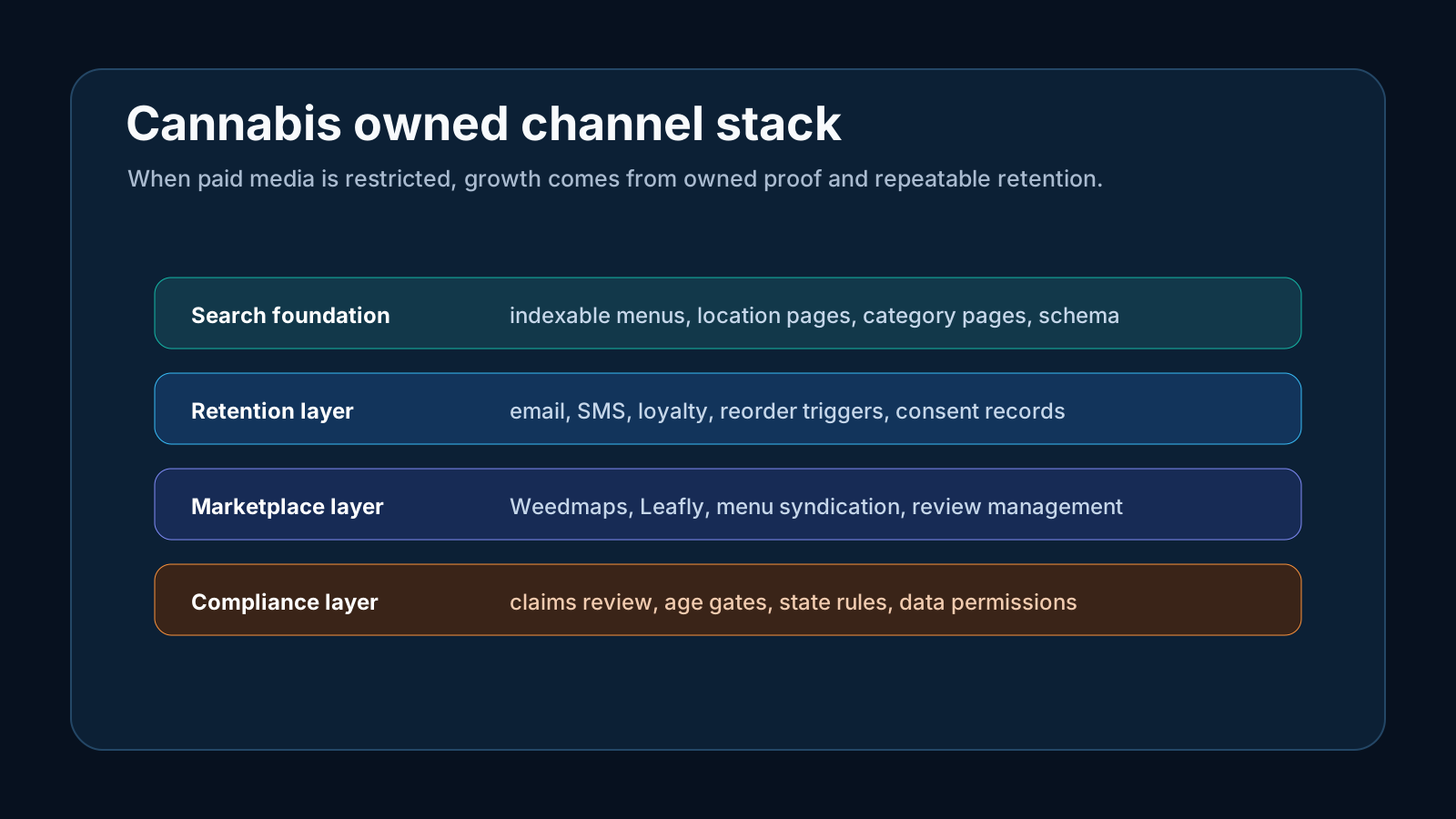
The durable stack is:
- Search and local visibility.
- Email and SMS with clear consent.
- Marketplace profile discipline.
- Retail partner content.
- Creator and PR activity that can be defended.
- Review and reputation management.
- Compliance review across claims, age gates, and distribution.
That is not a workaround. It is the operating system.
The iframe problem is still real
Many dispensary websites look useful to customers and thin to search engines. The reason is usually the embedded menu.
When menus are loaded through third-party iframes, the customer can browse products, but the dispensary's own domain may not receive the search value of those product names, categories, descriptions, and availability signals. Google has become better at rendering modern pages, but relying on an embedded menu as the only product surface is still a weak search strategy.

An embedded menu can work for ordering while still leaving the brand with thin indexable content.
The fix is not always a full custom menu. Some operators can start with category pages, location pages, product education, and server-rendered content around the commerce experience. Others should use API access to create indexable menu and category pages on their own domain.
The business point is simple: a dispensary should not rent its entire product discovery layer from an embed.
Marketplaces are rent, not equity
Weedmaps, Leafly, Dutchie, Jane, and other cannabis platforms matter. They can drive high-intent traffic, menu discovery, reviews, and order behavior. Ignoring them is a mistake.
Depending on them is also a mistake.
Marketplaces control the interface, ranking logic, sponsored placements, review presentation, category structure, and pricing. The operator gets access, but not control. If marketplace spend becomes the whole strategy, the brand is renting demand from another business.
A stronger model treats marketplaces as one layer:
| Channel | Job | Risk |
|---|---|---|
| Marketplace | Capture high-intent demand | Rent, algorithm changes, price pressure |
| Website | Build owned visibility and proof | Requires technical work |
| Email and SMS | Retain customers | Consent, age gate, compliance review |
| Reviews | Build local trust | Must be earned, not incentivized |
| PR and creators | Expand mentions | Claim and audience-composition risk |
This is where cannabis AI search discovery becomes relevant. The brand needs citable source material across owned and third-party surfaces, not only a marketplace listing.
Compliance is a channel constraint
Cannabis marketing compliance is not a legal footnote. It determines where a message can travel.
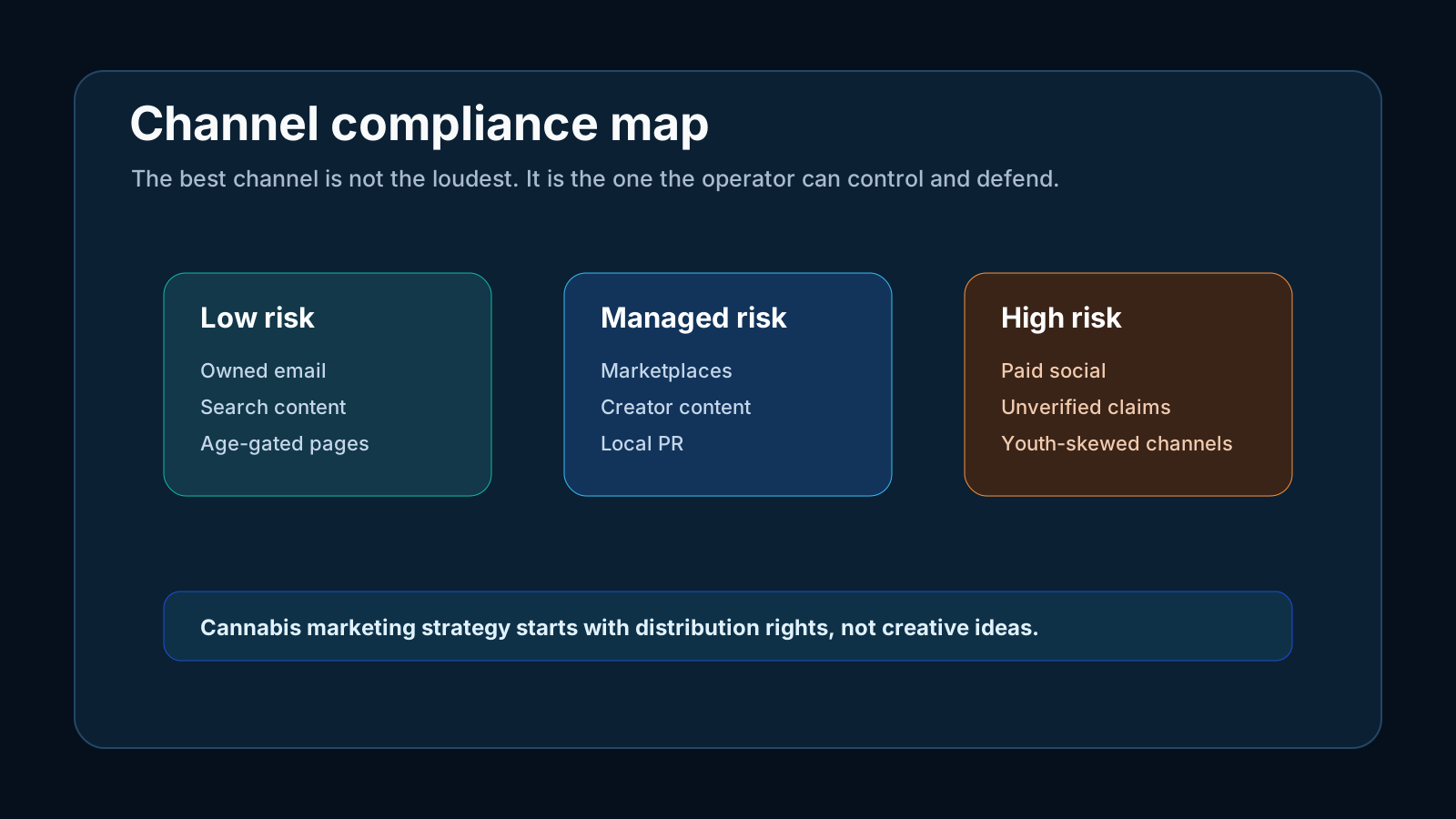
A compliant message on an age-gated website may become risky when copied to a youth-skewed social platform. A product education page may be safe if it avoids health claims, but a creator post can add claims the brand did not approve.
A loyalty email may be allowed with proper consent and age verification, while the same deal language could be a problem in public social distribution depending on state rules.
The channel changes the risk.
Teams should review:
- Audience age composition.
- Claims and substantiation.
- Promotions and discount rules.
- State-specific advertising restrictions.
- Data consent and retention.
- Creator instructions and approval rights.
The FTC's guidance on health-related and AI claims is not cannabis-specific, but the lesson is relevant: if a brand makes a claim, it needs support. Cannabis teams should be even more careful.
Retention is the quiet growth engine
Cannabis brands often over-focus on acquisition because paid channels feel scarce. The better opportunity may be retention.

A cannabis marketing budget should fund channels that compound: search, retention, profile discipline, and compliance.
Email and SMS can do work that paid ads cannot:
- Welcome new customers.
- Explain store policies.
- Announce restocks.
- Promote compliant loyalty offers.
- Recover lapsed customers.
- Educate customers without unsupported claims.
- Route customers back to owned pages.
The catch is permission. Consent records, age-gated opt-ins, unsubscribe handling, message review, and state-specific promotional rules are not optional. A list that cannot be defended is not an asset.
This is the same point behind customer retention strategy: repeat behavior has to be earned through useful moments, not blast frequency.
Creators need guardrails
Creators can help cannabis brands because audiences trust people more than polished brand accounts. They can also create compliance risk quickly. A creator may add a claim, imply an effect, mention a deal in the wrong channel, use youthful creative cues, or skip a required disclosure.
That does not mean brands should avoid creators. It means the program needs rules before product or payment moves. Briefs should define approved language, prohibited claims, disclosure requirements, age-gated distribution limits, review rights, and what happens if content goes off-policy.
The best creator programs feel human while still having adult supervision. Cannabis brands need both.
What cannabis brands should measure
Cannabis marketing measurement gets distorted by platform limits. If the team only measures what ad platforms can see, it will undercount organic, direct, referral, email, marketplace, and word-of-mouth movement.
Measure the channel system:
| Metric | Why it matters |
|---|---|
| Local pack impressions and actions | Shows nearby demand and profile health |
| Non-branded organic clicks | Shows search visibility beyond loyal customers |
| Email and SMS repeat revenue | Shows retention quality |
| Marketplace conversion | Shows rented-demand efficiency |
| Review velocity and response rate | Shows trust and local prominence |
| Compliance review issues | Shows whether growth is creating risk |
The goal is not perfect attribution. The goal is enough proof to allocate budget without pretending cannabis behaves like normal retail.
The practical budget split
For a cannabis brand or dispensary with limited budget, start here:
- 1Fix owned search foundations first.
- 2Build compliant email and SMS.
- 3Maintain marketplace profiles and reviews.
- 4Add creator, PR, and social content only where review rules are clear.
- 5Keep legal and compliance review close to campaign planning.
The brands that win will not be the cleverest at dodging platform filters. They will be the best at building demand they own.
That also makes the work easier to defend internally. When leadership asks why the team is investing in search, retention, reviews, and compliance review instead of chasing another paid social workaround, the answer is simple: those assets compound. A banned account does not. A deleted post does not. A marketplace placement that disappears when the spend stops does not.
That is slower than a loophole.
It also survives longer.
FAQ
Google Ads restricts cannabis and related recreational drug promotion, so THC-focused brands should not build their growth plan around standard search ads.
Many dispensary menus load through embedded third-party iframes. Customers can browse them, but the dispensary's own site may not get enough indexable product and category content.
No. They can drive high-intent traffic, but they are rented channels. A durable strategy also needs owned search, retention, reviews, and source pages.
Email and SMS can work well when opt-in, age verification, consent records, unsubscribe rules, and state-specific promotional review are handled correctly.
Avoid health claims, youth-skewed distribution, platform workarounds that cannot be defended, unsupported creator claims, and sales tactics that depend on one rented channel.