Dispensary SEO is not a blog calendar.
It is the work of getting a store found in the Google local pack and making product or category intent visible on the dispensary's own domain. For most operators, those two jobs matter more than publishing another generic strain article.
The local pack captures nearby intent. Product and category pages capture what the embedded menu often hides. Reviews, citations, license consistency, age gates, and compliance language make the whole system defensible.
That is the operator-side version. Less theory, more store reality.

For dispensaries, the local pack often matters before traditional organic blue links.
What dispensary SEO actually is
Dispensary SEO has two layers.
The first layer is local SEO: Google Business Profile, maps, reviews, proximity, categories, photos, hours, citations, and the signals that help the store appear when someone nearby searches. Google's own documentation says local ranking is based on relevance, distance, and prominence.
For dispensaries, prominence is where operators have the most room to work.
The second layer is website SEO: indexable location pages, category pages, product education, FAQ content, internal links, schema, and technical structure. This is where many dispensaries are thin because the commerce experience sits inside a third-party embed.
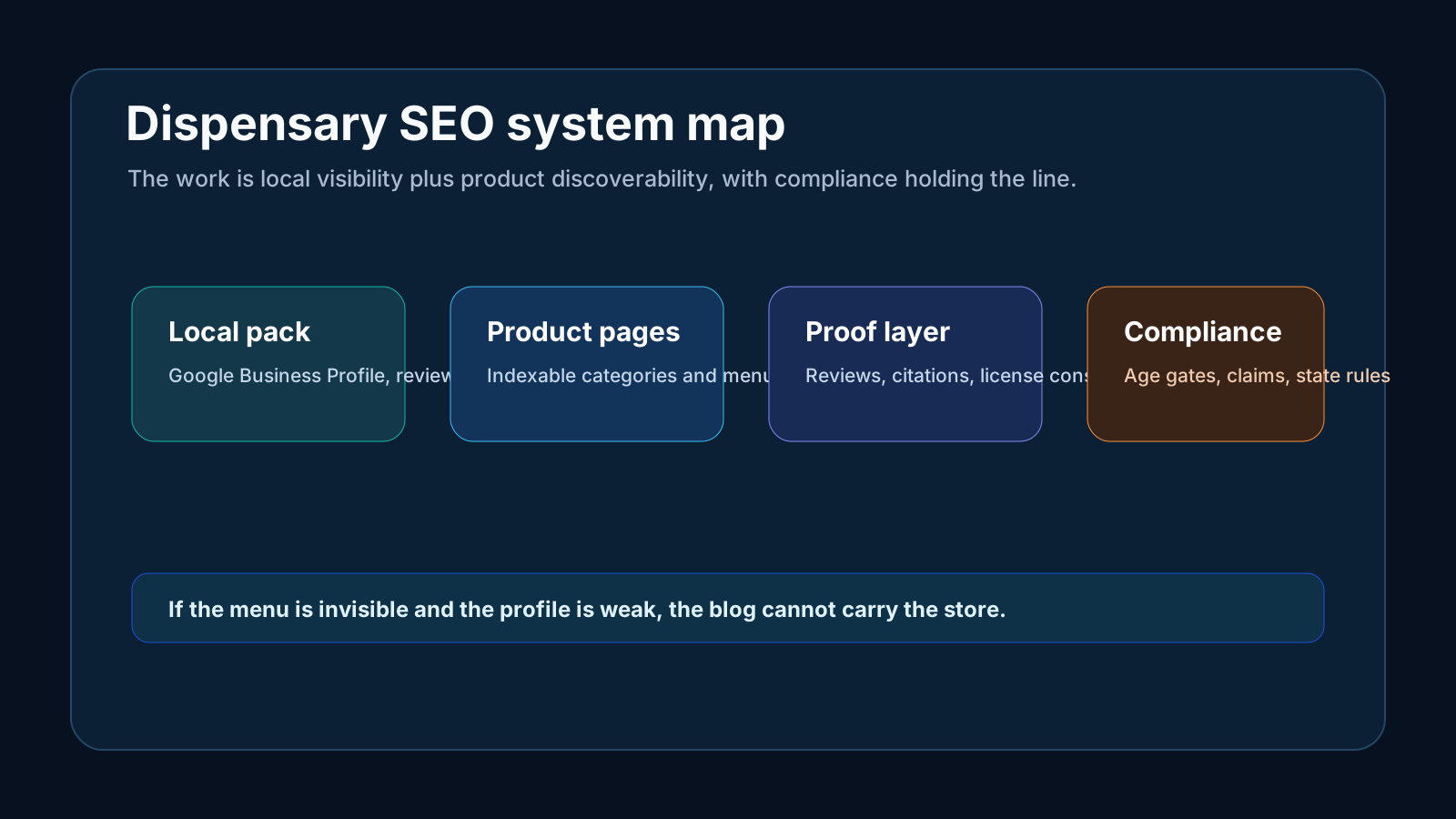
The store needs both. A strong profile with a weak site leaves product intent on the table. A strong site with a weak local profile misses nearby shoppers.
Paid media limits make SEO necessary
Cannabis operators cannot rely on the same paid acquisition playbook as normal retailers. Google Ads policy restricts cannabis promotion, and social platforms create their own review and enforcement risks. State rules add another layer.
That does not make SEO optional. It makes SEO infrastructure.
Organic search, local visibility, reviews, direct traffic, email, SMS, and marketplace profiles become the channel mix. Paid media may exist through cannabis-specific networks or carefully reviewed ancillary campaigns, but it should not be the whole growth plan.
This is why cannabis digital marketing has to start with owned channels. A dispensary that cannot advertise its way out of a demand problem needs to be findable when shoppers are already looking.
The local pack is the first battlefield
When someone searches for a dispensary nearby, Google often shows map results before traditional organic results. That is the battlefield.
A dispensary's Google Business Profile should be boringly complete:
- Correct primary category.
- Real storefront photos.
- Accurate hours, including holiday changes.
- Clear address and phone number.
- Consistent name, address, and phone across directories.
- Review responses.
- Links to the correct location page.
- No category games that risk suspension.

Review consistency and response quality can move local trust more than another generic blog post.
Reviews matter, but not in the cheap way people talk about them. The goal is not a suspicious burst of five-star reviews. It is steady review velocity from real customers, thoughtful responses, and evidence that the store is active.
Never incentivize reviews. Google's review policies prohibit review gating and manipulation. Ask naturally, make the link easy to find, and respond like an operator who is paying attention.
Product pages are the second battlefield
The menu is where customer intent lives. It is also where many dispensary websites lose search value.
If the menu is only an iframe, the website may not have enough indexable content around products, categories, brands, formats, or local availability. The customer can shop, but search engines may not see enough of the catalog as part of the store's domain.
The best fix is a native or server-rendered menu integration. The practical fix is often a hybrid:
| Approach | SEO value | Operational load |
|---|---|---|
| API-fed native product pages | High | High |
| Category pages with menu support | High | Medium |
| Location pages with product modules | Medium | Medium |
| Iframe only | Low | Low |
| Blog-only strategy | Low for store intent | Medium |
The goal is not to publish thousands of thin product pages. The goal is to create useful category and product surfaces that match how people search: flower, pre-rolls, edibles, vapes, concentrates, beverages, brands, store locations, and pickup options.
Schema helps only after the page helps
Structured data is useful, but it is not a magic layer. A weak page with schema is still weak. A strong page with schema is easier for search engines and answer engines to understand.
For dispensaries, the useful schema usually starts with LocalBusiness or a more specific local business pattern, Organization, FAQPage, BreadcrumbList, and Article on education posts. Product markup can help when product pages are genuinely indexable and compliant, but operators should not use markup to make claims the page itself cannot defend.
The rule is simple: write the page for the shopper first, then mark up the truth clearly.
Local content should sound local
Many dispensary local pages are fake local. They swap city names, add a map embed, and call it done.
A good local page answers actual shopper questions:
- Where is the store?
- What parking or pickup details matter?
- Which neighborhoods does it serve?
- What are the age and ID requirements?
- How does online ordering work?
- What products or categories are usually available?
- What should first-time visitors expect?
That is useful to humans and easier for search engines to understand.
Internal links should also connect the cluster: the cannabis marketing hub, dispensary marketing services, and relevant blog posts should reinforce each other instead of floating as isolated pages.
Page types that earn their keep
Not every page deserves to exist. Dispensary SEO gets stronger when the site focuses on pages close to store intent.
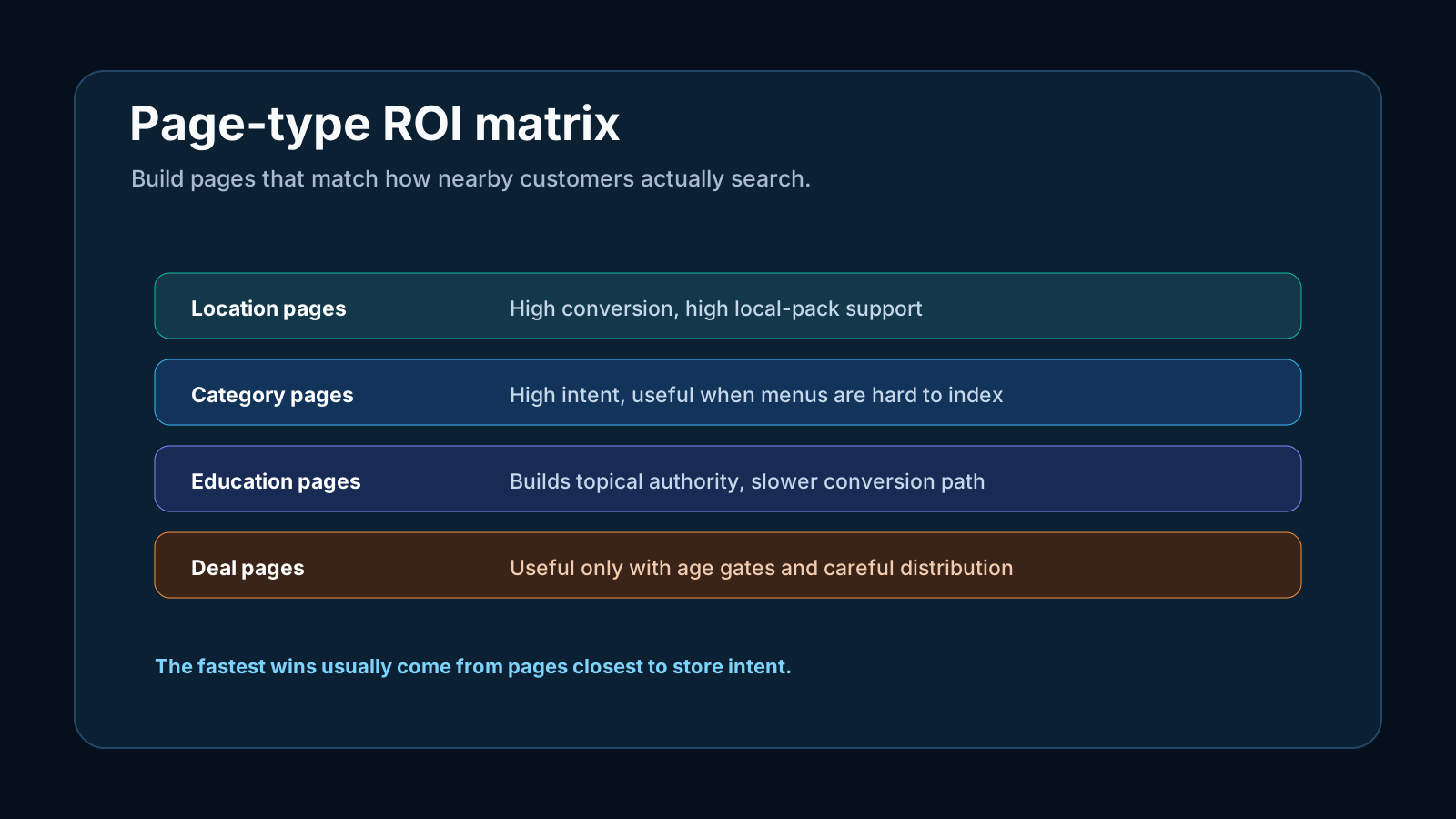
| Page type | Why it matters |
|---|---|
| Location pages | Local-pack support and conversion |
| Category pages | Product-intent discovery |
| Product education | Helps customers understand formats without claims |
| Policy pages | Builds trust around pickup, delivery, ID, returns |
| FAQ pages | Captures common operational questions |
What usually does not work: thin lifestyle posts, generic "best strains" lists, copied manufacturer descriptions, and city pages that are 90 percent duplicated.
Compliance is part of SEO
Cannabis content can rank and still create risk. SEO teams need to know the boundaries.
The California Department of Cannabis Control provides the baseline for California operators, while Nevada rules create their own advertising constraints. The practical rule is simple: avoid health claims, avoid youth-oriented creative, keep age gates and disclaimers clear, and review promotional language before distribution.
A search page can become advertising when it is promoted in a channel. A product education page can become risky if it implies therapeutic effects. A deal page can be fine in email and risky on public social depending on the state and audience.
SEO is not separate from compliance. It is public evidence.
What to measure
Track the metrics that map to store behavior:
- 1Google Business Profile impressions.
- 2Calls, direction requests, and website clicks from the profile.
- 3Local pack position by location.
- 4Non-branded organic traffic to location and category pages.
- 5Review velocity and response rate.
- 6Menu and order conversion from organic sessions.
- 7Indexed pages that actually receive impressions.
Do not over-focus on domain rating, raw keyword count, or blog traffic that does not move store behavior. A thousand informational visits are less useful than fifty nearby shoppers ready to choose a store.
The quiet advantage
Dispensary SEO works because many operators still treat it as a checklist. The stores that build real local pages, make product intent indexable, earn steady reviews, and keep compliance close have a compounding advantage.
Paid channels may open more over time. Maybe they do.
The operators with owned search equity will still be in a better position.
FAQ
Local profile improvements can show movement in weeks, but meaningful organic growth usually takes a few months. Product and category pages need time to index, earn impressions, and prove usefulness.
Yes. Dispensaries can rank through Google Business Profile, local pages, reviews, citations, category pages, technical SEO, and useful education content.
An iframe menu lets customers browse products but can leave the dispensary's own domain with thin indexable content. A native or hybrid menu strategy gives search engines more useful product and category information.
The biggest mistake is treating SEO as blog publishing while the local profile, menu indexation, reviews, and location pages are weak.
Yes, but only after the store has handled local and product-intent pages. Blog content should answer real customer questions and avoid unsupported product claims.