The date is not the strategy
The first version of this post treated Colorado's AI law as a June 30, 2026 scramble. That framing is no longer good enough. Colorado's SB24-205 created the high-risk AI governance framework, and SB26-189 changed the implementation path.
The better takeaway for cannabis operators is not "panic by June." It is "use 2026 to become auditable before AI governance becomes a partner, insurer, platform, or regulator request.
Cannabis brands should care even if they do not operate in Colorado. State AI laws tend to travel. Vendor questionnaires travel faster. If an AI chatbot, recommendation engine, compliance bot, hiring screen, surveillance tool, or pricing model touches regulated operations, someone will eventually ask how it works.
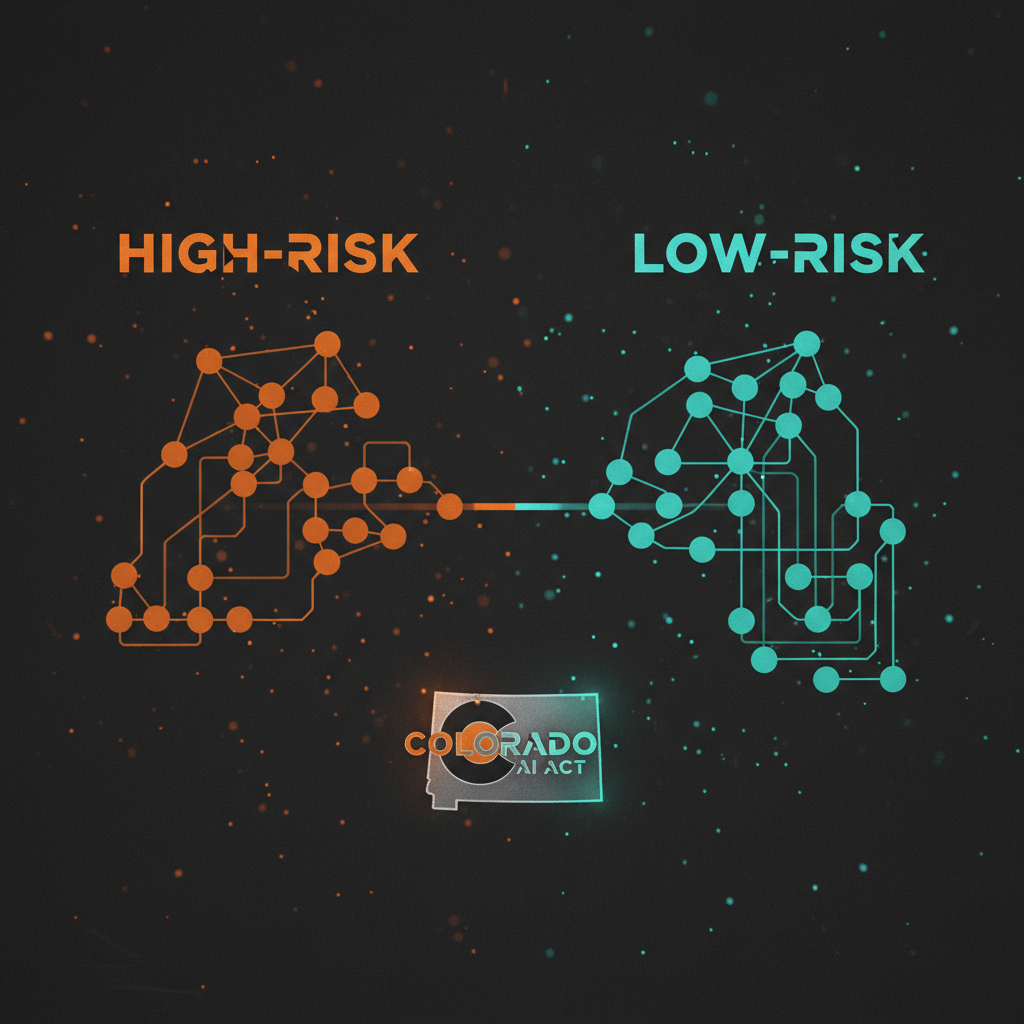
The practical deadline is when someone asks for your AI inventory and vendor evidence.
*The practical deadline is when someone asks for your AI inventory and vendor evidence.*
What counts as AI governance in cannabis
Governance is not a policy PDF. It is a working file that explains the systems in use and the controls around them.
For cannabis, that means the AI inventory should include customer-facing chatbots, budtender assistants, personalization engines, compliance-review tools, video analytics, demand forecasting, fraud screening, recruiting tools, and any vendor model that influences a regulated decision.
| System type | Why it matters | First document to create |
|---|---|---|
| AI budtender or chatbot | Influences product discovery and customer answers | Approved knowledge sources and escalation rules |
| Personalization engine | Uses behavior data to rank products or offers | Data map and recommendation receipt |
| Compliance automation | Flags claims, transactions, or reporting issues | Human override and appeal workflow |
| Video intelligence | Turns surveillance footage into event decisions | Retention, access, and error-review policy |
| Forecasting or pricing | Shapes inventory and margin decisions | Input list and exception log |
The goal is not to call every system high risk. The goal is to stop guessing. Once the inventory exists, risk classification becomes a management exercise instead of a debate during a crisis.
The five-file governance kit
A practical cannabis AI governance kit has five files. The system inventory names every AI tool and owner. The data map explains what the system sees.
The vendor file stores contracts, data-use limits, retention terms, security terms, and export rights. The impact review explains the decision the tool influences and who can be harmed. The monitoring log records changes, incidents, overrides, and complaints.
This kit aligns with the spirit of the NIST AI Risk Management Framework: govern, map, measure, and manage. It also gives compliance, legal, marketing, retail, and IT a shared language. Without that shared language, AI governance becomes a Slack thread every time a new vendor shows up.

Governance starts with system ownership, data mapping, and escalation paths.
*Governance starts with system ownership, data mapping, and escalation paths.*
What to classify first
The first classification pass should be practical, not legalistic. Start with three labels: customer-facing, employee-facing, and back-office. Then add the decision type: answer, recommendation, score, forecast, summary, detection, or generated creative. That gives the team a map before anyone argues over whether a system is "high risk" under a statute.
For cannabis, customer-facing systems deserve the first pass because they can shape product discovery, age-gated communication, loyalty targeting, and claim exposure. Employee-facing systems come next because hiring screens, productivity scoring, and surveillance summaries can create fairness or labor issues even when the tool never touches a shopper.
Back-office systems still matter because inventory forecasts, pricing suggestions, freight alerts, and fraud scores can change regulated operations without looking like public marketing.
This classification also keeps the vendor conversation honest. A vendor may sell a tool as "analytics" while the output is used to approve a shopper message, deny a return, flag an employee, or route security footage. Governance starts when the business names the real use, not the sales category.
Why cannabis operators should move before enforcement
Cannabis already operates under fragmented state rules, strict licensing, sensitive customer data, and platform distrust. AI adds a second layer of uncertainty. If the operator cannot explain the system, the default assumption from a regulator or partner will not be generous.
The near-term trigger may not be a state enforcement action. It may be a payment partner asking about AI fraud screening. It may be an insurer asking about surveillance analytics. It may be a retail partner asking whether personalization uses protected characteristics. It may be an enterprise vendor demanding data-processing terms before integration.
That is why AI Compliance Is Becoming Cannabis Retail's Moat and Cannabis personalization control design belong in the same operating conversation. Governance is the connective tissue.
Vendor governance is the part most teams skip
The hardest AI governance questions often sit outside the model. A vendor may host the chatbot, another vendor may score fraud, another may summarize video, and another may generate campaign copy. Each tool can look small on its own. Together, they form a shadow operating layer that touches customers, employees, inventory, and compliance evidence.
That is why every AI vendor file should answer six questions. What data does the system receive? Can the vendor train on it? How long are prompts, outputs, transcripts, videos, or event logs retained? Can the operator export records without a services ticket? Who can change the model or knowledge source? What happens when the system is wrong?
Those questions are not procurement theater. They decide whether the brand can reconstruct a decision later. If a shopper complains, a regulator asks for a record, or an insurer questions an incident, the operator needs more than a vendor dashboard.
It needs portable evidence. This is the same vendor-control problem described in AI vendor lock-in and compliance risk, but cannabis raises the stakes because the underlying business is already licensed and state-specific.
A clean vendor file will not make every AI system low risk. It will make the risk legible. That is the first step toward managing it.
What to do this quarter
Create the inventory first. Interview marketing, ecommerce, retail operations, HR, security, compliance, and finance. Ask what tools generate answers, classify people, rank products, score risk, summarize footage, write copy, or make recommendations. Then tag each system by owner, vendor, data source, decision type, human review path, and export capability.
After that, pick the three highest-risk systems and build impact reviews. Do not try to perfect the whole program on day one. Build a repeatable file format, test it on real systems, and make it normal.
The brands that wait for a final enforcement calendar will spend 2027 reconstructing decisions they made in 2026. That is the wrong kind of archaeology.
FAQ
Colorado's AI framework has changed through SB24-205 and SB26-189, with key obligations now oriented around the updated implementation path. For cannabis operators, the important point is to use 2026 to build inventories, vendor files, and impact-review workflows.
The law itself is Colorado-specific, but its governance pattern will influence vendor questionnaires, insurance reviews, partner requirements, and future state laws. Multi-state operators should treat it as an early template.
Create a system inventory. You cannot classify risk, test bias, write policies, or negotiate vendor terms until you know which AI systems are in use.
2026 evidence and control update
The relevant move for cannabis operators is to treat Colorado SB24-205 and SB26-189 as an early governance pattern, not just a Colorado calendar item. The NIST AI Risk Management Framework gives the operating structure, while California DCC regulations remind cannabis teams that state-specific records already matter.
Start with the inventory because every later impact review depends on knowing which systems exist.
| Control area | Why it matters now | What to document |
|---|---|---|
| Data source | AI quality depends on the inputs behind the answer | Vendor feed, POS field, menu source, or policy document |
| Rule layer | Cannabis rules still vary by market and channel | State rule, platform policy, age gate, claim restriction |
| Human review | Edge cases should not be decided only by automation | Reviewer, escalation threshold, approval or rejection note |
| Evidence trail | Future audits need more than screenshots | Timestamp, prompt/output pair, creative version, final URL |

