Personalization is not free.
Every tailored recommendation, segmented email, loyalty trigger, retargeting audience, and AI-generated offer depends on data. In a normal category, that data is treated like fuel. In a regulated category, it can also become evidence, breach exposure, and consent debt.
The personalization liability is not that AI makes messages more relevant. The liability is that brands often collect more than they can explain.
More data is not always smarter
Marketing teams are trained to want more customer data. More purchase history. More preferences. More location signals. More browsing behavior. More audience segments.
AI makes that appetite stronger because models can use more signals to generate more tailored messages. The problem is that regulated brands have to defend the collection, use, retention, and sharing of those signals.
The California Privacy Protection Agency's CCPA resources are a reminder that personal information governance is not a marketing nice-to-have. Sensitive data, consumer rights, notice, retention, and data use limits are operational issues.
For cannabis, the stakes are sharper. Purchase behavior can reveal location, age, product interest, loyalty membership, payment pattern, and health-adjacent intent. A brand should not treat that like ordinary clickstream data.

Personalization data becomes risk when the business cannot explain why it was collected.
Personalization creates records
AI personalization leaves a trail.
It can show which customer received which message, what data influenced the recommendation, which segment the customer entered, what offer was shown, and how the customer responded. That trail can help marketing. It can also become discoverable in a dispute, breach review, regulator inquiry, or vendor audit.
This does not mean regulated brands should avoid personalization. It means they need a minimization model.
| Personalization choice | Lower-risk version | Higher-risk version |
|---|---|---|
| Product recommendation | Based on current context or inventory | Based on named purchase history |
| Email targeting | Broad preference category | Detailed consumption profile |
| Loyalty trigger | Aggregate behavior | Individual health-adjacent inference |
| Website content | Anonymous session context | Cross-device identity graph |
| AI prompt data | Sanitized audience pattern | Raw customer record |
The FTC has pushed businesses to limit unnecessary collection and use of sensitive data in health-adjacent contexts, including through health privacy enforcement and guidance around sensitive health information. Regulated marketers should apply the same discipline before AI personalization expands the data footprint.
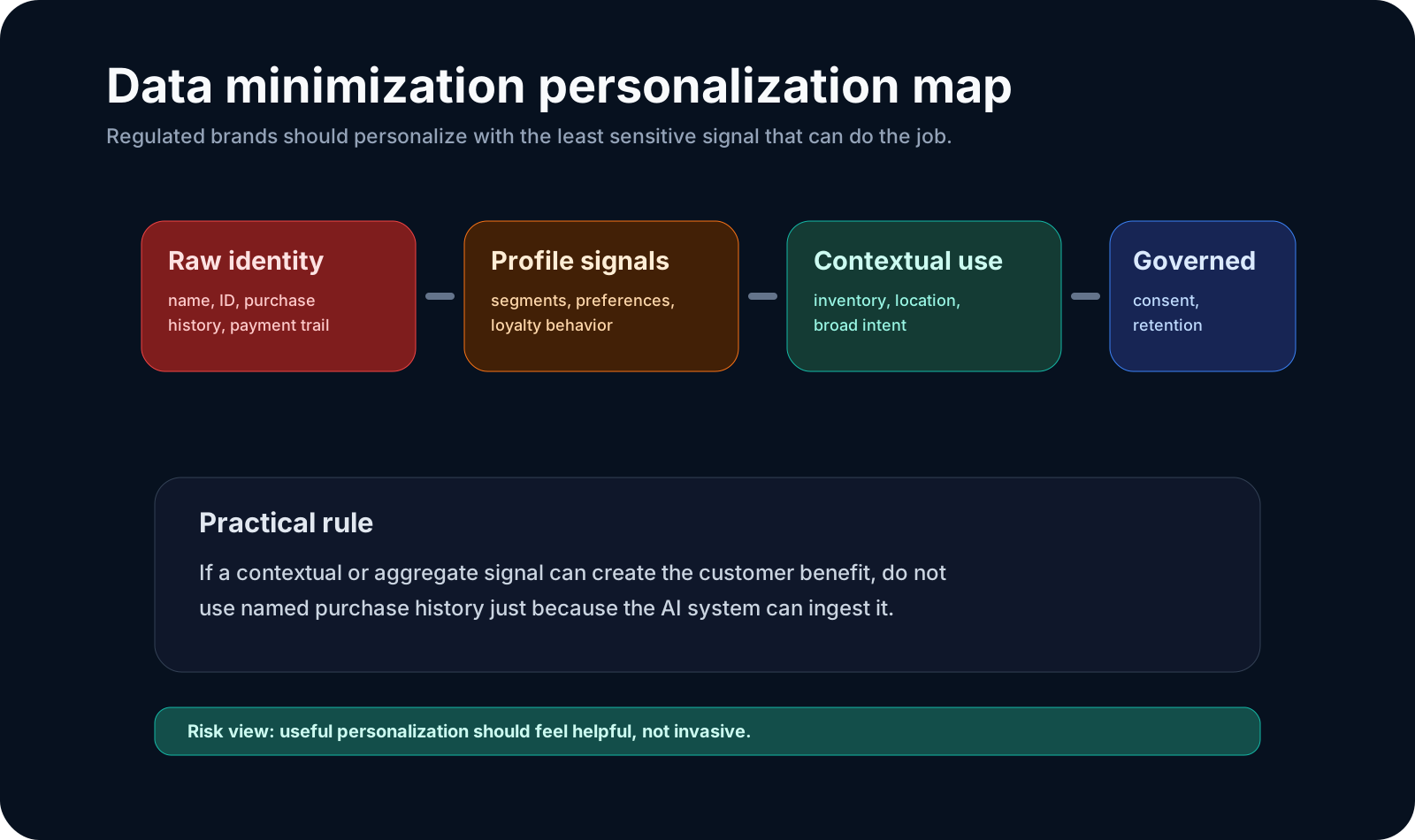
Helpful is safer than intimate
There is a difference between useful personalization and intimate personalization.
Useful personalization helps the customer make a decision. It can show nearby locations, relevant education, broad product categories, store policies, inventory context, or a reminder the customer clearly asked to receive. Intimate personalization signals that the brand remembers too much, infers too much, or uses sensitive behavior in a way the customer did not expect.
Regulated brands should optimize for helpful, not creepy.
That standard is practical. A cannabis retailer can recommend educational content based on the page a visitor is reading without storing a named consumption profile. A healthcare-adjacent brand can segment by stated interest without inferring a condition. A legal services firm can route visitors by topic without building unnecessary behavioral dossiers.
The question to ask before launch is blunt: would the customer be surprised if we explained exactly why they received this message? If the answer is yes, the personalization is not ready.
The consent problem
Consent is not a checkbox buried under a form.
For personalization, consent has to match the use. A customer may agree to receive emails. That does not automatically mean the brand should use every purchase, browsing, and loyalty signal to generate individualized recommendations. A customer may join a loyalty program. That does not mean the brand should infer sensitive preferences forever.
This is where AI creates a new problem. The personalization logic may be harder to explain than the original sign-up flow. If staff cannot describe what data is used and why, the brand is not ready to scale the program.
The cleanest consent language is specific without being overwhelming. It tells the customer what channel the brand will use, what kind of information may shape the message, how the customer can opt out, and what the brand will not do.
The last part matters. "We do not sell your purchase history" or "we do not use sensitive information for unrelated advertising" can be more trust-building than another generic privacy-policy link.
Consent also needs maintenance. A customer preference from two years ago may not justify a new AI-driven journey today. Regulated brands should treat consent like an active operating record, not a one-time capture event.
Cannabis needs a smaller data posture
Cannabis brands often want the same personalization stack as mainstream retail: loyalty profiles, abandoned cart journeys, recommendation engines, segmented offers, predictive replenishment, and lifetime value scoring.
The category is different.
State rules, advertising restrictions, age gating, platform limitations, payment constraints, and social stigma make customer data more sensitive. A cannabis brand should ask whether a piece of data is necessary before asking whether it is useful.
For cannabis CRM and compliance strategy, the smarter posture is often contextual personalization: use store, inventory, content interest, broad preference, and consented channel behavior without building unnecessary named consumption profiles.
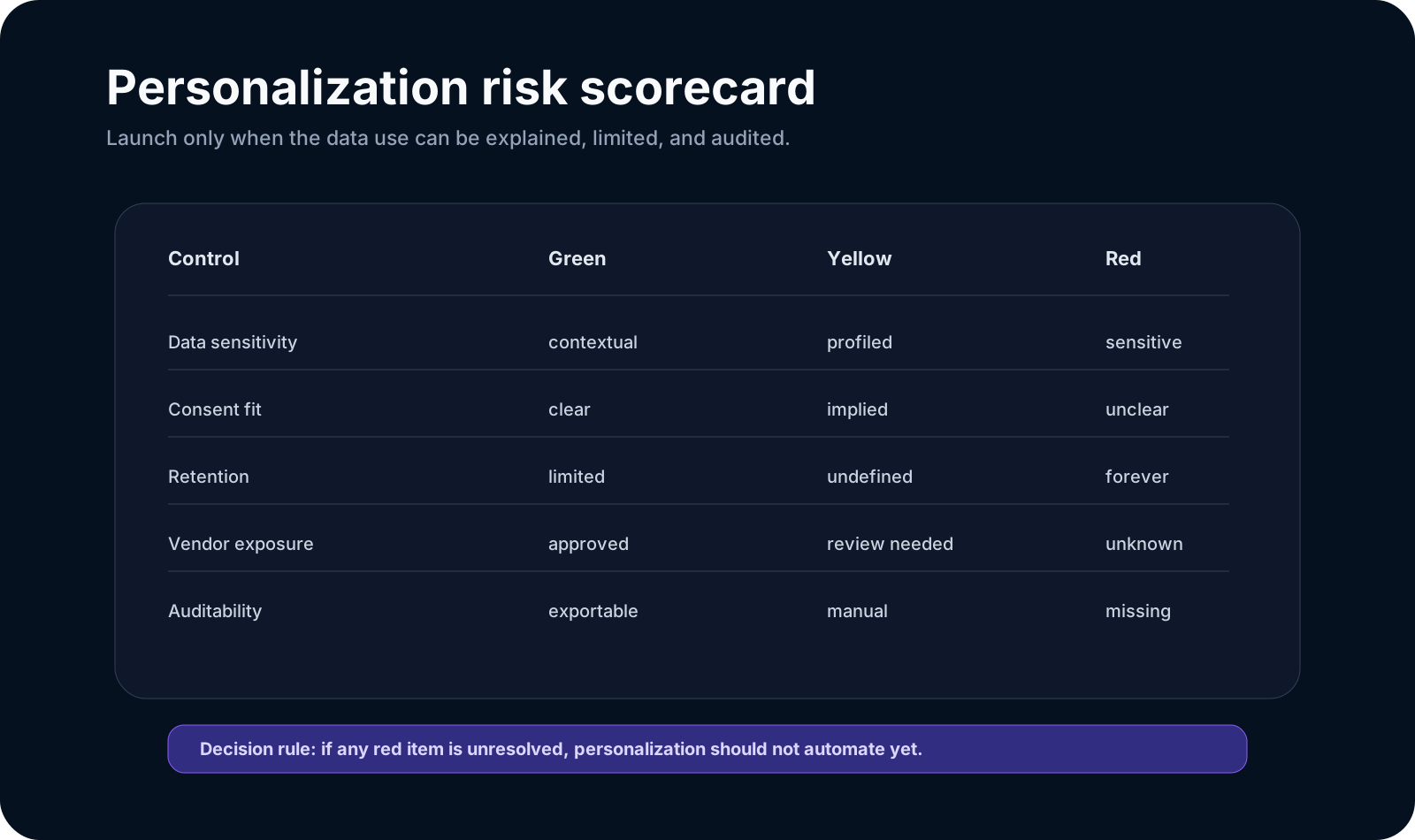
Vendor risk is part of the liability
Many personalization programs depend on vendors: customer data platforms, email platforms, loyalty tools, recommendation engines, analytics tools, and AI writing systems.
That expands the risk surface.
The brand needs to know what data enters each tool, whether the vendor can use it for model training, where the data is stored, how long it is retained, how deletion works, and whether regulated or sensitive data is allowed under the vendor terms.
If the answer is unclear, do not send raw customer records into the system.
This is where AI workflow policy matters. A marketer pasting customer segments into a generative tool can create privacy exposure without intending to. The fix is not fear. It is a rule: no raw sensitive customer data in AI prompts unless the vendor, contract, security posture, and business purpose have been approved.

Personalization risk grows when customer data moves through too many systems without a clear owner.
Vendor reviews should not be one-time procurement checks. Personalization programs change over time. A vendor may add new AI features, new sub-processors, new retention defaults, or new data-sharing language. The brand needs a review cadence that catches those changes before customer data starts flowing through a different system than the one legal approved.
This is also why marketing should keep a data map. A simple map showing where customer data enters, where it is enriched, where it is exported, and where it is deleted can prevent months of confusion later. If nobody can draw the map, the personalization program is already too loose.
A safer personalization model
Personalization should start with restraint.
Use aggregate insights before individual profiles. Use contextual recommendations before behavioral surveillance. Use shorter retention windows. Separate identity from preference where possible. Keep sensitive signals out of creative prompts. Review outputs for claims and targeting risk.
The operating model can be simple:
- 1Define the customer benefit.
- 2Name the minimum data needed.
- 3Confirm consent and notice.
- 4Limit retention.
- 5Review vendor terms.
- 6Test with a small audience.
- 7Audit the output and delete what is no longer needed.
That is less flashy than "AI-powered one-to-one personalization."
It is also more mature.
For regulated brands, personalization is strongest when it feels helpful without making the customer wonder how much the brand knows.
FAQ
Not always. The risk depends on the data used, the consent story, vendor handling, retention, and whether the message creates compliance or privacy concerns.
Data minimization means collecting, using, and retaining only the data needed for a defined purpose. It is especially important when data is sensitive or regulated.
Avoid raw customer identity data, sensitive purchase history, health-adjacent preferences, payment details, and unapproved loyalty records unless legal, security, vendor, and business-purpose reviews allow it.
Yes. Brands can use contextual signals, aggregate behavior, inventory, location, broad preferences, and consented channel behavior without building detailed individual consumption profiles.
Audit data inputs, consent language, vendor terms, retention rules, model prompts, output claims, targeting logic, and deletion processes.