Regulated brands need AI compliance tools. They also need to stop letting those tools write the brand.
That is the paradox. The same system that catches risky claims can push every message toward the same safe middle. The brand avoids a violation and loses its voice.
In cannabis, healthcare, legal, finance, and other regulated categories, the issue is not whether compliance review matters. It does. The issue is whether the review process protects the business while still leaving room for a human point of view.
Compliance tools start with no
Most automated compliance systems are built around restriction. They look for prohibited claims, unsafe words, missing disclosures, unsupported performance promises, risky targeting, and platform-policy triggers.
That is useful. It is not creative strategy.
The FTC's AI claims guidance makes the standard clear: businesses need evidence for claims about AI systems and outcomes. The same discipline applies to cannabis claims, health-adjacent language, and product benefits. If the brand cannot support the claim, the claim should not ship.
But a claim review is not the same thing as a voice review. A system can remove risk and still leave the content dull.

Automated review catches obvious risk, but the brand still needs human judgment.
The middle gets crowded
AI moderation tools tend to reward the safest phrasing because safe phrasing is easier to score.
That creates a category problem. Every dispensary starts saying "elevated experience." Every wellness brand says "support your routine." Every AI vendor says "streamline operations." Every regulated brand learns to sound like it was edited by the same cautious machine.
For cannabis, the pressure is stronger because platform rules are strict. Meta's advertising policies restrict promotion of recreational drugs and cannabis-related products, and brands have to treat platform substance policies as part of the operating reality.
The channel may reject what the state allows. The compliance tool may flag what the brand could legally say.
The result is not clarity. It is defensive copy.
The banned-word list is not a strategy
Many regulated teams start with a banned-word list because it feels concrete. Do not say this. Avoid that. Replace this phrase with that phrase. The list is useful, but it becomes harmful when it turns into the creative strategy.
A banned-word list catches surface risk. It does not decide what the brand believes, what the customer needs, or which point is worth making. It also misses implied claims. A sentence can avoid every forbidden phrase and still imply a benefit the brand cannot support. Another sentence can use a sensitive word in an educational, compliant way. The context matters.
That is why review systems need examples, not only rules. Keep approved rewrites. Keep rejected lines with the reason they failed. Keep channel-specific examples. Keep a voice library that shows how the brand says hard things safely. AI tools can then review against a living standard instead of a generic fear list.
The goal is not to make writers timid. The goal is to give them a sharper fence.
Voice needs its own rules
The mistake is running content through compliance before the brand knows what it is trying to say.
Start with the message. Then review the claim. Then adapt for the channel.
That sounds simple, but many teams invert the order. They open with the banned-word list, generate a safe draft, and then wonder why it sounds like everyone else. Compliance becomes the creative brief.
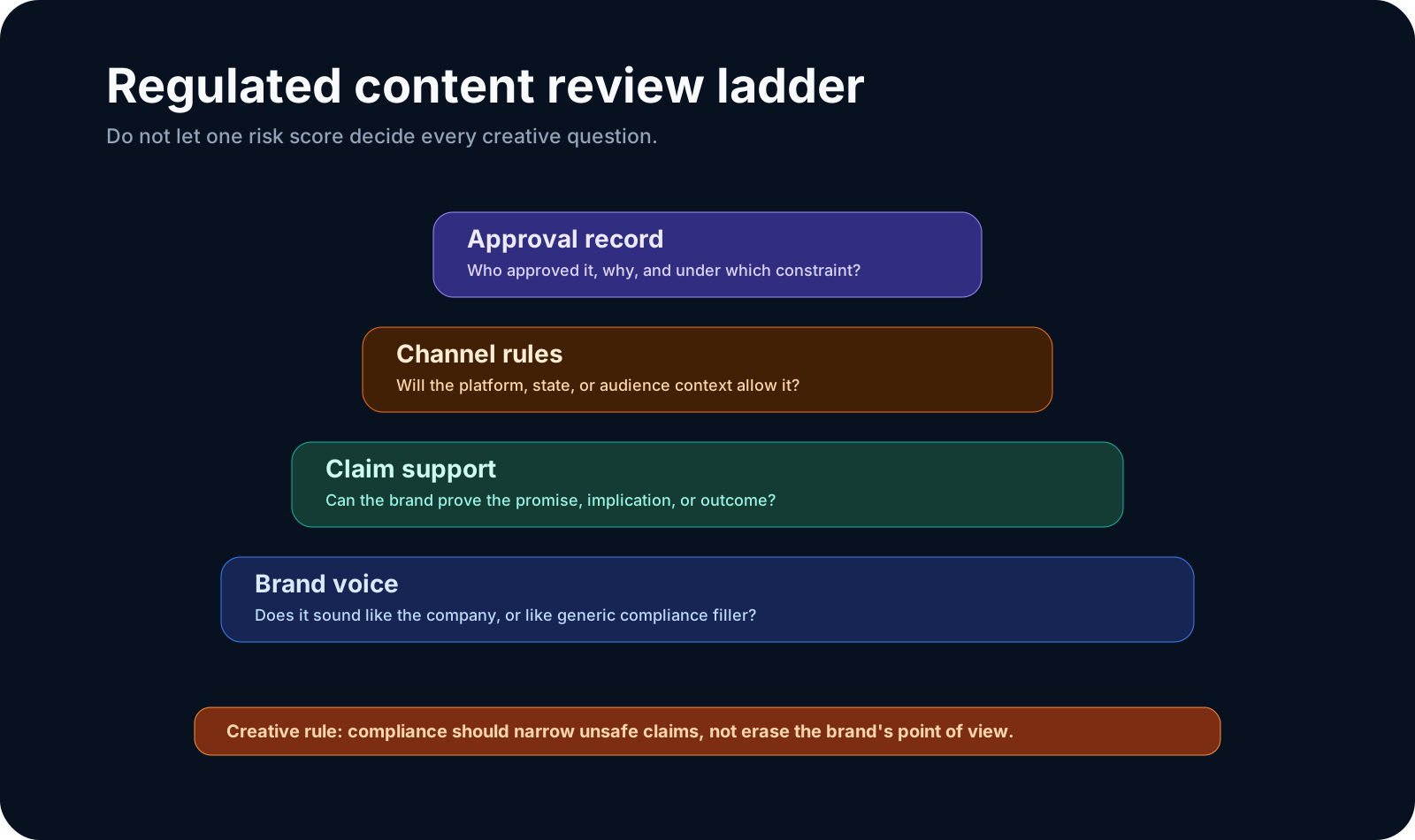
The better model separates three questions:
| Review layer | Main question | Owner |
|---|---|---|
| Brand voice | Does this sound like us? | Marketing lead |
| Claim support | Can we prove it? | Compliance or legal |
| Channel risk | Will this platform allow it? | Channel owner |
When those layers collapse into one AI score, the brand loses nuance. A low-risk sentence is not automatically a good sentence.
Cannabis is the stress test
Cannabis exposes the problem because operators face overlapping rules: state law, local rules, age restrictions, product-claim limits, platform restrictions, payment limitations, and internal legal review.
That makes automation tempting. It also makes blind automation dangerous.
The FDA's cannabis product pages show why claim discipline matters, especially around health and therapeutic language. A cannabis brand that lets AI generate wellness claims without review is creating avoidable risk.
A brand that removes all personality because the tool is scared is creating another kind of risk: nobody remembers it.
For operator-side cannabis marketing, the goal is not edgy for the sake of edgy. It is specific, useful, and human inside real constraints.
That standard also protects agencies and internal teams. If the only instruction is "make it compliant," every draft becomes a negotiation with fear. If the instruction is "explain the store policy in plain language without product-effect claims," the writer has a real target. The clearer the constraint, the more room the voice has to work.
This is the part AI can actually help with. It can compare a draft against an approved voice library, identify unsupported claims, and suggest safer alternatives. The human still decides which alternative keeps the point alive.
The workflow that works
AI belongs in the review process, but not as the only editor.
Use AI to catch risky phrasing, missing disclosures, unsupported claims, age-gate problems, and channel-specific issues. Keep humans responsible for what the brand is trying to say. Then document the decision when the team chooses a more distinctive phrase that still passes claim review.
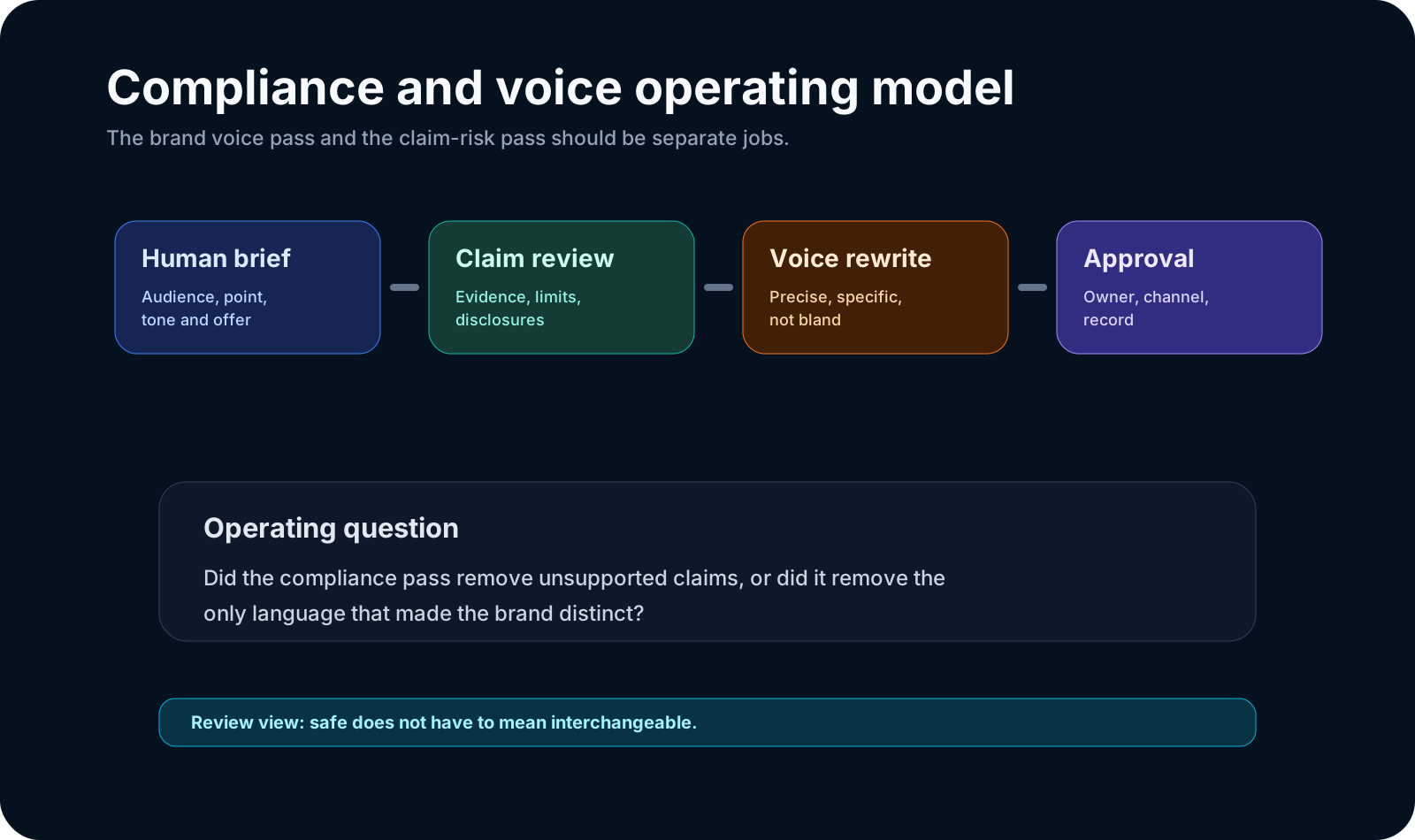
The workflow should look like this:
- 1Draft the human message first.
- 2Mark every claim that needs support.
- 3Run AI compliance review against the claim list.
- 4Rewrite for precision, not blandness.
- 5Run platform-specific review.
- 6Keep an approval record for sensitive content.
This is also where AI personalization and compliance overlap. The more targeted the message, the more the brand has to understand who receives it, what it implies, and whether the claim is defensible for that context.
What to measure
Compliance teams often measure avoided violations. Marketing teams measure engagement. Neither metric is enough.
Regulated brands should add a voice-preservation measure:
| Metric | What it catches |
|---|---|
| Claim rejection rate | Risky or unsupported language |
| Rewrite reason | Whether edits are legal, platform, or style driven |
| Approval time | Operational drag |
| Voice drift | Content becoming generic over time |
| Customer language match | Whether content still sounds useful to buyers |
Voice drift is not soft. It affects recall, conversion, search distinctiveness, and AI citations. If every source page says the same thing, answer engines and customers have fewer reasons to identify the brand as a distinct authority.

Regulated brands need content review that protects the claim without flattening the whole message.
The review meeting should include a voice question every time: what did we preserve? If the only record is what legal removed, the process trains the team to shrink. If the record also names the phrase, proof point, analogy, or customer language that survived review, the system gets smarter.
That archive becomes useful training material for both humans and AI. It shows future writers what compliant distinctiveness looks like in practice.
The real paradox
AI compliance tools are necessary because regulated brands cannot afford careless claims.
They are dangerous when teams confuse compliance with strategy.
The brands that win will not be the ones that avoid every interesting sentence. They will be the ones that build a review system strong enough to let humans write with confidence.
Safety should give the brand room to move.
If it only teaches the brand to hide, the tool is running the marketing department.
FAQ
Yes, but as review support. AI tools can flag risky claims, missing disclosures, and platform-policy issues. They should not replace legal judgment or brand strategy.
Many tools are optimized to reduce risk, so they reward safe phrasing. Without a separate voice review, the content can become technically acceptable but forgettable.
Avoid health claims, unsupported product benefits, youth-oriented content, misleading safety language, and platform-specific restricted claims. Use regulator and platform sources when reviewing sensitive content.
Draft the message first, mark claims that require support, run compliance review, and rewrite for precision instead of blandness. Keep voice and claim review as separate steps.
Document claim support, review owner, platform adaptation, final approval, and the reason for major rewrites. That record helps the team learn without flattening future work.