# AI Search Visibility Is Not Qualified Demand
Google is finally giving marketers more visibility into generative AI search performance. That sounds like the measurement problem is getting smaller. It isn't.
The new reports can help you see impressions, clicks, and the broader presence of your content inside AI features. They do not tell you whether a buyer trusted the answer, remembered your brand, visited later through another channel, or became a qualified lead. Visibility is useful evidence. It is not revenue.

AI search can expose the signal. Your measurement system still has to interpret it.
The report is helpful, not magical
Google's AI features guidance makes an important point: the same fundamentals still matter. Useful content, clear site structure, and a good page experience remain the foundation for appearing in AI-powered search features.
The generative AI performance report in Search Console adds a new view of performance. That is progress. Most marketing teams have been working with a blind spot, especially when a prospect sees a brand in an answer but never clicks the cited page.
The mistake is turning a new visibility report into a new attribution model. A report can tell you that an exposure happened. It cannot assign intent to a person you never identified.
That distinction matters because AI search compresses the journey. A buyer may ask a question, read a synthesized answer, remember one company name, and return days later by typing the brand directly into a browser. The last click gets the credit. The first exposure disappears.
Exposure is not intent
Traditional search already made marketers overconfident. A high ranking was treated as demand, even when the query was vague or the page attracted the wrong audience. AI search makes the gap harder to see because the answer can mention a brand without creating a measurable session.
A citation is not a hand raise. An inclusion is not a sales conversation. A recommendation inside an answer is closer to a brand impression than a form fill.
That does not make the signal worthless. It changes the question. Instead of asking, “How many times did we appear?” ask, “Which topics produce repeated qualified exposure, branded follow-up, and better downstream conversations?”
The answer requires a measurement layer that sits between search visibility and pipeline. It should connect the language used in AI answers to the pages, audiences, and offers that create demand. The work is less glamorous than a dashboard screenshot. It is also where the useful insight lives.

The useful question is not whether the signal exists. It is whether the right buyers recognize it.
Build a signal chain
A practical system has four layers.
Visibility. Track where your brand appears, which questions trigger it, what claims are attached to your name, and whether competitors are being cited instead. This is the top of the chain. It tells you what the answer engine is willing to repeat.
Engagement. Look for branded search lift, direct traffic, return visits, high-intent page views, and assisted conversions. These signals will be incomplete, but they help you test whether visibility is creating memory.
Qualification. Compare leads influenced by the topic against your normal lead mix. Did they fit the industry, geography, budget, and buying stage you actually serve? A surge in low-fit inquiries is not a win just because the chart points up.
Business quality. Follow opportunities into sales acceptance, close rate, contract value, retention, or whatever outcome matters to your model. The further downstream you measure, the less noise a visibility metric can hide.
The chain is not a neat funnel. Buyers move back and forth. Some enter through a citation, some hear your name from a colleague after seeing it in an AI answer, and some never become identifiable until a sales call. The point is not perfect tracking. The point is refusing to call the first signal the final result.
What to measure each month
A useful monthly review can stay small. Start with a fixed set of questions and compare the answers over time.
| Layer | Question | Useful evidence |
|---|---|---|
| Visibility | Are we present for the right questions? | AI mentions, cited pages, topic coverage |
| Engagement | Did exposure create memory? | Branded searches, direct visits, return sessions |
| Qualification | Did the right audience respond? | Fit, intent, sales acceptance |
| Business quality | Did it improve the business? | Pipeline, win rate, value, retention |
Do not blend these into one weighted score just to make the dashboard look decisive. A single number hides tradeoffs. A topic can gain visibility while losing qualified traffic. Another can have little reach but produce the best opportunities.
Use a small scorecard instead. Mark each topic as growing, flat, or unclear across the four layers. “Unclear” is a legitimate result. It is much better than inventing precision because a reporting tool returned a decimal.
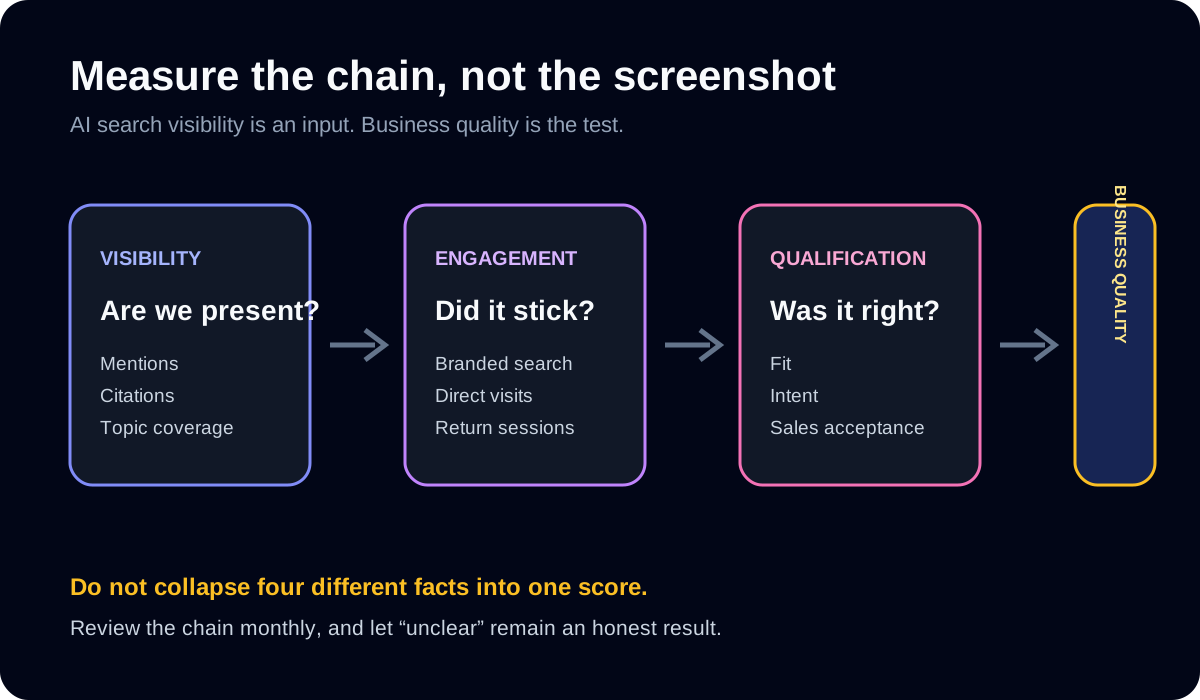

Good measurement leaves room for uncertainty. Bad measurement hides it in a percentage.
The content implication
If your content team only chases questions with the highest possible reach, AI search will reward you with a lot of shallow exposure. The better strategy is to build a connected set of pages around the questions that buyers ask before they choose a provider.
That means explaining tradeoffs, naming constraints, showing how decisions get made, and making your point of view easy for an answer engine to understand. It also means giving the reader a clear next step when they move from research to evaluation.
Sparksbox has written about the trust problem in AI marketing and why AI is breaking traditional marketing measurement. The same principle runs through both: automation can increase output while making judgment harder to see.
For teams serving regulated industries, the content needs another gate. A claim that gets repeated in an AI answer can travel farther than the original page. Cannabis marketers should pair human review with AI discovery and keep compliance review close to publication, not after a claim has already spread.
Questions marketers are asking
Does Google Search Console show every AI mention?
No. Search Console is useful for the Google search performance data it provides, but it is not a universal monitor for every answer generated across every AI system. Use it as one evidence source, then supplement it with controlled query testing, brand search trends, analytics, and sales feedback.
Should AI visibility become a key performance indicator?
It can be a useful leading indicator when the tracked topics match your audience and buying motion. It should not replace qualified pipeline, revenue, or customer quality metrics. Give visibility a place near the top of the scorecard, not at the bottom where the business outcome belongs.
How can a company measure AI-assisted conversions?
Start by comparing branded search, direct traffic, return visits, and self-reported discovery against changes in topic visibility. Add a simple “How did you hear about us?” field to forms and ask sales teams to capture the first remembered source. None of these methods is perfect, but together they reveal patterns that last-click reporting misses.
Do citations in AI answers improve rankings?
A citation in an AI answer is not itself a traditional ranking factor. It is an observed appearance in a generated search experience. Keep focusing on helpful, crawlable, well-supported content, then measure whether that content earns the right kind of attention.
What should a small marketing team track first?
Track ten to twenty high-intent questions, the pages associated with them, branded search movement, qualified inquiries, and sales acceptance. Review the set monthly. A small, consistent panel will teach you more than a giant dashboard nobody trusts.
The metric that survives scrutiny
AI search reporting will keep improving. New tools will promise cleaner visibility, faster monitoring, and more confident attribution. Some will be genuinely useful.
The discipline is knowing what each signal can prove. An impression can prove exposure. A click can prove a visit. A qualified opportunity can prove that a buyer saw enough value to continue the conversation.
Those are different facts. Keep them separate, and AI search becomes a source of strategic evidence instead of another place for marketing dashboards to manufacture certainty.