The AI Disclosure Crisis Nobody's Talking About
In this postCollapse -Open +
AI disclosure rules are expanding, but many notices still answer the weakest question: did you tell the user AI is involved? They often do not explain training data, failure modes, liability, validation, or opt out.
This is disclosure theater: the performance of transparency without the substance. A checkbox that says "This uses AI" while the actual training data, failure modes, and liability ownership remain completely obscured.
In regulated industries (cannabis, healthcare, finance, e-commerce), disclosure has become a compliance checkbox, not a consumer protection mechanism. And the gap between what's disclosed and what's actually happening is growing.

A disclosure notice is not transparency if it hides training data, validation, and liability ownership.
The Disclosure Mandate Explosion
The EU AI Act, California's AB 2013 training-data transparency law, the Colorado AI Act, New York City's automated employment decision tool rules, and sector-specific guidance all point in the same direction: automated systems are getting more transparency obligations.
The common thread is simple: companies using AI need to tell people more about it.
Most companies complied the same way too. Added a line of text.
A cannabis dispensary that uses AI for customer profiling? Their disclosure reads: "This site uses AI-powered recommendations." The AI model they're using was trained on general retail engagement data.
They've never validated it against actual cannabis compliance rules. The model occasionally recommends products before the age gate or location rule is confirmed, and they have no liability chain because the vendor's contract says "client responsible for output accuracy.
A healthcare platform using AI for patient triage? Checkbox. The model was trained on 2024 data. It hallucinates diagnoses. The vendor's terms say the hospital is liable for medical decisions, even though the hospital didn't build the model and has no access to its training data.
An e-commerce brand using AI for product descriptions? Checkbox. The model generates false claims about durability. The liability chain goes: brand → vendor → model builder → vendor's vendor. Nobody actually owns it.
This isn't oversight. It's liability diffusion.
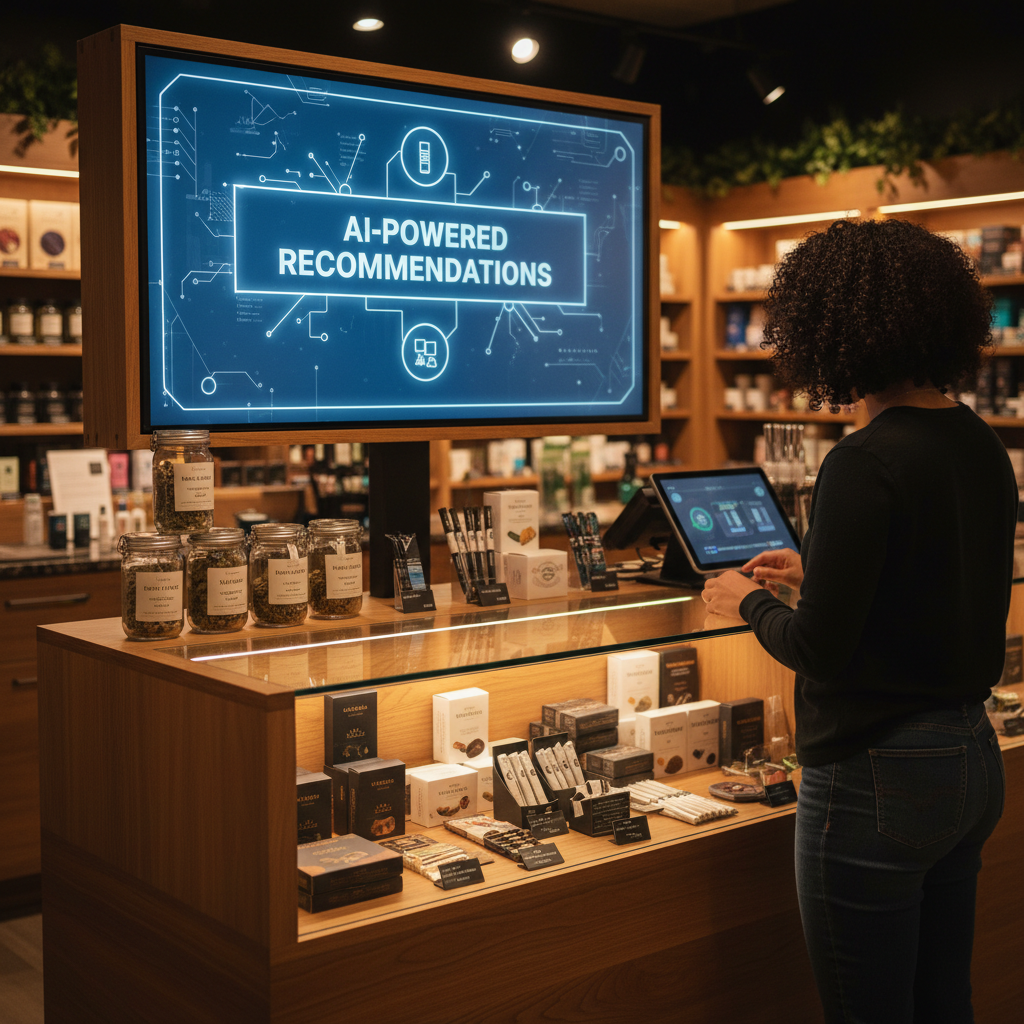
*The disclosure is there. The understanding isn't.*
Why Disclosure Doesn't Actually Protect Anyone
Disclosure works when three things are true:
- 1The person being disclosed to can understand what they're being told
- 2They can make an informed choice based on that information
- 3There's accountability if the disclosure was misleading
In AI, none of those are true.
A customer at a cannabis dispensary sees "AI-powered recommendations." What does that mean? Are their purchases being recorded? Is the AI making personalization decisions they can opt out of? Is it training on their behavior? Are they being age-gated? Is the recommendation biased? They have no way to know.
A healthcare patient gets flagged by an AI triage system. The disclosure says "This system uses machine learning." The patient has no way to evaluate whether that system is appropriate for their condition. They can't ask what data it was trained on. They can't audit its accuracy. They can't see how it arrived at its conclusion.
An e-commerce shopper sees "AI-powered descriptions" but has no way to verify the claims about the product. They're buying something with potentially false specifications generated by a language model, and the only disclosure they got is a checkbox.
So disclosure becomes theater. Companies check the box. Regulators see the checkbox. Consumers see words they don't understand. Nothing actually changes.
The Liability Chain Problem
Here's where it gets dangerous: when something goes wrong, nobody actually owns it.
A cannabis customer follows a recommendation from an AI system before the retailer has confirmed age, location, and state-specific rules. Who's liable?
The dispensary: "We used the vendor's AI. They're responsible."
The vendor: "We're just providing the model. The dispensary implemented it wrong."
The model builder: "We provided the training data. The vendor built the model."
The training-data company: "We just provided data. We don't know how it's being used."
In practice? The customer bears the liability because nobody else will. The disclosure checkbox becomes a liability waiver.
Cannabis dispensaries are particularly vulnerable here. They're operating in a compliance-heavy market where recommendations can create age-gating, privacy, claims, and state-rule problems. An AI system that recommends products to someone under 21.
An AI that doesn't understand state-specific restrictions. An AI that turns a generic retail pattern into a regulated cannabis recommendation.
The dispensary is liable. The AI vendor just provided a tool.
The Training Data Trap
Many AI disclosure rules focus on telling users that AI is involved. Fewer force a clear, customer-facing explanation of where the AI was trained, what data it learned from, and whether that data matches the regulated use case.
A cannabis-focused CRM uses an AI system for customer behavior prediction. The model was trained on Instagram user behavior and Amazon purchase history. It was never trained on cannabis-specific purchasing patterns. It doesn't understand cannabis compliance rules. But the vendor's disclosure just says "Uses AI."
A healthcare platform uses a language model for patient communication suggestions. The model was trained on Reddit threads and medical journal abstracts from 2023. It's never seen a case of the specific condition the patient has. But the disclosure checkbox is checked.
An e-commerce brand uses AI for product descriptions. The model was trained on clothing and electronics descriptions. It generates false claims about durability that apply to fashion but not to their specialty products. But the vendor's disclosure just says "AI-generated content."
Training data transparency is the one disclosure that would actually matter. It would let companies evaluate whether an AI system is appropriate for their use case. It would let regulators spot models trained on irrelevant data.
And it's the one thing almost no AI disclosure law requires.
The Compliance Theater Example: Cannabis Retail
Take a concrete example: a cannabis retail chain using AI for customer segmentation and recommendations.
The marketing department wants to use the vendor's AI to identify high-lifetime-value customers and tailor recommendations. The AI system was trained on e-commerce and retail data. It's never seen a cannabis customer dataset.
It doesn't understand age verification requirements. It doesn't know that some products are restricted in some states. It doesn't know that customer data in cannabis retail has strict privacy requirements.
But the vendor provides a checkbox. "This system uses AI."
Compliance team: "We disclosed it. We're compliant."
Marketing: "Great, we can use it for customer profiling."
Legal: "Did we disclose it?"
Compliance: "Yes, checkbox."
The AI system starts making recommendations. A small number of recommendations appear before the right age, location, or state-rule checks run because the model learned "high engagement" from the training data, and it never learned cannabis-specific gates.
Now:
- The cannabis company faces regulatory action
- The vendor says their tool was used inappropriately
- The vendor's contract says the client is responsible for output accuracy
- The customer bears the consequences
The disclosure checkbox protected nobody. It just created the appearance of transparency.

*Compliance checking boxes. Liability staying unchecked.*
What Real Disclosure Would Look Like
Actual transparency in AI disclosure would require:
- 1Training data provenance: Where was the model trained? On what data? From what time period? How representative is it of the current use case?
- 1Failure mode documentation: What's the model's accuracy by demographic? By use case? Where does it perform poorly? What specific risks exist?
- 1Liability ownership: Who's responsible if the model makes a wrong decision? Is it shared? Is it the vendor's or the client's?
- 1Validation requirements: Has this model been tested in the specific regulated context where it's being deployed? Has anyone verified it works for cannabis compliance? Healthcare workflows? Financial regulation?
- 1Opt-out mechanisms: Can users actually choose not to be subject to the AI system's decisions? Or is it mandatory?
This kind of disclosure would be expensive. It would require vendors to validate their models for specific use cases. It would require them to own some liability. It would slow down deployment.
So instead, companies take the checkbox approach. A line of text that says "AI" and nothing else.
The Regulatory Failure
Too much disclosure enforcement still looks at the wrong metric. It counts whether the checkbox exists. It does not always audit what's actually being disclosed. It does not always evaluate whether customers can understand what they're being told. It does not always trace liability chains when things go wrong.
The audit pattern to watch is simple:
- The disclosure says AI is involved
- The training data source is missing
- The failure modes are missing
- The opt out is unclear
- Liability ownership is buried in a vendor contract
That creates the appearance of compliance without the substance of protection.
What Real Transparency Requires
Disclosure theater works because it solves the regulator's problem, not the consumer's. It lets the agency say "we fixed this." It gives the company legal cover. It satisfies the checkbox.
But the customer buying a product recommended by an AI trained on irrelevant data? The patient flagged by an AI system nobody audited for their condition? The cannabis retail chain facing liability because their AI didn't understand compliance rules?
For them, the disclosure checkbox is just a liability waiver dressed up as transparency.
Real protection would require hard questions: Where was this trained? How was it validated? Who owns the liability if it fails? What can you actually opt out of?
Until regulations require those answers, the disclosures will keep getting more elaborate while the gaps keep getting wider.
That's not transparency. That's just theater with better lighting.
2026 evidence and control update
The more useful 2026 question is not whether ai disclosure theater: why transparency is failing is possible. It is whether operators buying AI tools without full training-data or decision transparency can prove what happened after the system made, shaped, ranked, routed, or explained a customer-facing decision.
The less obvious issue is that the hidden record is the distance between public training-data disclosures and the actual client workflow that produces a recommendation or compliance decision. That record is what separates a working AI pilot from a defensible operating system.
For source alignment, the public claim language should stay consistent with California AB 2013 training-data disclosure law and FTC guidance on AI claims. Those sources do not remove the need for local legal review, but they give the article a better evidence spine than vendor screenshots or unsupported performance claims.
This also connects to related operating risk, AI measurement gap, compliance workflow, because the same pattern keeps repeating: AI systems look clean in the dashboard while the proof, ownership, and customer context live somewhere else.
| Control layer | What to verify | Evidence to keep |
|---|---|---|
| Source data | Which approved source fed the answer, recommendation, ranking, or claim | Source URL, vendor field, timestamp, and owner |
| Decision boundary | Where the AI is allowed to help and where it must stop | Allowed use case, blocked topics, and confidence threshold |
| Human review | Who owns the exception, correction, or escalation | Reviewer role, handoff note, and approval record |
| Monitoring | How the team catches drift, complaints, or weak signals | Review cadence, sampled outputs, and customer feedback themes |


Frequently asked questions
AI disclosure theater is the appearance of transparency without meaningful information. A company may say "AI is used here" while hiding training data, failure modes, opt-out rights, and liability ownership.
Cannabis recommendations sit inside age-gating, location, privacy, advertising, and product-claim rules. A generic AI notice does not prove that a recommendation system understands those rules.
It should explain what the AI does, what data it uses, whether users can opt out, how the system was validated, what failure modes are known, and who is responsible if the output is wrong.
Usually not. A checkbox may satisfy a narrow notice requirement, but it will not answer deeper audit questions about decision logic, evidence, validation, and accountability.
Map each AI disclosure to the actual system behind it. If the notice cannot explain the system's purpose, data source, human review process, and owner, the disclosure is not ready.