The Comfort Story That's Costing You Visibility
There's a narrative circulating through cannabis brand teams right now: Federal rescheduling is finally happening. Schedule III will normalize banking, ease interstate commerce, expand medical research, and then, after all that legal dust settles, the brand-building work can begin.
That story is only partially true.
Federal rescheduling is still a proposed rulemaking process, not a completed marketing reset. DEA's marijuana rescheduling page points to formal hearing proceedings, and the Federal Register notice describes proposed rescheduling with a hearing beginning June 29, 2026. But the brand-building work didn't wait for federal clarity.
It happened during 2024. It happened during 2025. It's happening every single quarter that an AI engine routes a "best cannabis brand" or "best cannabis dispensary" prompt to a brand other than yours.
The data is starting to quantify the cost of that delay.

Waiting for rescheduling does not build the entity signals AI engines already use to choose citations.
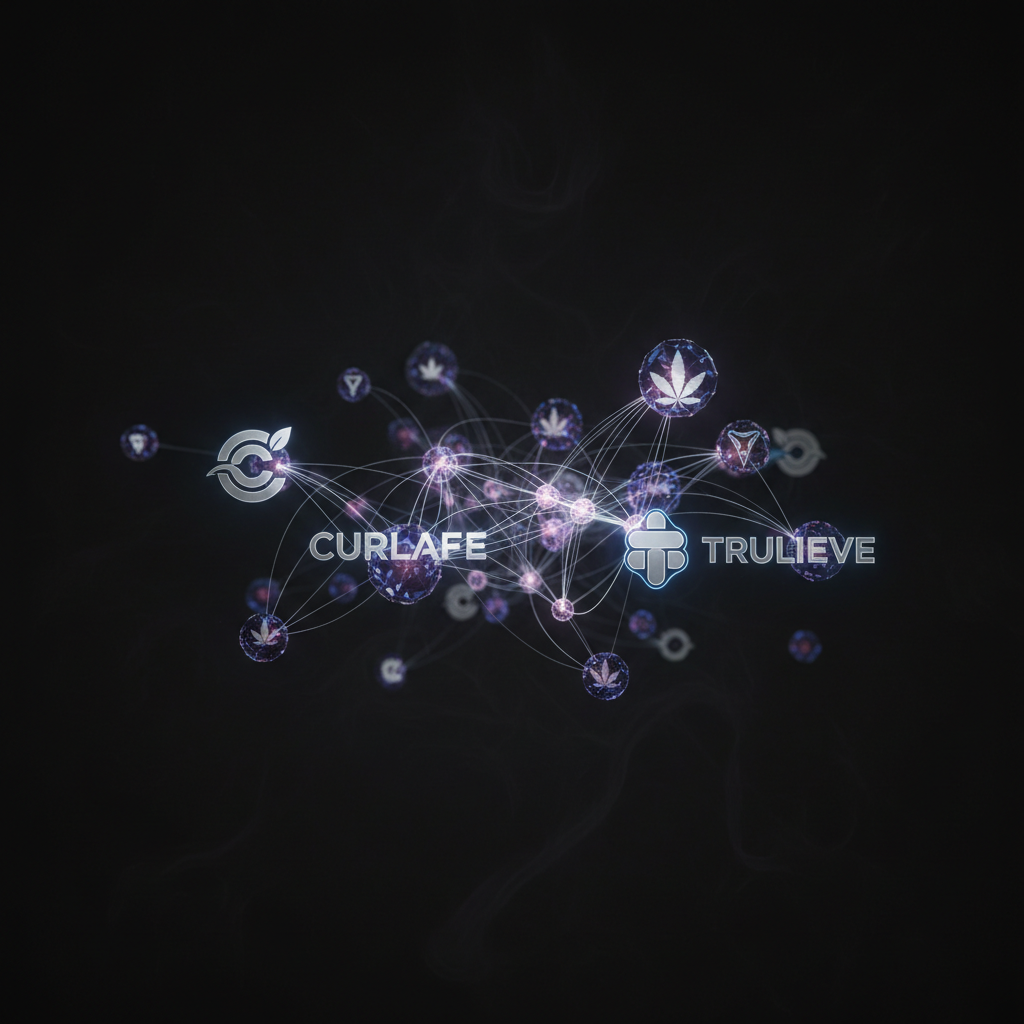
AI citation concentration is already locked in for the top three MSOs
The Citation Moat Is Already Built
5WPR's Cannabis AI Visibility Index 2026 measured AI citation share across ChatGPT, Claude, Perplexity, and Google AI Overviews using consumer-intent prompts in Q1 2026. The findings are stark.
Three multistate operators captured 17.5 percent of all cannabis-category AI citations. Curaleaf, Trulieve, and Green Thumb Industries are pulling away from the rest of the field. The gap between those three and everyone else is meaningful. More important, it's widening.
Cookies leads branded consumer products with a citation advantage over the second-place brand wider than the gap between the top two MSOs. Charlotte's Web has held the number-one CBD position for five years, and that sector's moat is widening, not narrowing.
The mechanism is compounding. AI engines concentrate citations on the small number of brands that produced credentialed, structured, state-specific content depth during 2024 and 2025. Each quarter, the cited brands accrue more citations because their citation history reinforces their authority to the next iteration of the AI model.
The uncited brands accrue less. The compounding runs in both directions. It does not pause for federal reform.
What Schedule III Actually Changes
Federal Schedule III reform could deliver real wins for cannabis operators if finalized. Tax treatment, research pathways, medical positioning, and federal enforcement dynamics could all change. These are material advantages.
None of them erase the citation moat.
None of them automatically surface a brand AI engines have not been citing already.

The citation gap widens quarterly. Waiting means compounding loss.
What Schedule III actually changes is the set of questions consumers ask. "Is cannabis legal in my state?" becomes "What does Schedule III mean for medical cannabis access?
" "Best cannabis dispensary near me" becomes "best Schedule III medical cannabis provider near me." The brands that published Schedule III content in Q1 2026 captured citation share for those prompts. The brands waiting for the Schedule III rulemaking to conclude will arrive after the citation surface has already concentrated.
This is not a new pattern. The brands that waited through Schedule I did not get a do-over from medical legalization in California or Colorado. The compounding did not pause. The window did not widen.
The Hedge Window Nobody's Talking About
There is one category-wide pattern Schedule III will not change. Approximately 28 percent of cannabis prompts produce AI engine refusals, hedges, or prominent disclaimers. That's the highest rate of any consumer category 5W measured.
Schedule III rescheduling could reduce that rate if finalized, but it will not eliminate it. State-by-state variation will persist. Medical-versus-adult-use distinctions will persist. Drug-interaction concerns will persist.
That movement creates a new window of opportunity for brands publishing credentialed content into the new hedge surface. And a new wave of irrelevance for brands that do not.

Citation authority compounds. The brands at the peak get more authority every quarter.
What Works Now Is What Worked Then
The compounding cost of waiting is real and it compounds daily.
What works from here is what worked from 2024 onward: state-specific legal and qualifying-condition content, credentialed-author medical applications coverage, structured product-by-product education, regulatory-event-driven publication cadence, and consistent presence on the aggregators AI engines treat as authority sources.
The brands doing that work today are running ahead of Schedule III. The brands waiting for Schedule III to begin the work are running behind it.
The citation moat was built while the industry waited for federal reform. Federal reform is arriving. But the moat is not closing. It's widening.
2026 evidence and control update
The more useful 2026 question is not whether schedule iii won't save your cannabis brand's ai visibility is possible. It is whether regulated cannabis retail and marketing teams can prove what happened after the system made, shaped, ranked, routed, or explained a customer-facing decision.
The less obvious issue is that the hidden record is not only the customer-facing answer, it is the product data, state rule, age gate, claim boundary, and human owner behind that answer. That record is what separates a working AI pilot from a defensible operating system.
For source alignment, the public claim language should stay consistent with California Department of Cannabis Control retail guidance and FTC guidance on AI claims. Those sources do not remove the need for local legal review, but they give the article a better evidence spine than vendor screenshots or unsupported performance claims.
This also connects to related operating risk, AI measurement gap, compliance workflow, because the same pattern keeps repeating: AI systems look clean in the dashboard while the proof, ownership, and customer context live somewhere else.
| Control layer | What to verify | Evidence to keep |
|---|---|---|
| Source data | Which approved source fed the answer, recommendation, ranking, or claim | Source URL, vendor field, timestamp, and owner |
| Decision boundary | Where the AI is allowed to help and where it must stop | Allowed use case, blocked topics, and confidence threshold |
| Human review | Who owns the exception, correction, or escalation | Reviewer role, handoff note, and approval record |
| Monitoring | How the team catches drift, complaints, or weak signals | Review cadence, sampled outputs, and customer feedback themes |


FAQ
No. As of June 27, 2026, marijuana rescheduling is still in DEA's formal hearing process. The Federal Register describes proposed rescheduling, not a completed final rule.
It may change what consumers ask and which sources AI engines consider useful, but it will not automatically make uncited brands visible. Brands still need structured, credible, state-aware content.
An AI citation moat is the compounding advantage a brand gets when answer engines repeatedly cite it as a trusted source. Existing citations can reinforce future visibility.
They should publish state-specific compliance content, medical-use explainers where appropriate, product education without health claims, entity pages, FAQs, and source-backed Schedule III updates.