Law firm SEO gets expensive because firms often measure the wrong thing.
Clicks are not cases. Leads are not signed matters. Calls are not qualified clients. A campaign can look efficient in a dashboard and still waste intake time, partner attention, and budget.
The real job of legal SEO is to connect search demand to the right matters. That means the page, local profile, attorney proof, intake process, review system, and ethics review have to work together.
If they do not, the firm is just buying or earning more noise.

Law firm search costs only make sense when the firm can connect clicks to qualified matters.
The click is the wrong finish line
Legal search is competitive because the value of one signed matter can be high. Personal injury, mass tort, criminal defense, immigration, family law, and business litigation all create expensive search markets in competitive metros. But high cost per click is not the core problem.
The problem is poor translation from search to intake.
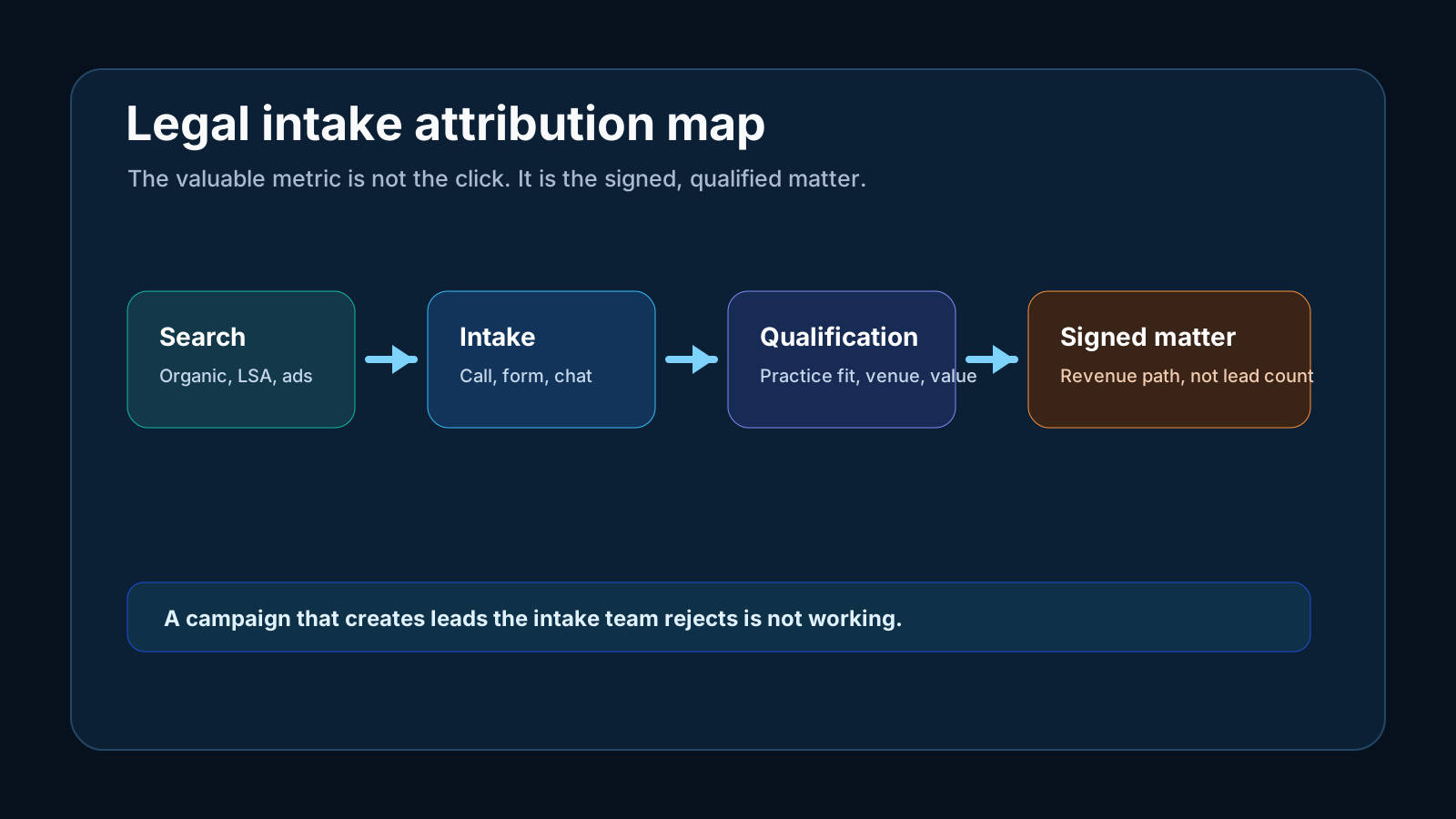
A firm needs to know:
- Which query created the first touch?
- Which page answered the question?
- Which intake channel captured the person?
- Was the matter in the right practice area?
- Was the jurisdiction right?
- Did the firm sign it?
- Did the case quality justify the spend?
Without that path, SEO reporting becomes a ranking report with no business memory.
Local Services Ads changed the top of the page
Google Local Services Ads can sit above traditional search results for many legal queries. They are lead-based, carry a Google Screened badge for eligible professional services, and require verification. Google's Local Services Ads screening and verification documentation explains the background and license checks.
That changes SEO strategy. A firm may need Local Services Ads for immediate demand capture while SEO builds compounding assets underneath.
The trap is treating LSAs as a replacement for organic visibility. They are rented attention. Organic pages, local profiles, attorney entities, reviews, and case-result content build the firm's source of truth.
Thin city pages are weaker now
The lazy local-page model is easy to spot: "Personal injury lawyer in [city]" with swapped names, generic paragraphs, and no real local or legal substance.
Those pages may still exist. They are just not a durable strategy.
Google's search quality direction has consistently moved toward helpful, experience-backed content. Legal is a category where trust matters because bad information can affect serious decisions. A page written only for a keyword has a hard time proving experience, expertise, authority, and trust.
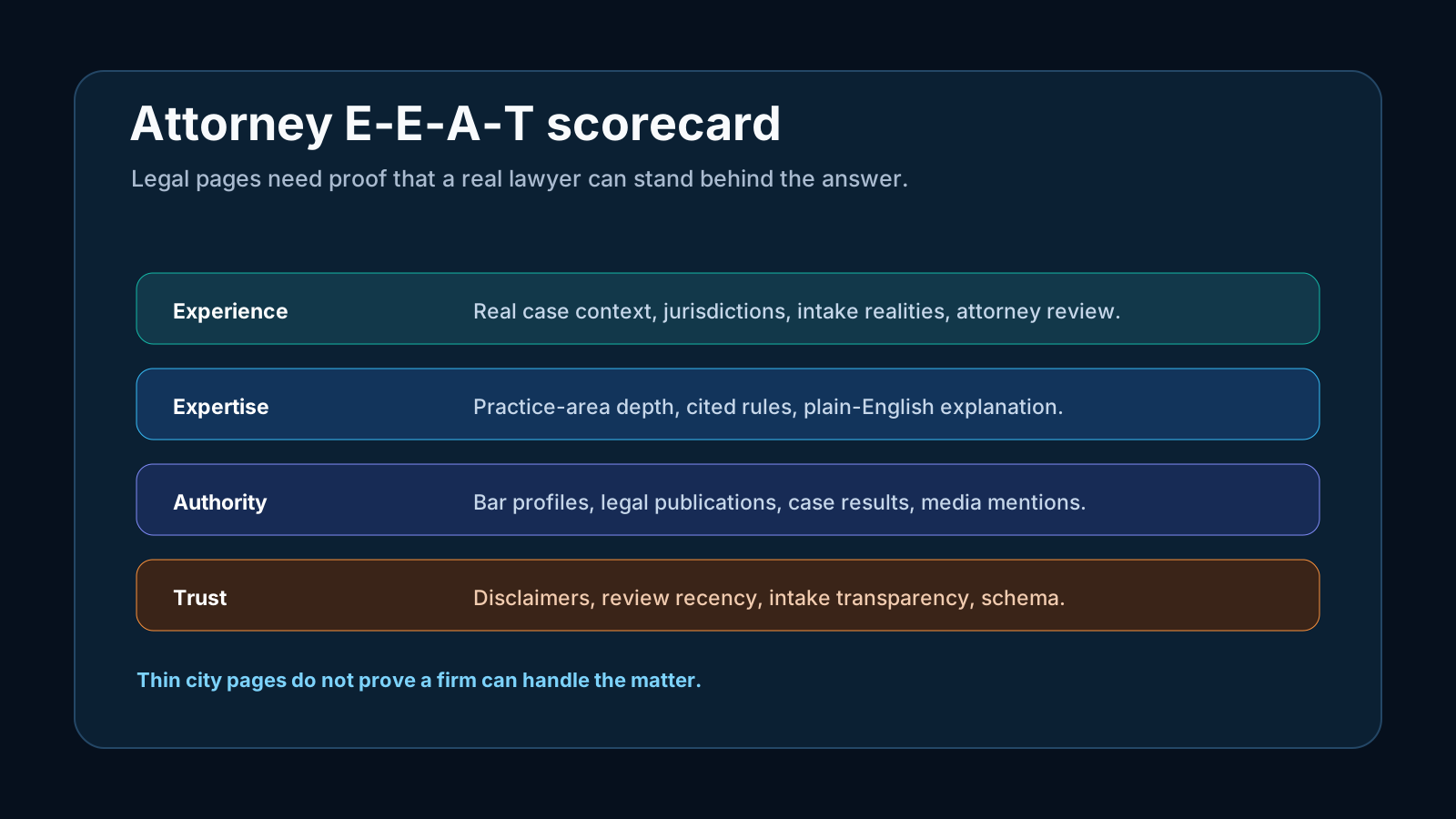
A useful local legal page includes:
- Jurisdiction-specific process.
- Local court or venue context where relevant.
- Attorney experience in that practice area.
- Intake criteria.
- Clear disclaimers.
- Case-type examples without misleading promises.
- Reviews and profile links where appropriate.
The page should help a person decide whether to call, not merely help a crawler identify the city.
Attorney entities matter
Law firm SEO is not only firm-level SEO. It is attorney-level proof.
Consumers research lawyers online. The Clio Legal Trends Report has repeatedly shown how important online research, responsiveness, and reviews are to legal consumers.
Search systems also rely on entity signals: attorney bios, state bar profiles, legal directories, publications, media mentions, structured data, and consistent naming.
That means the attorney bio is not a brochure page. It is a trust asset.
Strong attorney pages should include:
- Bar admissions.
- Practice areas.
- Representative matters where allowed.
- Publications or speaking.
- Review links or testimonials where compliant.
- Clear contact path.
- `Person` or attorney-relevant schema where supported.
If an attorney is the reason a client should trust the firm, the website should make that visible.
Intake should feed SEO decisions
The intake team hears the truth before the dashboard does. They know which pages bring confused callers, which leads are outside the firm's criteria, which questions keep repeating, and which practice-area pages set the wrong expectation.
That feedback should shape the SEO roadmap. If a page drives calls the firm never accepts, rewrite the page or change the target. If callers keep asking the same jurisdiction question, add the answer. If qualified clients mention one case result, expand that proof into a stronger practice-area section.
Legal SEO gets better when marketing stops treating intake as the end of the funnel and starts treating it as research.
Case-result pages need discipline
Case results can be powerful, but they can also be risky. Firms should avoid implying guaranteed outcomes, disclosing confidential details, or creating misleading comparisons.
The best pages are specific enough to be useful and careful enough to survive review. They explain matter type, jurisdiction, legal issue, process, timeline, and outcome context without turning one result into a promise.

Case-result content works only when it is accurate, reviewed, and tied to intake realities.
Use case-result content to support long-tail searches:
| Page type | Better angle |
|---|---|
| Practice page | What the firm handles and how intake works |
| Case result | What happened, with careful limitations |
| FAQ | Common questions in plain English |
| Attorney bio | Why this lawyer is credible |
| Local page | How the matter works in this jurisdiction |
The stronger the claim, the more careful the review.
AI content raises ethics risk
AI can help law firms draft, summarize, outline, and repurpose content. But legal content has an ethics bar.
The American Bar Association's Formal Opinion 512 on generative AI addresses lawyers' duties around competence, confidentiality, communication, and supervisory responsibilities when using generative AI tools. For SEO, the practical rule is simple: attorney review is mandatory.
Do not publish AI-drafted legal content without a lawyer checking facts, law, jurisdiction, citations, confidentiality, and whether the page creates misleading expectations.
That review is not just risk control. It improves the content. A real attorney can add judgment, examples, and caveats that generic content misses.
Reviews and response time matter
Legal consumers often compare firms quickly. Reviews, response time, profile completeness, and clarity affect whether a searcher becomes an intake.
Reviews should be earned ethically and managed carefully. Firms should avoid incentives, avoid revealing confidential information in responses, and follow local bar rules. A thoughtful review response can signal professionalism without discussing the matter.
Intake speed matters too. A person with a legal problem may contact several firms. The SEO team can drive the inquiry, but the intake team decides whether the spend turns into a matter.
This is where legal SEO and operations meet. The firm should track missed calls, response time, qualification reasons, duplicate leads, signed matters, and revenue by channel.
The budget split
For a competitive practice area, a practical mix often looks like this:
| Channel | Role |
|---|---|
| Local Services Ads | Immediate lead capture |
| Organic SEO | Compounding visibility and trust |
| Google Business Profile | Local proof and reviews |
| Attorney content | E-E-A-T and conversion support |
| Intake analytics | Business truth |
Paid channels can fill the pipeline while SEO compounds. But the firm should not let paid reporting become the only truth. Organic assets reduce dependence on auction costs over time.
For firms that serve regulated or high-trust categories, Sparksbox's search strategy work focuses on that operating layer: search visibility tied to measurement, source quality, and conversion path.
What to fix first
Start with the handoff between marketing and intake.
- 1Audit the top landing pages by signed matter, not only traffic.
- 2Connect calls and forms to practice area and qualification outcome.
- 3Rewrite thin city pages into jurisdiction-specific pages.
- 4Strengthen attorney bios and structured data.
- 5Add reviewed FAQs to practice pages.
- 6Build careful case-result pages where ethics rules allow.
- 7Track response time and missed-call rate.
The firms that win legal SEO will not be the ones with the most pages.
They will be the ones that know which pages create the right clients.
FAQ
Competitive legal SEO usually takes months, not weeks. Local and long-tail gains can appear faster, but high-value practice-area terms in major metros take sustained content, reviews, links, and local profile work.
They can be useful for immediate lead capture, especially when organic rankings are still building. They should be measured by qualified signed matters, not raw lead count.
They can use AI for drafting and research support, but attorney review is required. Legal content must be accurate, jurisdiction-aware, confidential, and not misleading.
Practice pages, attorney bios, reviewed FAQs, local pages, and careful case-result pages often work best when they are tied to real intake needs.
The biggest mistake is optimizing for rankings and leads without measuring whether those leads become qualified signed matters.