A discount can win the order and still lose the customer relationship. That is the uncomfortable part of promotion strategy. The short-term lift is visible in the dashboard. The trained expectation that full price is optional usually is not.

A sale can move product without moving the business forward.
Brands do not create this habit with one coupon. They create it through repetition. If customers see a sale every few weeks, the rational move is to wait. Marketing has changed the buying decision from “Do I want this?” to “How long until this gets cheaper?”
That shift matters for ecommerce, retail, subscriptions, and cannabis operators with tight margins. A promotion should solve a specific business problem. It should not become the business model by accident.
The sale becomes the reference price
Consumers judge a price against a reference point, not in isolation. That reference can come from a previous purchase, a competitor, a remembered sale, or the crossed-out number next to the current offer. Once the lower number becomes familiar, the regular price starts to feel inflated even when it has not changed.
This is why a 20 percent promotion can produce a strange result. It creates urgency today, but it also teaches the shopper that waiting has an expected payoff. The next visit begins with a lower willingness to pay.
Research on online price promotions has found that the influence of a discount can change during the shopping trip, rather than operating as a fixed lift from the first click to checkout. That is a useful reminder for marketers. Promotion performance is not only about the size of the offer. It is also about what the customer learns from seeing it repeatedly.

A predictable promotion calendar teaches a predictable waiting habit.
A healthy pricing system gives the customer other reasons to buy now. Better availability, useful service, a bundle that removes friction, or a clear guarantee can create value without resetting the reference price every week.
That is also where customer trust after the click becomes a practical marketing issue. The promise in the ad, the price on the product page, and the final amount at checkout all need to feel like parts of the same story.
Short-term volume hides the margin leak
Promotion reports often start with revenue. They should start with incremental contribution margin.
A campaign that generates 1,000 orders is not automatically a win. Ask what would have happened without the discount, how many buyers were already planning to purchase, whether the basket got larger, and whether the promotion pulled demand forward from next week. Those answers tell you whether the campaign created demand or simply rented it from the future.
A simple post-campaign review should separate:
- full-price buyers from promotion-only buyers
- new customers from existing customers
- incremental units from shifted purchase timing
- gross revenue from contribution after discount, fulfillment, fees, and returns
- first-order lift from repeat purchase behavior

The cheapest visible price is not always the strongest value signal.
The accounting gets more important as acquisition costs rise. If a discount is doing the work of paid media, customer service, and product differentiation at the same time, the offer may look efficient while quietly absorbing the margin that funds those capabilities.
The team should also watch the shape of demand after a campaign ends. A sharp drop is not always evidence that the offer worked. It can be evidence that the offer borrowed orders from the following period.
Make price clarity part of the product
Customers do not need every brand to be cheap. They need the price to make sense.
That starts with explaining what the customer receives for the money. In ecommerce, this can mean showing delivery timing, return terms, product durability, service access, or the reason a bundle saves money.
In a local retail business, it can mean a clear menu, dependable inventory, and staff who can explain the difference between products without pushing the most expensive option.
Price clarity also means removing surprises. Baymard Institute's checkout research identifies unexpected extra costs as a leading reason shoppers abandon their carts. A promotion cannot repair trust that disappears when shipping, tax, or fees arrive at the final step.
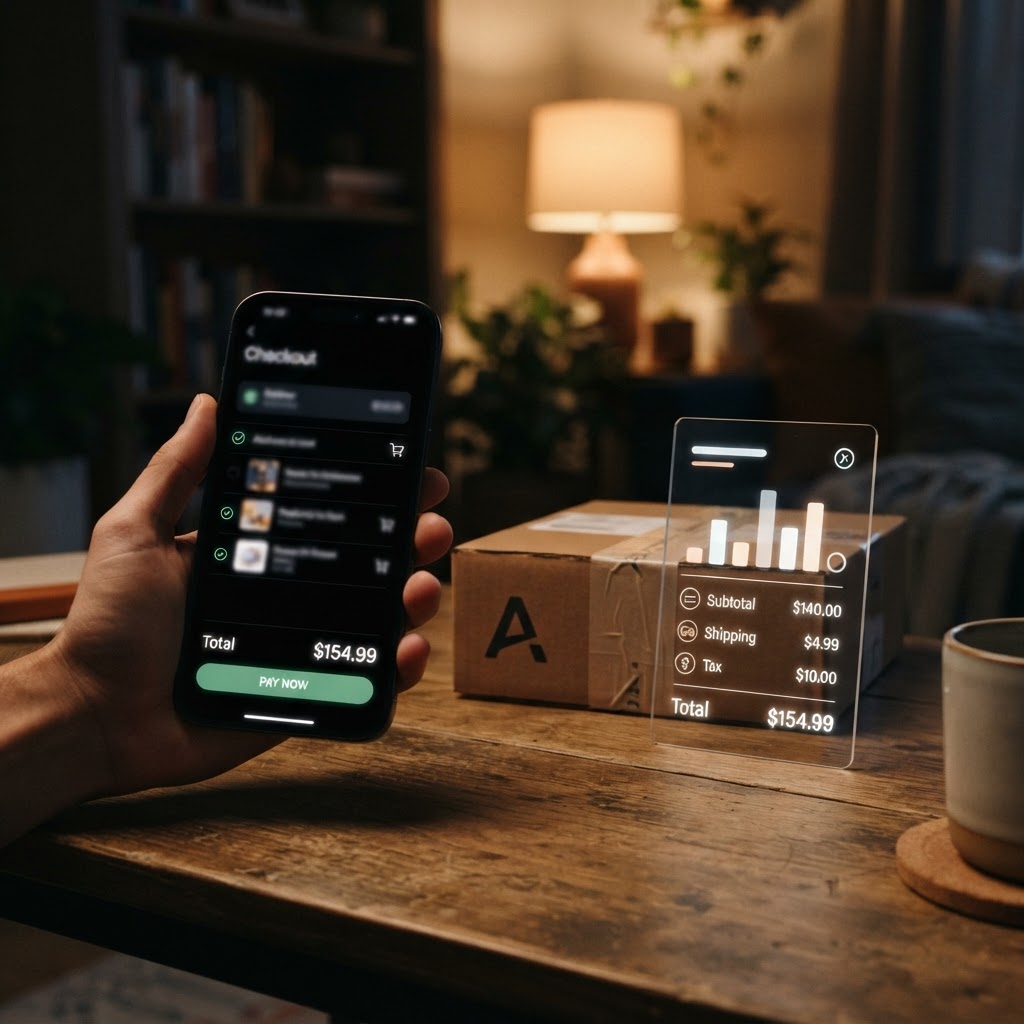
A clear final price is a conversion tool, not a footnote.
The practical test is simple. Can a customer explain why the item costs what it costs before they reach checkout? If not, the team may be compensating for weak communication with a stronger discount.
This is where a weak funnel can create a false pricing problem. If the page does not answer basic questions, conversion falls. The reflex is to cut price. The better move may be to fix the information gap.
Replace constant discounts with earned value
Not every incentive has to reduce the list price. Some of the strongest offers protect the reference price while improving the customer's experience.
A bundle can make the decision easier when the products genuinely belong together. A loyalty benefit can reward repeat behavior without telling every new visitor that the base price is negotiable.
Free delivery above a sensible threshold can increase basket size if the threshold is visible and attainable. A limited service upgrade can create urgency without turning the product into a clearance item.

Earned value feels different from a permanent markdown.
The word “earned” matters. A benefit tied to a behavior has a reason. A discount that appears everywhere has a habit.
Loyalty programs still need discipline. McKinsey's research on loyalty and pricing argues that loyalty mechanics work best when they are integrated with the broader value proposition, rather than treated as a separate coupon engine. Customers should understand what the relationship gives them and why the brand is worth returning to.
A good offer answers one of three questions:
- What problem does this remove?
- What behavior does this reward?
- What value becomes easier to access?
If the only answer is “it is cheaper,” the offer is doing too much strategic work.
Give promotions a job
Promotions are useful when they have a job with a beginning and an end.
A new product launch might need trial. A slow day might need traffic. A seasonal inventory problem might need a controlled exit. A lapsed customer might need a reason to reconsider. Those are different problems, so they should not all receive the same percentage-off code.

A promotion is easier to control when its job is explicit.
Before launching, write down the intended behavior and the guardrail. For example: “Increase first purchase among qualified local customers without lowering repeat order margin.” That sentence is more useful than “drive sales this weekend.”
Then choose a measurement window that includes the quiet period after the promotion. Track the offer against a comparable audience or market where possible. If the campaign is for existing customers, hold out a small group. If it is a local retail offer, compare matched days and stores instead of relying on a blended monthly total.
The same discipline applies to measurement decisions that survive the dashboard. Attribution can show where a customer arrived from. It cannot tell you whether the customer would have purchased anyway or whether the discount changed their future behavior.
What the customer sees at home
The internal promotion calendar may look carefully controlled. The customer experiences it as a stream of signals across email, search, social, marketplaces, and the inbox.
That is why channel teams need a shared offer calendar. A customer should not receive a full-price product email in the morning, a deep discount from a retargeting ad at lunch, and a different promotion from a marketplace that evening. Each channel can hit its local target while the brand teaches one global lesson: never buy at the first price.

Customers remember the pattern across channels, not the reason each team gave for it.
A useful weekly review asks:
- What price did a customer see first?
- How long did they wait before buying?
- Which offer reached them last?
- Did the order include more items or only a lower price?
- What did the same customer receive after purchase?
That last question is easy to miss. If the post-purchase experience is thoughtful, the customer has a reason to return that is not purely promotional. If it is forgettable, the next coupon becomes the only visible relationship.
A better promotion brief
The next promotion brief should fit on one page. Include the customer segment, the business problem, the exact behavior you want, the margin floor, the channels involved, and the stop condition.
Add one more line: “What should the customer believe after seeing this?”
Possible answers might be:
- this product is worth trying now
- this brand understands my routine
- buying more together is genuinely easier
- the reward is better when I return
“Everything is on sale” is not a belief. It is noise.

Small teams feel the cost of weak pricing habits first, usually in the margin report.
The best pricing strategy is not the one with the fewest promotions. It is the one where every promotion has a reason, a boundary, and a lesson the customer can live with.
FAQ
No. A discount can support trial, clear a specific inventory problem, or reward a behavior. The damage comes from making the lower price the most consistent part of the brand promise.
There is no universal number. Watch whether customers delay purchases, whether full-price conversion weakens, and whether repeat buyers increasingly purchase only during offer windows. Those patterns matter more than a calendar rule.
Usually not. Start by assigning each promotion a job and a margin floor. Replace broad, predictable discounts with targeted benefits, bundles, service improvements, and loyalty rewards where they fit the customer and the business.
Measure incremental contribution margin, purchase timing, repeat rate, basket composition, returns, and the behavior of a comparable holdout group. Revenue alone cannot show whether the promotion created demand or moved it forward.
They can help if the program gives customers a clear reason to return and rewards behavior that matters to the business. If the program is only a permanent coupon, it may deepen the same dependence under a different name.
Create a shared offer calendar and record the purpose of every promotion. Then review what customers did after the offer ended. That small habit usually reveals whether the team is building demand or teaching people to wait. The customer is always learning from the price. Make sure the lesson is about value, not patience.