Most marketing teams treat the click as the finish line. It isn't. The click is where the brand promise gets handed to the rest of the business.
A campaign can earn attention with a sharp offer and a clean landing page. Then the customer sees an unexpected fee, waits longer than promised, receives no useful update, or has to explain the same problem twice. The ad did its job. The company still lost trust.
Customer trust is built after the click. That makes checkout, delivery, support, and recovery marketing work, not just operations work.

The moment after the click is where the promise gets tested.
The promise has a receipt
Every campaign makes a promise, even when the copy doesn't sound like one.
A low price promises affordability. Same-day delivery promises speed. A premium product page promises care. A free consultation promises that the next step won't feel like a trap. Customers carry that expectation into the buying process and compare what they receive with what they thought they were promised.
That comparison is the real conversion event.
The promise should be written down before a campaign launches. Keep it simple:
- What is the customer being offered?
- What must be true for the offer to feel honest?
- Where can the business fail to deliver it?
- Which team owns the recovery if it fails?
This is closely related to marketing offer strategy, but the offer should not stop at the headline. It needs an operational receipt, a short record of the conditions that make the claim true.
For a delivery company, that receipt might include service zones, cutoff times, inventory limits, fees, and the definition of on-time. For a software company, it might include implementation time, support coverage, data access, and the boundary between a feature and a promised outcome.

Trust starts with the details customers check when nobody is selling to them.
The point isn't to make every ad cautious and dull. The point is to make the excitement survive contact with the buying experience.
Checkout is a trust test
Baymard's ongoing checkout research has found that extra costs, forced account creation, slow delivery, and complicated flows are among the recurring reasons shoppers abandon carts. Its current cart abandonment research puts the average documented abandonment rate near seven in ten carts, while also showing that a meaningful share of abandonment is caused by preventable design and information problems.
The exact percentage matters less than the pattern. Customers leave when the transaction starts asking them to take risks the brand hasn't explained.
A trustworthy checkout answers the quiet questions in a customer's head:
- What will I pay today?
- When will this arrive?
- Can I change or cancel it?
- What happens if something goes wrong?
- Why do you need this information?
Those answers should not be hidden in a policy page. Put them beside the decision.
For an ecommerce brand, that means showing total cost before payment, stating the delivery range in plain language, and making guest checkout available when there is no strong reason to require an account. For a service business, it means showing what happens after a form is submitted, when a person will respond, and what the first conversation will cover.
A checkout can be technically functional and still feel unsafe. Speed is not the same as confidence.
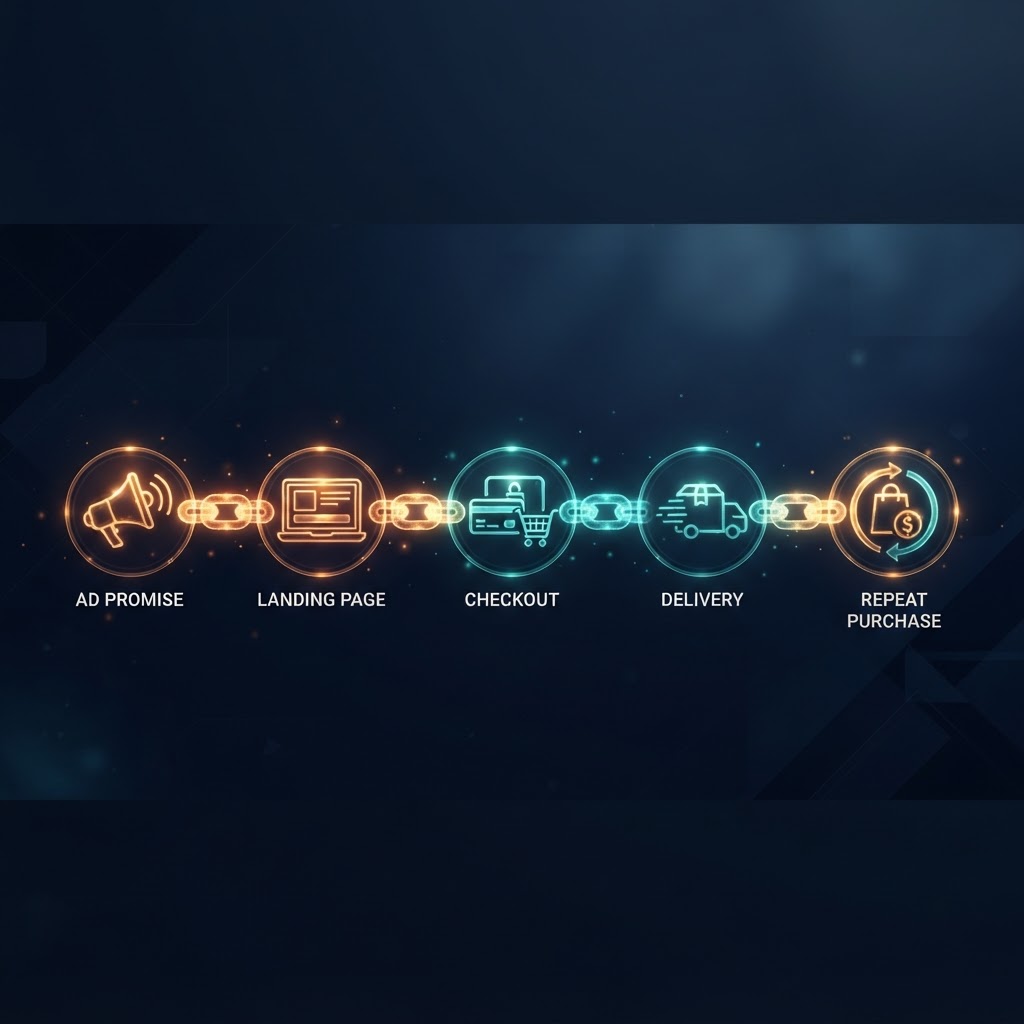
Conversion is a chain. One weak handoff can break the whole experience.
Delivery is a media channel
After payment, the customer is still paying attention. They are watching the delivery promise, the tracking information, the packaging, and the first use of the product.
That period is often treated as dead time. It isn't. It is a long brand impression with unusually high attention.
A useful delivery message does three things. It confirms what happened, tells the customer what happens next, and gives them a clear path if the plan changes. “Your order is on the way” is better than silence, but it is still thin. A stronger update explains the expected window, the current stage, and the action to take if the customer won't be available.
The same rule applies to appointments, onboarding, estimates, and service tickets. Customers don't need constant notifications. They need fewer moments where they have to guess.
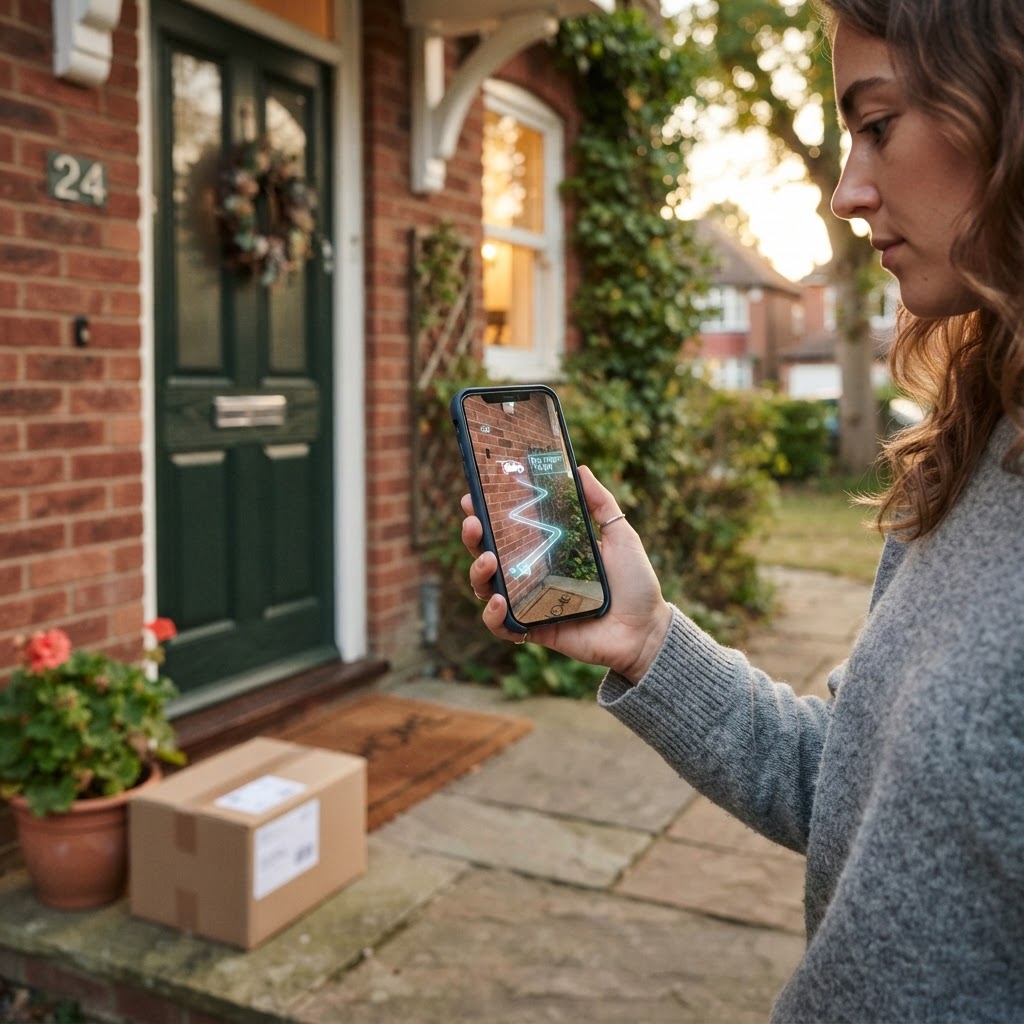
Good updates reduce the work customers have to do to trust you.
This is where digital marketing measurement plans often need to expand. Add operational signals to the marketing view: delivery accuracy, cancellation rate, support contacts per order, refund rate, repeat purchase, and review sentiment.
A campaign that produces first orders but creates avoidable recovery work is not performing as well as its dashboard suggests.
Reviews are earned in the handoff
Reviews are often approached as a content request. Send an email, ask for five stars, collect the quote. That approach misses the important part. The review is usually a response to the entire handoff, not just the product.
Customers remember whether the promise was clear. They remember if the package arrived when expected. They remember whether support acted like the problem belonged to someone else.

The best review strategy is usually a better handoff.
The practical move is to ask for feedback at the moment the customer can judge the experience, then separate the questions. Product satisfaction, delivery satisfaction, and support satisfaction are different signals. Combining them into one star rating makes it harder to know what to fix.
A review program should also include a response path. If a customer reports a problem, the company should know who owns the next message and how quickly it needs to arrive. Public replies can show accountability, but the real recovery usually happens in the private handoff that follows.
Trust grows when customers see that feedback changes the next experience. A review collection system without a learning loop is just a larger inbox.
Recovery is part of the brand
Things go wrong. Inventory moves late. A driver misses a window. A payment fails. A new customer misunderstands the offer. The mistake itself is not always what determines the relationship. The recovery does.
The worst recovery message makes the customer prove the failure. It asks for an order number the company already has, repeats a policy without addressing the situation, or offers a generic apology with no next step.
A useful recovery path has four parts:
- 1Name what happened in plain language.
- 2Take responsibility for the part the company controls.
- 3Offer a specific next action or choice.
- 4Close the loop when the fix is complete.

A recovery message should remove work, not create another task.
The recovery should be designed before the campaign runs. If the business can't explain what happens after a late order, a misleading ad is only one traffic spike away from exposing the gap.
That is why landing page conversion strategy should include the next few steps after the form or payment. The page is not successful because someone converted. It is successful when the customer receives the expected value with reasonable effort.
Measure the handoff, not just the click
Marketing reports often stop at cost per acquisition, conversion rate, and revenue. Those numbers are useful, but they can hide a trust problem because they end before the customer has enough time to judge the promise.
Add a second measurement layer after the conversion:
| Handoff | Useful question | Metric to watch |
|---|---|---|
| Checkout | Did the final transaction match the offer? | Payment failure, checkout abandonment, unexpected-fee contacts |
| Fulfillment | Did the customer receive what was promised? | On-time rate, cancellation rate, refund rate |
| Support | Did the company reduce customer effort? | First-response time, repeat contacts, resolution time |
| Retention | Did the experience earn another purchase? | Repeat rate, review rate, referral rate |
These metrics don't belong in a separate operations report that marketing never sees. Put them next to campaign and channel performance. If one source of traffic has a lower acquisition cost but a much higher cancellation rate, the cheap channel may be buying the wrong kind of growth.
The same logic applies to cannabis retail, where availability, delivery windows, identification requirements, and local restrictions shape the customer's experience. Marketing can create demand, but the business earns trust by making the constraints clear before payment and handling exceptions without making the customer start over.

Customer proof becomes easier when the experience gives people something real to share.
Build the trust loop
The next campaign brief should include more than audience, creative, budget, and conversion event. Add the trust loop:
- Promise: What does the customer believe will happen?
- Proof: What evidence makes that belief reasonable?
- Handoff: Which team delivers the next experience?
- Failure: Where can the promise break?
- Recovery: What happens when it does?
- Learning: Which metric tells us whether the system improved?
This turns brand trust from a soft aspiration into a working marketing input. It also gives creative teams better material. A real delivery window, a clear cancellation policy, a useful support response, or a customer story about a recovered mistake can be more persuasive than another polished claim.
The best marketing doesn't end at conversion. It creates an experience customers can accurately describe to someone else.

The unboxing is the first proof that the promised experience was real.
Frequently asked questions
Yes. Checkout is where a customer's expectation meets the company's transaction rules. Unexpected fees, unclear timing, forced account creation, and confusing forms can reduce conversion even when the campaign and landing page are strong.
Start with cancellation rate, refund rate, delivery or fulfillment accuracy, support contacts, resolution time, repeat purchase, and review rate. Choose measures that reveal whether the promised experience actually arrived.
Make the offer conditions explicit, show the full price early, state the realistic delivery or response window, and create one clear recovery path for problems. These changes usually matter more than adding another campaign variation.
Not necessarily. The recovery should match the failure and the customer's next best action. The important part is consistency in ownership, response time, and communication, not a universal discount.
Reviews expose which parts of the customer experience create confidence or disappointment. Separate product, delivery, and support feedback so teams can fix the specific handoff that affects future conversion. Trust isn't a brand value that lives in a presentation. It is the accumulated result of whether the business does what the marketing told people to expect.