AI assistant ads are no longer a thought experiment. They are becoming part of the interface where people ask what to buy, which provider to choose, and what to do next.
That changes the job. A search ad competes for a click. An assistant recommendation competes for trust inside an answer that already feels personal. The winning brands won't simply buy placement. They'll make their products easy for an AI system to understand, verify, and recommend without embarrassing the user.

The new ad unit is not a banner. It is a decision made inside a conversation.
The interface just moved
OpenAI is expanding ChatGPT ads to 31 European countries, according to <a href="https://searchengineland.com/chatgpt-ads-are-expanding-to-31-european-countries" rel="nofollow noopener noreferrer" target="_blank">Search Engine Land's report</a>. That doesn't mean every brand suddenly needs to buy ChatGPT inventory.
It does mean the channel is moving beyond a US-only test and into markets where privacy, disclosure, and consumer expectations are already heavily scrutinized.
The useful comparison is not Google versus ChatGPT. It's interruption versus assistance.
A traditional ad asks a person to stop what they're doing and consider a message. An assistant recommendation arrives after the person has already stated a need. The commercial opportunity is stronger, but the tolerance for a bad recommendation is lower.
If the assistant recommends a weak product, the user doesn't blame an ad slot. They blame the system, and often the brand that appeared in it.

The recommendation appears after intent, which raises the reward and the reputational risk.
That is why the old performance dashboard won't be enough. Impressions and clicks describe exposure. They don't tell you whether the assistant represented the product correctly, disclosed the commercial relationship, or sent a customer who was actually a fit.
Sparksbox has already written about AI search visibility as a marketing operating system. Assistant ads make that operating system more urgent because paid and organic brand information now sit closer together. A sponsored recommendation can amplify an inaccurate product description just as quickly as a strong one.
Trust becomes the ad format
The IAB recently updated its guidance for disclosing AI in advertising. The practical issue is not whether every generated pixel needs a badge. The issue is whether an ad changes what a reasonable person thinks is real, who is speaking, or why a recommendation appeared.
Assistant advertising creates all three questions at once.
Was the recommendation paid for? Is the answer based on the user's request, the advertiser's bid, or both? Did a human approve the product facts? Can the user tell the difference between a neutral comparison and a paid placement?
The clean answer is not to hide the commercial layer inside helpful language. Make it clear, close to the recommendation, and easy to understand. A disclosure buried behind a menu will feel like a trick even if it technically passes a checklist.

Trust is built before the prompt, in the evidence a brand gives the system.
This is where marketing and compliance stop being separate lanes. The creative team owns the promise. The product team owns the facts. Legal owns the boundary. Someone still needs to decide whether the final answer sounds like something the brand is willing to defend in public.
For regulated categories, that gate matters even more. A fluent assistant can turn an old claim, missing qualifier, or wrong location detail into a confident recommendation. In cannabis marketing, that is not a minor copy issue. It can become a platform, legal, or customer-trust problem.
Our earlier piece on AI marketing's claim ledger points to the operating answer: maintain a living record of what can be said, what needs evidence, what expires, and where the claim is allowed to appear.
Brand data is now media
The brands most prepared for assistant ads won't necessarily have the biggest creative budgets. They'll have the cleanest decision data.
An assistant needs more than a product name and a landing page. It needs accurate attributes, availability, location, pricing context, service boundaries, customer experience signals, and a clear explanation of who the product is for. If those details conflict across the website, map profile, product feed, reviews, and third-party directories, the system has to guess.
Guessing is where visibility turns into distortion.

The media plan now includes the evidence trail behind the recommendation.
This is the less glamorous work behind better evidence for AI marketing decisions. Product feeds need owners. Review responses need substance. Location pages need current facts. Claims need dates. Promotions need an expiration path. The assistant can only make a reliable recommendation from information that someone has maintained.
That changes how teams should think about content. A page is not only a destination for a human visitor. It is a source document that can be summarized, compared, quoted, and used to justify a recommendation.
The question is no longer, “Do we have content for this keyword?” It is, “Could an assistant use this page to make a safe, accurate decision?”
Measurement needs a second scoreboard
Assistant advertising will create a dangerous reporting temptation. Teams will see a new impression number and assume they have found the next growth channel.
Don't.
Track the commercial result, but also track the quality of the representation. A useful scorecard should include four layers:
| Layer | What to measure | Why it matters |
|---|---|---|
| Visibility | Mentions, impressions, recommendation frequency | Shows whether the brand enters the conversation |
| Accuracy | Product facts, pricing, location, availability | Shows whether the system describes the brand correctly |
| Trust | Disclosure clarity, review quality, claim support | Shows whether the recommendation can survive scrutiny |
| Business | Qualified visits, calls, purchases, repeat behavior | Shows whether attention turned into useful demand |
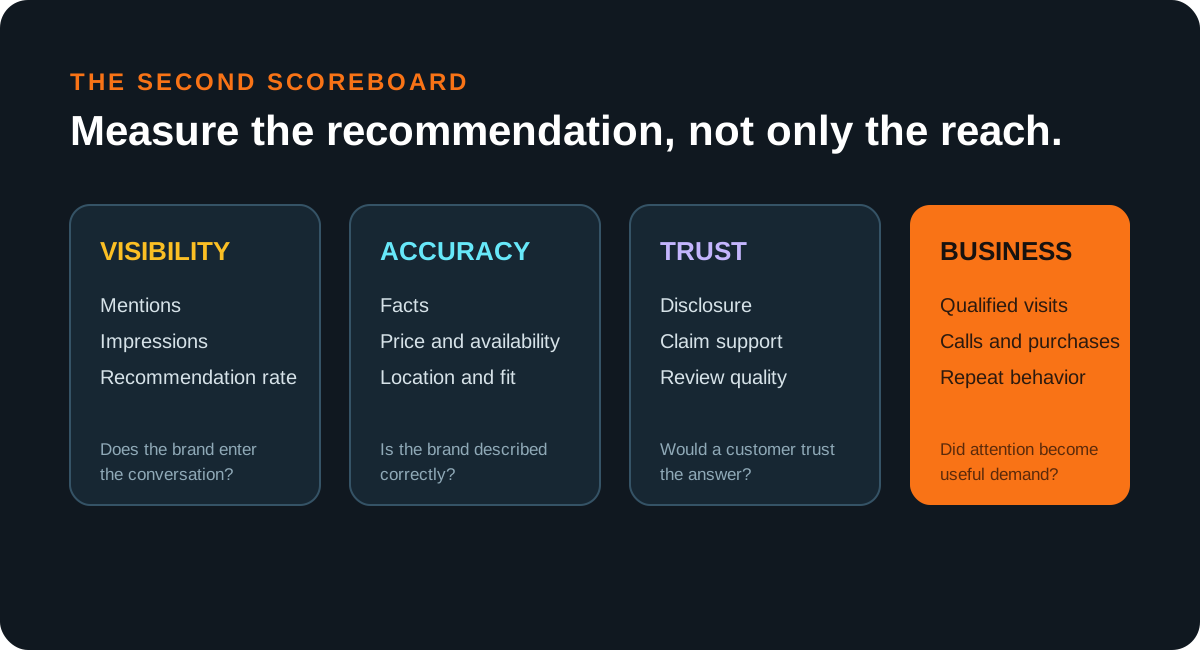

Visibility is the first number, not the final answer.
The second layer is the one most teams will skip because it requires manual review. Run the same high-value prompts every week. Record what the assistant says, which competitors appear, what sources it cites, whether the disclosure is visible, and whether the answer contains an outdated claim.
Then connect those observations to real customer behavior. A recommendation that produces traffic but sends people to an unavailable product is not a win. A brand that appears less often but is described accurately may be building a stronger asset.
Google's own recent AI tools for Ads and Analytics point in the same direction: automation is moving into planning, optimization, and measurement. The more of that work software handles, the more valuable a human-owned definition of “good” becomes.
The operating model changes
A small team doesn't need a new department called Assistant Advertising. It needs a tighter weekly loop.
Start with the ten questions customers ask before buying. Check how the major assistants answer them. Fix the evidence gaps first. Then decide whether paid placement would improve the answer or merely put money behind a weak one.

The approval process should review the answer, not only the asset.
A sensible review includes the person who owns the offer, the person who owns the customer experience, and the person who can stop a risky claim. Keep the group small. The goal is not another committee. It's a fast way to catch a bad promise before an assistant repeats it at scale.
The creative standard also rises. A generated ad can look polished and still feel dishonest if the recommendation ignores the user's context. The prompt is part of the media environment. So is the answer. So is the reason the system chose that brand.
What marketers should do this week
- 1Choose a narrow decision category, not a broad channel goal. “Be visible in AI” is too vague. “Be the most accurately described local option for this customer question” is measurable.
- 2Run a baseline prompt set across the assistants your customers use. Save the exact wording and the answer, not just a screenshot.
- 3Build a claim and evidence sheet for the products, services, locations, and offers most likely to be recommended.
- 4Add a disclosure review to the approval process. Ask whether a reasonable person can tell what is paid, what is generated, and what is verified.
- 5Measure qualified outcomes alongside representation quality. If the brand earns attention but loses accuracy, stop scaling the spend.
A candid phone snapshot from an operator's desk often tells the truth faster than a polished campaign deck. The work is becoming operational.

The weekly audit starts with the questions customers actually ask.
What are AI assistant ads?
AI assistant ads are paid placements or sponsored recommendations delivered inside conversational tools while a person is asking for information, comparisons, or purchase help.
Are AI assistant ads replacing search ads?
Not yet. They are creating another decision surface. Search ads still capture active queries, while assistant ads can influence a recommendation after the user has described a broader need.
What should a brand prepare before testing them?
Prepare accurate product and service data, current claims, clear audience boundaries, strong first-party pages, and a review process for disclosure and factual accuracy.
How should marketers measure assistant advertising?
Measure visibility, representation accuracy, disclosure clarity, and qualified business outcomes together. A high impression count without accurate answers is a warning, not a success.
Do small brands need to buy assistant ads now?
No. Small brands should first make sure assistants can find and describe them correctly. Paid placement is a poor substitute for missing or contradictory brand evidence.
What is the biggest risk?
The biggest risk is scaling a recommendation before the business knows whether the assistant's answer is accurate, clearly disclosed, and useful to the customer.
The first brands to win in assistant advertising won't be the ones that shout the loudest. They'll be the ones with enough evidence to be recommended without a correction in the next sentence.