The DEA's cannabis rescheduling hearing wrapped up on July 15. Post-hearing briefs are due August 17. Then a judge writes a recommendation. Then the DEA administrator decides. Nobody knows when that ruling lands.
Meanwhile, 17 Senate Democrats just filed a bill to remove cannabis from the Controlled Substances Act entirely. Two federal tracks are running in parallel, and most dispensary operators are preparing for only one of them.
That's the problem. Your marketing plan probably assumes rescheduling to Schedule III is the finish line. It isn't even close.
What the hearing actually settled
The hearing ran from June 29 to July 15, 2026 at the DEA facility in Arlington, Virginia. DEA Chief Administrative Law Judge Derek Julius presided. He invited only organizations and people who oppose cannabis reform to participate as designated parties, a decision that drew criticism from reform advocates who were shut out of the process entirely.
Here's what happened inside: witnesses called by the opposition ended up testifying that cannabis has accepted medical use and is relatively safe compared to alcohol and opioids. An FDA scientist detailed medical benefits.
A doctor from New Hampshire explained how medical marijuana helps pain patients as an alternative to opioids. The opposition's own witnesses made the case for rescheduling better than the government did.
On July 16, Judge Julius issued his post-hearing order. Participating parties have until August 17 to file closing briefs, capped at 50 pages. After that, Julius will write his recommendation.
But the final call belongs to DEA Administrator Terrance Cole, who set up the hearing to include only opponents in the first place. No timeline has been given for either the recommendation or the administrator's decision.
Schedule III keeps your ads locked
Here's the part most operators miss. Rescheduling cannabis to Schedule III does not legalize it. Cannabis remains a controlled substance under federal law. The Controlled Substances Act still applies. State regulations still apply. And the advertising policies of Meta, Google, X, and every other major platform are built around those federal restrictions.
<a href="https://mjbizdaily.com/news/does-federal-marijuana-rescheduling-change-cannabis-advertising-rules/615904/" rel="nofollow noopener noreferrer" target="_blank">MJBizDaily put it bluntly</a>: rescheduling "may give marijuana companies more room to market themselves, but the change is unlikely to result in an advertising free-for-all."
That's not speculation. It's how platform trust and safety teams work. Meta's cannabis advertising policy doesn't reference a specific schedule. It references whether cannabis is legal under federal law. Under Schedule III, it still isn't.
Google's policy is similar. Both platforms require complex certification processes and restrict cannabis ads to specific legal markets. Moving from Schedule I to Schedule III changes the optics. It does not change the policy infrastructure.
We already covered this in depth when we looked at <a href="/blog/cannabis-advertising-schedule-iii-still-locked-2026">why cannabis advertising stays locked after Schedule III</a>. The short version: platform policies move slower than federal scheduling, and they have their own enforcement logic that doesn't map cleanly to DEA scheduling decisions.
The moment most operators realize their ads still aren't running.
The descheduling wildcard
While the DEA hearing played out in Arlington, 17 Senate Democrats filed the Cannabis Administration and Opportunity Act, or CAOA. This bill would go further than rescheduling. It would remove cannabis from the Controlled Substances Act entirely. Full descheduling.
The <a href="https://drugpolicy.org/resource/cannabis-administration-and-opportunity-act-caoa/" rel="nofollow noopener noreferrer" target="_blank">Drug Policy Alliance explains</a> that CAOA would federally decriminalize marijuana by removing it from the CSA, establish a regulatory framework, and address the harms of prohibition. It's the legislative track running parallel to the executive rescheduling process.
If CAOA passed, the advertising landscape would change fundamentally. Cannabis would no longer be a controlled substance. Platform policies that reference federal illegality would need to be rewritten. Google and Meta would face pressure to open their ad platforms to cannabis brands, similar to how they handle alcohol.
But CAOA faces a long road. It needs to pass both chambers of Congress and get signed. That's a different timeline than the DEA's administrative process. The rescheduling ruling could come this fall. CAOA could take years, or it could die in committee.
The point isn't to predict which one wins. It's that operators need to be ready for either outcome, because the marketing playbook is completely different under each one.
Build what works regardless
The smartest operators aren't waiting for either ruling. They're building marketing infrastructure that works under Schedule I, Schedule III, or full descheduling. Here's what that looks like.
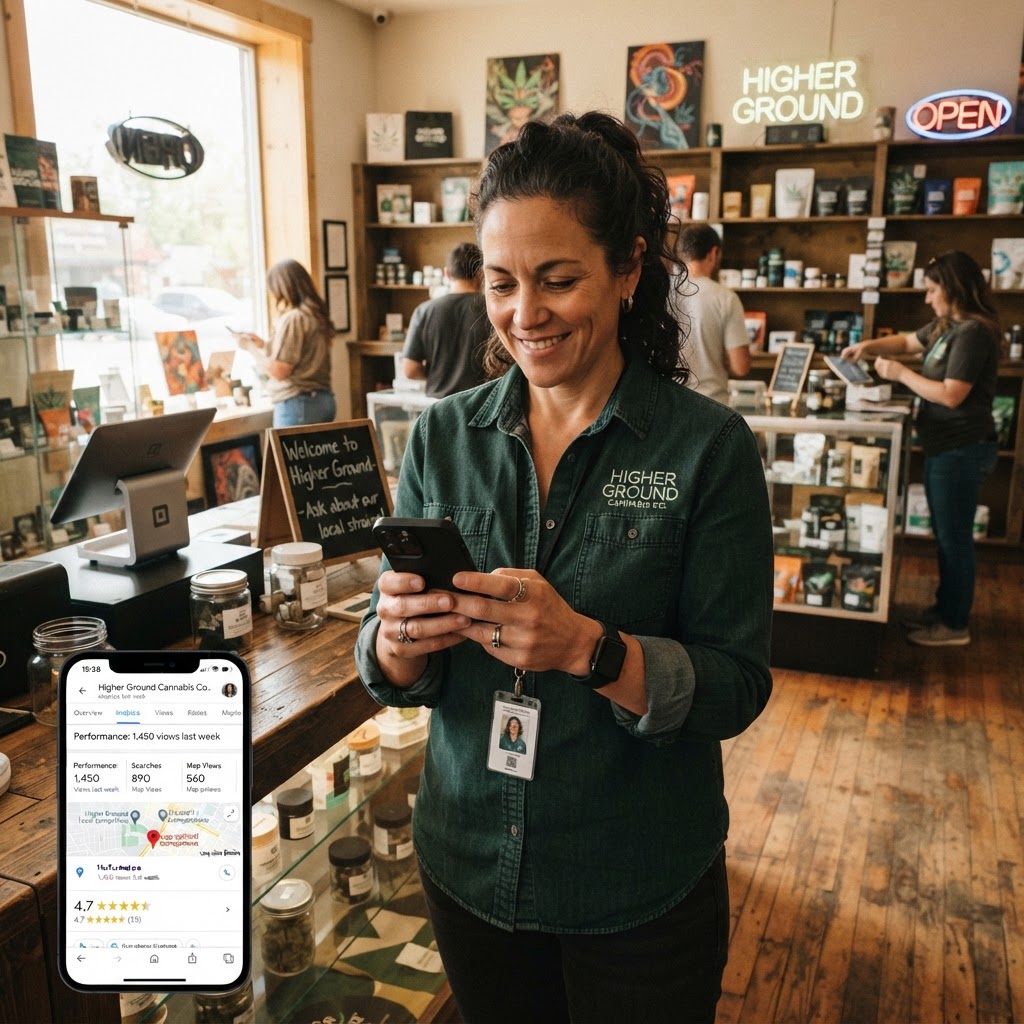
Own your local search presence. Your Google Business Profile is the highest-converting marketing asset you have. It works under any federal classification. A <a href="https://searchlabdigital.com/2025-google-business-profile-report-cannabis-dispensary-edition/" rel="nofollow noopener noreferrer" target="_blank">study of 3,475 dispensary Google Business Profiles</a> across 24 major U.
S. cities found clear patterns that separate dispensaries ranking first from the rest. Complete profiles, consistent review responses, and active posting matter more than ad spend for most dispensaries.
We broke down the latest Google Business Profile changes for cannabis operators in our <a href="/blog/google-gbp-update-cannabis-local-search-2026">GBP update analysis</a>. The short version: Google keeps tightening its local search guidelines, and dispensaries that stay ahead of the updates win the map pack.
Build content that AI systems can cite. When someone asks ChatGPT or Perplexity for dispensary recommendations, you want your content to be the source they quote.
That means structured, source-backed, answer-shaped content that AI systems can reference without creating compliance risk. We covered this angle in our analysis of <a href="/blog/cannabis-ai-visibility-schedule-three-2026">cannabis AI visibility after Schedule III</a>.
Grow your email and SMS lists. First-party data is the one marketing channel that works under every regulatory scenario. You own it. No platform can cut you off. No scheduling change can disable it. Start building your list now if you haven't already.

The marketing plan that works under Schedule I, Schedule III, or descheduling.
Invest in content marketing and SEO. Organic search traffic doesn't care about federal scheduling. Educational content, product guides, strain reviews, and local dispensary resources all rank regardless of what the DEA decides. The operators ranking now will keep ranking when the ruling lands. The ones who start then will be six months behind.
Get your compliance documentation in order. Whether you're preparing for Schedule III or descheduling, compliance documentation becomes more important, not less. Schedule III brings more scrutiny, not less.
We explored this in our <a href="/blog/cannabis-ai-compliance-gap-2026">cannabis AI compliance gap analysis</a>. Having your licenses, lab results, and standard operating procedures organized and accessible is a marketing asset when platforms and AI systems look for trust signals.
| Marketing channel | Schedule I (now) | Schedule III | Descheduled |
|---|---|---|---|
| Google Business Profile | Works | Works better | Works best |
| Paid social ads | Mostly blocked | Mostly blocked | Likely opens |
| SEO and content | Works | Works | Works |
| Email and SMS | Works | Works | Works |
| AI visibility | Limited | Improving | Full access |
| Local search | Competitive edge | Still critical | Table stakes |
Frequently asked questions
No. Rescheduling moves cannabis from Schedule I to Schedule III of the Controlled Substances Act, but it remains a controlled substance. Major advertising platforms like Meta and Google base their cannabis ad policies on federal legality, not the specific schedule. Cannabis advertising restrictions will likely persist under Schedule III.
Rescheduling moves cannabis to a different schedule within the Controlled Substances Act (Schedule III in this case). Descheduling removes cannabis from the CSA entirely. Rescheduling reduces some restrictions but keeps cannabis federally controlled. Descheduling would treat cannabis more like alcohol or tobacco, with regulation handled primarily at the state level.
The hearing concluded July 15, 2026. Post-hearing briefs are due August 17. After that, DEA Chief Administrative Law Judge Derek Julius will write a recommendation, but no timeline has been given. DEA Administrator Terrance Cole makes the final decision, and no date has been announced for that either. A ruling could come in fall 2026, but that is an estimate, not a confirmed date.
The CAOA is a bill filed by 17 Senate Democrats in July 2026 that would deschedule cannabis entirely, removing it from the Controlled Substances Act. It would establish a federal regulatory framework, address prohibition-related harms, and treat cannabis more like alcohol. It represents the legislative path to federal legalization, running parallel to the executive rescheduling process.
Google Business Profile optimization, SEO and content marketing, email and SMS lists, and local search presence all work under any federal classification. These channels do not depend on advertising platform policies or federal scheduling. They are owned or earned channels that operators control directly.
Both. The DEA's rescheduling process and the CAOA descheduling bill are running in parallel. Operators who build marketing infrastructure that works under any scenario will be ahead regardless of which track moves first. Waiting for a final ruling before investing in marketing is the riskiest strategy. [INSIGHT] The operators who win the next 12 months aren't the ones with the biggest ad budgets. They're the ones who built SEO, local search, and first-party data infrastructure before the ruling came down.
The ruling is coming. Your competitors aren't waiting.
A DEA ruling could land this fall. CAOA could gain momentum in Congress. Or both could stall and leave cannabis in regulatory limbo for another year. None of those scenarios change the fundamentals. The marketing channels that work for cannabis dispensaries today will still work tomorrow. The ones that are blocked will stay blocked until the policy infrastructure catches up.
The operators building their SEO, local search, content, and first-party data infrastructure right now will be the ones showing up in search results, AI answers, and map packs when the ruling finally drops. The ones waiting for permission to start marketing will be six months behind on day one.