Schedule III was supposed to change everything. In April 2026, cannabis moved from Schedule I to Schedule III, the same category as anabolic steroids and ketamine. Federal. Legal. Regulated.
But something strange happened on the way to mainstream acceptance: AI platforms didn't move.
Twenty-eight percent of cannabis queries tested on major AI systems still produce refusals, hedges, or prominent disclaimers. That's the highest refusal rate of any product category. Higher than alcohol. Higher than tobacco. Higher than prescription medications with actually dangerous side effects.
This isn't incompetence. It's caution baked into guardrails that were built during Schedule I panic and never updated.
The AI Lag Isn't Random
When the DEA rescheduled cannabis in April 2026, three things should have happened:
- 1AI training data updated to reflect the new legal status
- 2System prompts loosened restrictions on cannabis content
- 3Platforms aligned their policies with federal law
None of that happened at scale. Why?
Platform legal teams are conservative. Cannabis still lives in the paranoid part of their risk matrix , the same box as weapons, counterfeit goods, and unregulated health claims. Even though cannabis is now federally legal, the guardrails haven't caught up because:
- Training data cutoffs: Most large language models trained through mid-2026 captured the Schedule I era. Even models with fresh data still run old system prompts.
- Regulatory uncertainty: States still have absolute authority over cannabis. Federal reclassification doesn't mean New Hampshire allows the same things as California. Platforms would need state-by-state compliance logic , too expensive for now.
- Advertiser liability: If a platform shows cannabis content to someone in a dry state, who's liable? The platform chose to wait rather than build that infrastructure.
The result: AI systems are systematically hiding cannabis from visibility.
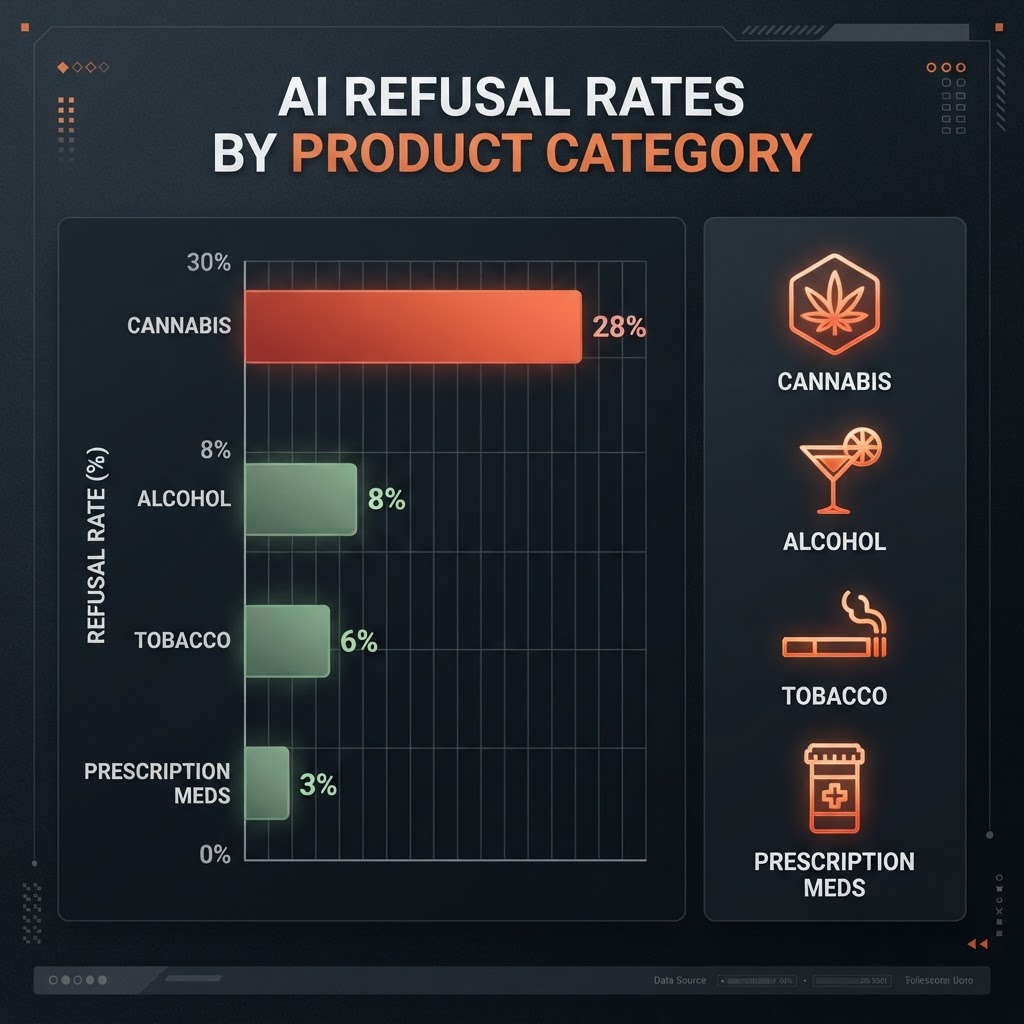
Cannabis sees 28% AI refusal rates,highest of any legal product category
What 28% Refusal Looks Like
Test "best THC vape brands" on Google's AI Overview. You get a hedge: "I can't provide specific product recommendations for cannabis products." On Claude, you get a disclaimer. On ChatGPT, full refusal.
But ask about the best bourbon whiskey brands and you get a clean, comprehensive list of products with notes on tasting profiles.
Ask about the best ADHD medications and you get full pharmacological breakdowns.
Cannabis gets the dreaded "I can't help with that" response , the same response you'd get asking for instructions on making meth.
From an operator perspective, this is actually a window. When AI platforms finally update their policies (probably late 2026 or early 2027), cannabis search visibility will spike. Operators who understand that cannabis content is currently invisible to AI can build advantages before the rush.
Why This Matters for Dispensaries
Your customers are searching differently because AI is refusing.
Instead of asking an AI what to buy, they're:
- Going to Reddit threads (old, unreliable, full of spam)
- Calling dispensaries directly (high friction, inconsistent service)
- Reading reviews on Google Maps (limited to customer experience, not product guidance)
- Asking friends (word-of-mouth, which favors established brands)
None of those paths include you unless you're already top of mind.

Operators who audit their product data now will be ready when AI platforms open up
When AI platforms update their cannabis policies, the visibility game shifts. Customers will ask their AI assistant questions like:
- "What's the best indica for sleep in [my state]?"
- "How does Delta-8 compare to Delta-9?"
- "What should I expect from a 10mg edible?"
And AI will actually answer , pulling from dispensary menus, product databases, and operator content.
Right now, that's invisible. In six months, it won't be.
The Compliance Layer
Here's where it gets interesting for operators. When AI platforms do open up cannabis visibility, they'll need a compliance layer.
That means:
- Age verification integration (can't show cannabis to under-21 users in most states)
- State-legal compliance (California edible rules aren't Nevada edible rules)
- Licensed retailer verification (AI won't recommend unlicensed operations)
- Automated THC/CBD labeling compliance (no exaggerated claims)
Operators who've already built compliant content, documented product specs, and integrated with state tracking systems will be ready. Operators who haven't will be scrambling when the AI visibility door opens.
Three Moves for Cannabis Operators Right Now
1. Audit your product data. Make sure every SKU has:
- Accurate THC/CBD percentages
- Compliant product descriptions (no health claims)
- State-specific labeling data
- QR codes that link to lab testing
AI systems will pull from structured data when they do index cannabis. If your data is messy, you won't show up.
2. Build owned content around your best sellers. Since AI is currently refusing, Google Search is still the main discovery channel. Create comparison guides, education content, and operator Q&As that rank naturally. This compounds when AI visibility opens.
3. Don't panic about advertising. Cannabis advertising is actually fine under Schedule III. Google Ads, Meta, and Programmatic platforms allow cannabis when you're licensed and compliant. The AI lag is about organic discovery, not paid. Build both.
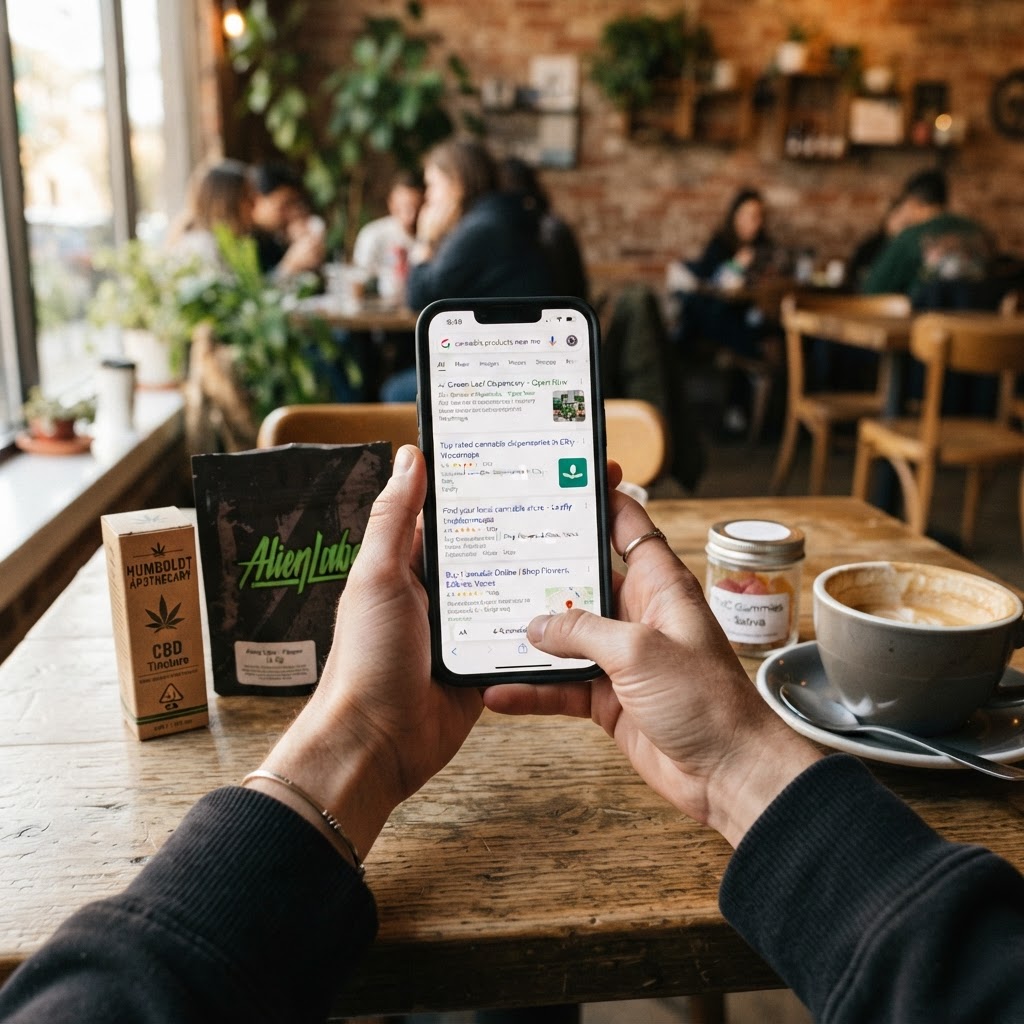
Customers are currently forced to search on Google, Reddit, and reviews because AI won't help
When the AI Door Opens
The calendar is obvious. Late 2026, platforms will update. Early 2027, cannabis content will be visible to AI systems. Operators who have compliant product data, owned content, and clear value props will see traffic spikes. Operators who don't will watch competitors capture visibility they're not ready for.
The advantage period is short. Five, maybe six months from now, the lag closes.
Use it.