The cannabis industry is waiting for federal clarity. The brands that are already visible in AI are building a moat that federal clarity won't erase.
For months, the narrative from cannabis marketing teams has been: "Once Schedule III happens, the real work begins." It's a comforting story. Federal rescheduling would theoretically level the playing field, unlock banking, ease interstate commerce, and reset the regulatory friction that has held cannabis brands back.
The problem is that the citation work already happened.
The Brands Winning AI Are Not Waiting for Federal Approval
The <a href="https://www.5wpr.com/cannabis-ai-visibility-index-2026" rel="nofollow noopener noreferrer" target="_blank">5W PR Cannabis AI Visibility Index 2026</a> measured how often cannabis brands show up in responses from ChatGPT, Claude, Perplexity, and Google's AI Overviews. The findings were stark: Three multistate operators (MSOs). Curaleaf, Trulieve, and Green Thumb Industries captured 17.5 percent of all cannabis-category AI citations in the first quarter alone.
Cookies leads branded consumer products with a citation gap to second place so wide it's essentially uncrossable for new entrants. Charlotte's Web has held the top CBD position for five years and the moat is widening, not narrowing.
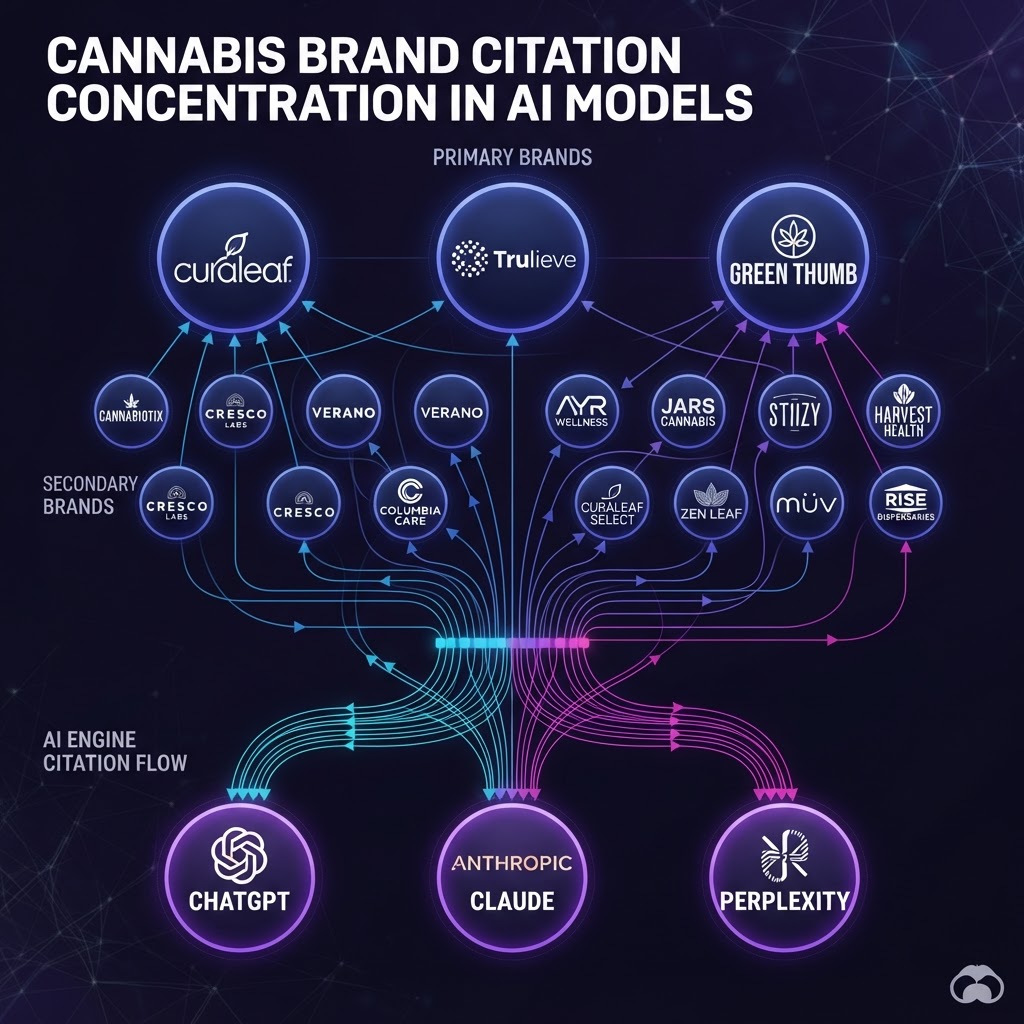
How AI concentrates citations: the three largest MSOs control 17.5% of all cannabis-category AI mentions
This wasn't random. These brands didn't get cited because they got lucky. They got cited because they built structured, state-specific, credentialed content that AI engines use to answer consumer questions. Each citation they receive reinforces their authority to the next version of the AI model. Each quarter they stay cited, uncited competitors fall further behind.
The compounding runs in both directions. It does not pause for federal reform.
Why Schedule III Actually Makes This Worse
Federal Schedule III rescheduling will happen. The April 2026 DOJ final order, the DEA's registration portal, and the scheduled administrative hearings all confirm it. That rescheduling will deliver real wins: banking access, potential Internal Revenue Code Section 280E relief for qualifying businesses, expanded medical research authorization, and reduced compliance friction.
None of those wins will surface a brand in an AI engine that hasn't been citing it already.
What Schedule III does change is the prompts consumers ask. "Is cannabis legal in my state?" becomes "What does Schedule III mean for medical cannabis access?" "Best cannabis dispensary near me" becomes "best Schedule III medical cannabis provider near me."
The brands that published Schedule III content in the first quarter of 2026 captured citation share for those new prompts. The brands waiting until the rulemaking process concludes will arrive after the citation surface has already concentrated. They will be late to questions that consumers are already asking now.
The Real Cost of Waiting
Federal clarity is not an on-ramp. It's a deadline that is already passing.

The work of building AI visibility is happening now in cannabis marketing teams, not waiting for Schedule III approval
What works from here is what has been working since 2024:
- State-specific legal and qualifying-condition content
- Credentialed-author medical applications coverage
- Structured product-by-product education
- Regulatory-event-driven publication cadence
- Consistent presence on the aggregators AI engines treat as neutral
The cannabis brands doing that work today are running ahead of Schedule III. The brands waiting for Schedule III to begin are already behind it. The window of opportunity is not widening after rescheduling. It is narrowing right now.
Why the Cannabis Category Looks Different to AI Engines
Cannabis carries compliance complexity that other consumer categories don't face. Approximately 28 percent of cannabis prompts produce AI engine refusals, hedges, or prominent disclaimers due to state-by-state variation, medical-versus-adult-use distinctions, and drug-interaction concerns.
That rate is the highest of any consumer category <a href="https://www.5wpr.com" rel="nofollow noopener noreferrer" target="_blank">AI communications firm 5W</a> measured.
Federal Schedule III rescheduling will reduce that hedge rate, but it will not eliminate it. State-by-state variation will persist. Medical supply chains will remain distinct from adult-use. Drug-interaction research will take years to publish. A brand waiting for the hedge rate to hit zero before investing in AI visibility is a brand that will never invest.
The brands that are publishing into the hedge surface right now, with credentialed, state-specific content that acknowledges regulatory complexity instead of ignoring it, are the ones that will own the surface when the hedge rate drops.
What Happens to Brands That Wait
The cannabis brand that waited through Schedule I is not going to get a do-over from Schedule III. The compounding does not reset. The window does not reopen.
Teams starting AI visibility work today have unbeatable compounding advantage over teams waiting until 2027
If you are not currently building state-specific, credentialed content for AI citation today, your brand is compounding backward in real time. Each quarter you do not publish Schedule III medical applications content, each quarter you are not visible in Perplexity or ChatGPT response chains, the brands that are publishing will compound forward.
By the time federal clarity arrives, the citation surface will be concentrated. The brands visible today will have reinforced their authority. The brands that tried to wait will discover that Schedule III didn't reset the game. It just made the moat permanent.
FAQ
No. Federal rescheduling will change the questions consumers ask AI engines, not the authority of the brands AI engines cite to answer them. The brands visible in AI citations today will remain visible tomorrow because their citation history reinforces their authority in newer model iterations. Waiting for Schedule III puts you further behind.
State-specific legal content explaining Schedule III implications, credentialed medical applications guidance, structured product-by-product education, and regulatory-event-driven updates. This content needs to be sourced, authored by qualified experts, and published consistently across the platforms that AI engines treat as neutral (Leafly, Weedmaps, brand owned properties, and medical databases).
Brands that started publishing credentialed, structured content in 2024 are seeing citation accumulation now in 2026. This is not a quick-fix channel. It requires 12-24 months of consistent, credentialed publication before you see material AI visibility. The brands that started in 2024 have already accrued 2 years of citation history. Waiting until 2027 to start means arriving 3 years behind.
Yes. Even in adult-use markets, AI engines produce hedges and disclaimers around cannabis recommendations. Publishing credentialed, state-specific content that acknowledges both medical and regulatory context will help you appear in responses that currently produce hedges or refusals. This is immediate opportunity, not future opportunity.
Not at scale, but vertically. Small brands can build citation authority in specific product categories (e.g., organic flower, CBG products, local dispensary locators), specific states, or specific qualified conditions. The brands that have done this, like Charlotte's Web in CBD, have built unbeatable moats in their vertical by publishing consistent, credentialed content targeted to specific searches rather than competing for general category visibility.
Not directly. AI visibility requires different content architecture. Google SEO favors keyword density and backlink profiles. AI visibility requires structured, credentialed, author-qualified content that answering engines can cite without compliance risk. A cannabis brand optimized for Google rankings is not optimized for AI visibility. You need both strategies running in parallel. --- The cannabis industry has a federal clarity moment coming. But the real moment already arrived in 2024. The brands that are visible in AI today will stay visible tomorrow. The brands that wait for federal approval to begin their AI visibility work will start from behind and never catch up. The compounding does not pause for Schedule III.