Cannabis retail is being ransacked. Organized theft rings are hitting dispensaries with military precision, using social engineering to distract staff, scanning inventory systems to target high-value products, and walking out with thousands in merchandise. The problem is not that dispensaries lack cameras. It is that cameras just record. They do not stop anything.
Until now, the security stack looked the same as it did fifteen years ago. CCTV feeds, hard drives, maybe a person watching a monitor. When something goes wrong, you review the tape and call the police. The damage is already done. The product is already gone.
AI video intelligence changes that equation. Instead of recording and reacting, the system watches, learns, and alerts in real time.
What is AI video intelligence in dispensary security?
AI video intelligence is a category of computer vision software that runs on existing CCTV camera feeds and uses pattern detection models to flag anomalous events as they happen. Instead of passive recording, the system continuously analyzes movement, behavior, and inventory interactions.
When it detects a pattern that matches a known theft, compliance violation, or operational anomaly, it sends an alert to staff or security in seconds.
Alpha Vision, a Silicon Valley AI company, demoed its latest agent at NECANN 2026. The system uses advanced video analysis to detect suspicious patterns as they happen. A customer lingering too long near a high-value display. A staff member pocketing an item.
A coordinated group moving through the store in an unusual pattern. The system flags it instantly. Security responds before the theft completes.
That is not futuristic. That is running now, in dispensaries across the country.

*A camera that just records is a liability. A camera that understands is an asset.*
Why does cannabis retail specifically need this?
Cannabis retail operates under enormous compliance pressure. Every transaction is logged. Every product is tracked from seed to sale. Every employee movement should be documented. The regulatory framework is built around visibility and control.
Here is the gap. The regulation assumes someone is watching. In reality, a single budtender is managing a floor, handling customers, processing transactions, and trying to prevent theft all at the same time. The moment compliance means more than one person can manage, shortcuts happen.
AI video intelligence does not replace staff. It extends their attention. It catches things a human would miss because they're handling three customers at once. It detects operational patterns that suggest internal theft or compliance drift. It creates an audit trail that satisfies regulators and protects the brand in the event of a charge-back or regulatory inquiry.
For regulated brands and dispensaries, that means lower shrinkage, cleaner compliance records, and less exposure to the kind of high-profile theft that destroys customer trust.
Editor's Note: Compliance automation in marketing has the same shape as compliance automation in physical retail. We covered the marketing side in AI Compliance Is Becoming Cannabis's Competitive Edge.
What does AI video intelligence actually detect?
The detection categories matter more than the brand of software you choose. Most systems in 2026 cover the same five categories.
| Detection category | What it catches | Why it matters in cannabis |
|---|---|---|
| Theft pattern detection | Concealment, group coordination, distraction tactics | Organized rings are the top shrinkage driver |
| Internal anomaly | Staff handling product outside of POS-logged transactions | Internal theft is 30-40% of total shrinkage industry-wide |
| Compliance drift | Display violations, ID check skips, age verification gaps | State audits look at exactly these patterns |
| Operational analytics | Dwell time, traffic flow, conversion patterns | Layout optimization, staffing decisions |
| Incident reconstruction | Auto-tagged event timelines for post-event review | Cuts investigation cycle from days to seconds |
Most dispensaries use a subset. The high-shrinkage stores prioritize theft pattern detection and internal anomaly. The expansion-mode brands prioritize operational analytics. The MSOs (multi-state operators) running 50+ locations need all five for consistent compliance posture.
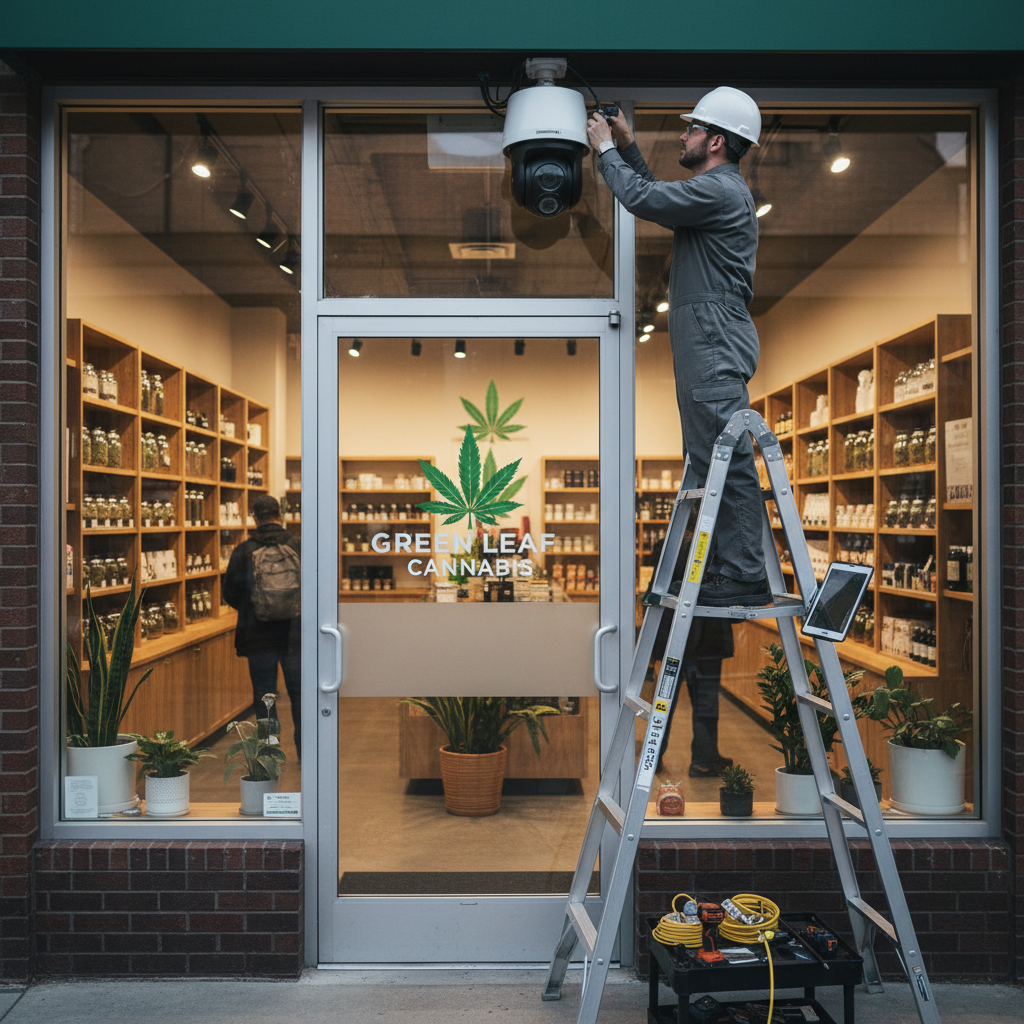
*The installation takes a day. The compliance and theft prevention benefits start immediately.*
Why does early adoption matter for dispensaries?
Video intelligence is becoming table stakes in high-security retail. Amazon's cashierless stores use computer vision to prevent loss and improve operations. Luxury retail uses gait recognition and social mapping. The regulated industry is catching up fast.
The brands that deploy these systems first get a measurable advantage. Tighter margins because shrinkage can fall when alerts are paired with staff action. Cleaner audit readiness. Fewer escalations. In a market as competitive and price-pressured as cannabis, every point of margin matters.
The secondary advantage is data. Video analytics give you a real-time feed on how customers move through the space, where they linger, what catches their attention. That is not surveillance. That is market research. A dispensary using video intelligence can optimize layout, product placement, and staffing in ways that increase transaction value and repeat rate.
For brand and dispensary teams thinking about the strategic stack, the retail store as a signal layer post explains why physical store data feeds back into algorithmic curation, the dispensary POS compliance blind spot shows where transaction data breaks, and our dispensary marketing services cover how to operationalize the data once you have it.
How to evaluate and deploy AI video intelligence in 6 steps
Before you sign with a vendor, work through this. The dispensaries getting value out of these systems followed roughly this path.
- 1Audit your existing CCTV infrastructure. Most AI video systems work with your current cameras. Document camera count, resolution, and coverage gaps before you talk to vendors.
- 2Identify your top three loss vectors. Rank by dollar impact: external theft, internal theft, compliance violations, or operational waste. The vendor pitch matters less than which detection categories actually map to your problem.
- 3Run a 30-day pilot at one location. Don't deploy fleet-wide on day one. Pick the highest-shrinkage store. Measure baseline shrinkage and operational KPIs before turning the system on.
- 4Set escalation rules with staff. The AI flags. Staff responds. If your team doesn't have a clear playbook for "AI flagged a pattern, what do I do," the alerts become noise.
- 5Track override and false positive rates. If staff is dismissing more than 20% of alerts, the model isn't tuned for your store. Push back on the vendor.
- 6Roll out fleet-wide only after the pilot hits target shrinkage reduction. Don't expand on hope, expand on measured impact.
What's the next 18 months for cannabis security tech?
Video intelligence in cannabis retail is still early adoption. Most dispensaries are not there yet. That window is closing fast. Within eighteen months, the brands that have invested in these systems will have lower cost of goods, tighter operations, and better customer data than those that have not. The gap will be measurable and hard to overcome.
Investors are already paying attention. Compliance teams are already asking for it. The move from passive recording to intelligent observation is no longer optional. It is how you stay competitive.
FAQ
Regular CCTV records footage for later review. AI video intelligence analyzes the footage in real time using computer vision models trained to detect specific patterns (theft, compliance violations, operational anomalies) and sends alerts within seconds of detection. The cameras can be the same. The software layer on top is what makes the difference.
Results depend on the baseline loss problem, camera coverage, alert quality, and staff response. Stores with high external theft or weak incident review usually see the clearest operational gains, while lower-risk stores may benefit more from analytics and documentation.
In most cases yes. Modern systems are camera-agnostic and run analysis on existing feeds, provided the cameras meet a minimum resolution (usually 1080p) and frame rate. Some vendors require specific camera firmware. Confirm before signing.
Yes, and in many states it strengthens compliance posture by creating a more rigorous audit trail. The systems do not store new categories of personally identifiable information beyond what CCTV already captures, so most state cannabis privacy frameworks treat them as enhanced CCTV.
Pricing in 2026 ranges from $200-$800 per camera per month for SaaS deployments, with one-time implementation fees of $5K-$25K per location. Custom on-premise deployments for MSOs run $50K-$200K initial plus monthly maintenance. ROI typically lands in 6-12 months from shrinkage reduction alone.
Amazon's tech tracks every product interaction to enable a checkout-free experience. AI video intelligence in cannabis is focused on threat detection and operational analytics, not POS replacement. Cannabis is too regulated for cashierless to be viable in most states, so the use cases diverge.
Yes, and it's often the highest-ROI detection category. Internal theft is estimated at 30-40% of total dispensary shrinkage. AI video can detect patterns like product handling outside of POS-logged transactions, suspicious access to high-value SKUs, and staff movements during off-hours that human supervisors typically miss.
2026 evidence and control update
Cannabis security footage is already regulated evidence. California's cannabis security requirements and retail rules make retention, access, and review more than IT preferences.
Once AI starts labeling events, summarizing clips, or escalating incidents, the NIST AI Risk Management Framework gives operators a clean test: can the business explain what the model flagged, who reviewed it, and what record survived?
| Control area | Why it matters now | What to document |
|---|---|---|
| Data source | AI quality depends on the inputs behind the answer | Vendor feed, POS field, menu source, or policy document |
| Rule layer | Cannabis rules still vary by market and channel | State rule, platform policy, age gate, claim restriction |
| Human review | Edge cases should not be decided only by automation | Reviewer, escalation threshold, approval or rejection note |
| Evidence trail | Future audits need more than screenshots | Timestamp, prompt/output pair, creative version, final URL |

