5W, the AI communications firm, published the first Cannabis AI Visibility Index in June 2026. They ran 50-plus consumer-intent prompts through ChatGPT, Claude, Perplexity, Gemini, and Google AI Overviews, then measured which cannabis brands got cited and how often. The rankings are interesting.
The methodology is solid. But the one number every cannabis operator should be losing sleep over is not a ranking. It is 28%.
That is the percentage of cannabis prompts that triggered AI engine refusals, hedges, or prominent disclaimers. The highest rate 5W has measured in any consumer category. Not alcohol. Not pharmaceuticals. Not firearms accessories. Cannabis.

AI citation share is becoming a visibility channel before most cannabis operators have a playbook for it.
The Citation Moat Nobody Saw Coming
Curaleaf, Trulieve, and Green Thumb Industries together captured 17.5% of all cannabis-category AI citations. Curaleaf alone took 7.5%. That is not a lead. That is a citation moat, and it is widening faster than retail footprint expansion ever could.
Think about what retail expansion costs. A new dispensary in a limited-license state runs seven figures in real estate, licensing, compliance, staffing, and inventory before the first dollar of revenue.
It takes 18 to 24 months to break even if everything goes right. Meanwhile, Curaleaf is getting cited in AI answers for "biggest cannabis company" and "national cannabis brand" prompts across every platform, in every state, without spending a dollar on variable cost per citation.

The top 15 cannabis brands by AI citation share in Q1 2026, per the 5W Cannabis AI Visibility Index
The full top 15 tells a story about who understood this shift early:
| Rank | Brand | Citation Share | Category |
|---|---|---|---|
| 1 | Curaleaf | 7.5% | MSO |
| 2 | Trulieve | 6.5% | MSO |
| 3 | Cookies | 5.5% | Branded Products |
| 4 | Leafly | 5.0% | Aggregator |
| 5 | Charlotte's Web | 4.5% | CBD |
| 6 | Green Thumb Industries | 3.5% | MSO |
| 7 | Weedmaps | 3.5% | Aggregator |
| 8 | Wyld | 3.0% | Branded Products |
| 9 | Stiiizy | 3.0% | Branded Products |
| 10 | Kiva Confections | 2.5% | Branded Products |
The remaining 45% of citation share splits across ranks 16 through 25, unranked brands, and those 28% refused or hedged prompts. Most cannabis brands are not losing the AI citation war. They are not even on the battlefield.
Why Aggregators Outrank Most MSOs
Leafly and Weedmaps each capture more AI citations than every individual MSO except Curaleaf. Combined, they outrank Trulieve. That should terrify every operator who has spent years building a direct-to-consumer brand.
The reason is structural. AI engines cite authoritative information sources. Leafly has spent 15 years building the definitive cannabis strain database. Weedmaps has the deepest geographic dispensary data on the West Coast.
When an AI answers "what is the best indica strain for sleep," it pulls from Leafly. When it answers "dispensary near me in Los Angeles," it pulls from Weedmaps. The MSO's own website, no matter how well-designed, does not have 15 years of structured strain data.
This is the same dynamic that made Wikipedia the most-cited source on the internet. It is not that Wikipedia's content is better than primary sources. It is that Wikipedia's structure makes it the easiest thing for algorithms to cite. Leafly and Weedmaps have built the same structural advantage in cannabis.
Editor's Note: The aggregator citation advantage is structural, not temporary. AI engines prefer sources with deep, structured, cross-referenced data. Leafly and Weedmaps spent 15 years building exactly that. Most MSO websites have product catalogs and store locators. That gap compounds.
The 2.8x State Multiplier
The most underreported finding in the Index is the state-specific content multiplier. 5W measured it at 2.8x for cannabis, the largest signal effect they have found in any tracked consumer category.
What this means: a cannabis brand with strong state-level content (state-specific landing pages, local regulatory context, state-by-state product availability, location pages with structured data) gets cited 2.8 times more often than a brand with equivalent national authority but no state-level content depth.
This makes intuitive sense. Cannabis is one of the most legally fragmented major consumer categories in America. The proposed federal Schedule III rescheduling process sits on top of different state adult-use and medical regimes.
The same prompt, "best cannabis dispensary near me," returns substantively different brand citations in California, Florida, and Massachusetts. The same brand surfaces in some states and disappears in others.
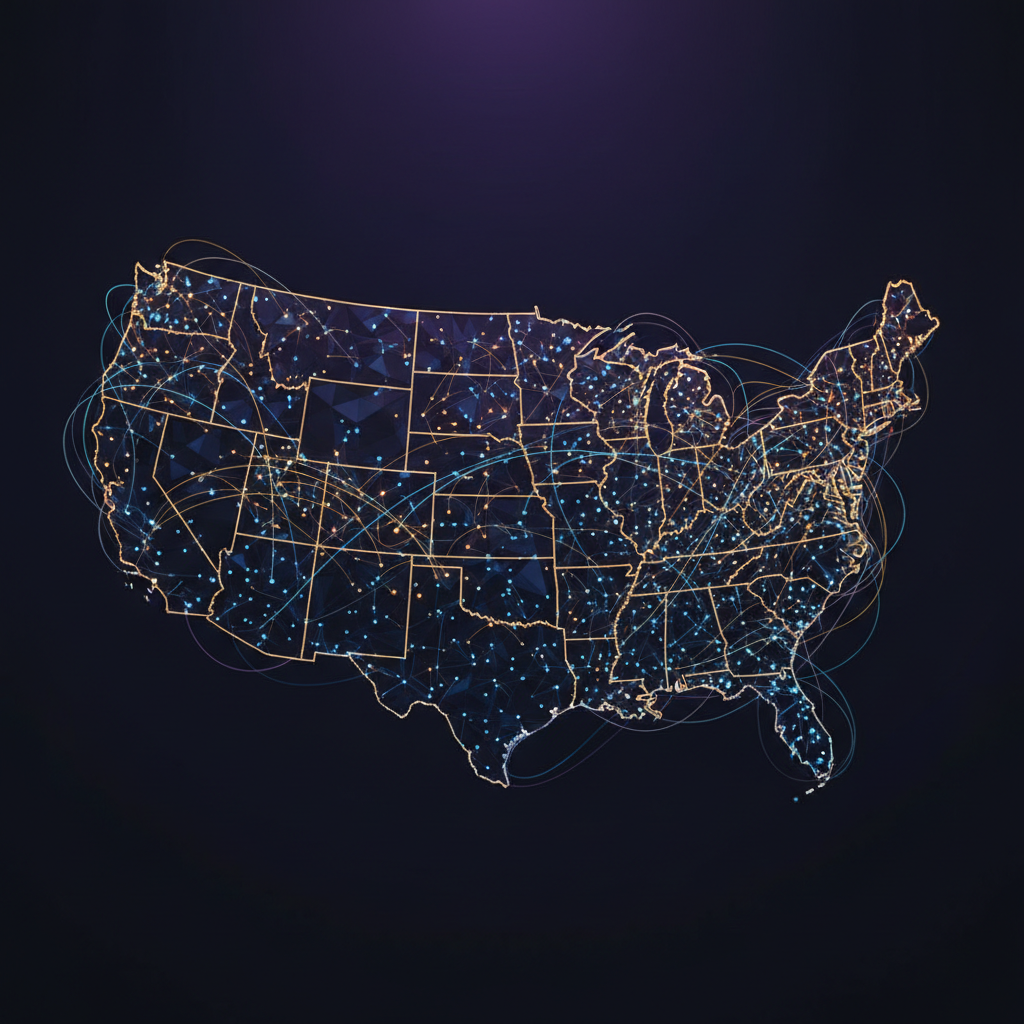
Cannabis AI citations vary dramatically by state. The state-specific content multiplier is 2.8x, the largest 5W has measured...
Trulieve wins virtually every Florida-specific cannabis prompt because Trulieve owns Florida retail at a scale no competitor matches. But that same dominance does not translate to California or Massachusetts without state-specific content investment. AI engines understand context.
They surface different answers based on query location. Brands that treat their website as one national experience are invisible in the state-specific queries that drive actual purchase intent.
The Schedule III Wildcard
The timing of this Index is not accidental. As of June 27, 2026, federal cannabis rescheduling remains a proposal moving through the DEA administrative process, not a final rule. That uncertainty is the point: AI visibility work cannot wait for federal clarity.
A future Schedule III move could change how financial institutions, advertising platforms, and AI training data handle cannabis. The platforms that currently hedge or refuse cannabis queries are watching the regulatory trajectory.
If guardrails loosen, citation share may compound faster. Brands that built AI visibility during the fragmented Schedule I era will have a structural head start if platforms open up.
The brands that ignored AI visibility entirely will wake up one day to find their competitors cited in every consumer cannabis query and themselves cited in none. By then, closing the gap will cost multiples of what it costs today.
Cookies and the Cultural Citation Moat
The most interesting non-MSO story in the Index is Cookies. Founded by Berner, Cookies leads all branded consumer cannabis products by a wide margin. The citation gap between Cookies and the second-place consumer brand is wider than the gap between Curaleaf and Trulieve at the MSO tier.
Cookies did not get here through retail footprint. They got here through cultural footprint. Mainstream lifestyle press coverage. Music industry adjacency.
Streetwear collaborations. A brand identity that transcends the cannabis category. AI engines surface Cookies not just for "best cannabis brand" prompts but for broader cultural queries where cannabis is tangential. That is a citation moat no competitor can replicate with a bigger marketing budget.
Charlotte's Web owns a similar moat in CBD. The origin story (Charlotte Figi) gives the brand citation density in CBD-for-medical-use queries that no challenger has matched in five years. AI engines cite the story because it is genuinely significant, widely covered, and structurally linkable. Origin stories are not SEO tricks. They are citation infrastructure.
What Most Operators Are Missing
The Index reveals a fundamental misunderstanding about how AI search works. Most cannabis operators still think about search as a rankings game. Build a website. Optimize for keywords. Get to page one of Google. Collect traffic.
AI search does not work that way. When a consumer asks ChatGPT or Perplexity "what is the best cannabis edible for sleep," the AI does not return ten blue links. It returns an answer. In that answer, it cites specific brands, products, and sources. If your brand is not among them, you do not exist for that consumer. There is no page two in AI search.
The operators who understand this are investing in three things simultaneously: structured data that AI engines can parse, authoritative content that AI engines trust enough to cite, and state-specific depth that triggers the 2.8x multiplier. Everyone else is optimizing for a search paradigm that is already being replaced.
The window to build AI citation share before the category hardens is measured in months, not years. Most operators are not even aware the window exists.
AI citation share now compounds faster than retail footprint expansion. The brands that understand this will define cannabis visibility for the next decade. The brands that don't will wake up invisible.
2026 evidence and control update
The more useful 2026 question is not whether the cannabis ai citation reset has begun is possible. It is whether regulated cannabis retail and marketing teams can prove what happened after the system made, shaped, ranked, routed, or explained a customer-facing decision.
The less obvious issue is that the hidden record is not only the customer-facing answer, it is the product data, state rule, age gate, claim boundary, and human owner behind that answer. That record is what separates a working AI pilot from a defensible operating system.
For source alignment, the public claim language should stay consistent with California Department of Cannabis Control retail guidance and FTC guidance on AI claims. Those sources do not remove the need for local legal review, but they give the article a better evidence spine than vendor screenshots or unsupported performance claims.
This also connects to related operating risk, AI measurement gap, compliance workflow, because the same pattern keeps repeating: AI systems look clean in the dashboard while the proof, ownership, and customer context live somewhere else.
| Control layer | What to verify | Evidence to keep |
|---|---|---|
| Source data | Which approved source fed the answer, recommendation, ranking, or claim | Source URL, vendor field, timestamp, and owner |
| Decision boundary | Where the AI is allowed to help and where it must stop | Allowed use case, blocked topics, and confidence threshold |
| Human review | Who owns the exception, correction, or escalation | Reviewer role, handoff note, and approval record |
| Monitoring | How the team catches drift, complaints, or weak signals | Review cadence, sampled outputs, and customer feedback themes |


Frequently asked questions
AI citation share is the percentage of AI-generated answers that cite a specific brand, website, source, or entity when users ask category-relevant questions.
Cannabis queries are more likely to trigger refusals, hedges, and state-specific answers. Brands that are not cited in AI answers may lose visibility before a customer ever reaches a traditional search result.
Start with structured product, location, and compliance content. AI engines need clear signals about where the brand operates, what is available, which claims are supported, and which state rules apply.
No. A future Schedule III move could affect platform behavior, but it would not create brand authority by itself. Citation share still depends on source quality, structure, relevance, and trust.
At least monthly for priority prompts and immediately after major regulatory, product, location, or brand changes. AI answers shift quickly, especially in categories with active policy risk.