Cannabis SEO used to be a fight for the map pack. Now it is also a trust test. A dispensary can have a strong position for a local query and still be missing from the answer a customer gets from an AI search experience because its business facts are inconsistent, thin, or hard to verify.
Google says AI Overviews and AI Mode do not require a special optimization system. The same technical SEO and people-first content practices still apply. That sounds simple, but it raises the standard for regulated retailers: the business has to make its location, hours, services, policies, and editorial claims clear enough for both people and machines to understand.
The operator-side answer is not to publish more generic cannabis content. It is to build a clean evidence layer around the store, then make every page earn its place.

Search visibility starts with a business people can verify
Search is becoming a trust layer
Google's own guidance on AI features in Search says the fundamentals remain the foundation. Pages need to be crawlable, indexable, useful, and connected through internal links.
AI Overviews and AI Mode may run related searches across subtopics, which means a single vague location page is a weak source for a nuanced answer.
That matters for dispensaries because local intent is rarely one-dimensional. The same problem appears in why dispensaries disappear in ChatGPT, where incomplete business evidence gets compressed into silence or uncertainty.
A customer may want a licensed store near them, accessible parking, pickup, delivery, adult-use information, current hours, or a clear explanation of what to bring. If those answers live in different systems, conflict with each other, or are only implied by a menu widget, the business becomes difficult to represent accurately.
This is where regulated retail SEO from the operator side still begins. The difference is that the audience now includes retrieval systems that compress the business into a short answer before a customer ever visits the site.
The menu cannot carry the business
Many dispensary sites treat the menu as the main source of truth. It is important, but it is not the whole business. Menus change quickly, may load through third-party scripts, and often provide little context about the retailer itself.
Build a durable layer around the menu. The store's location page should state the licensed business name, address, phone number, hours, service area, access details, and the exact services offered. Keep those facts consistent across the website, Business Profile, directory listings, delivery pages, and local landing pages.
Then answer the questions customers ask before they choose a store. Is this location adult-use, medical, or both? Is pickup available? Does delivery cover my city? What identification is required? Are there limits or local rules that affect the visit? These are operational questions, not filler copy.
Avoid promising live inventory in prose if the menu feed is the only system that can support that promise. A page that says “in stock today” after the item has sold out is not just stale. It weakens confidence in every other fact on the site.
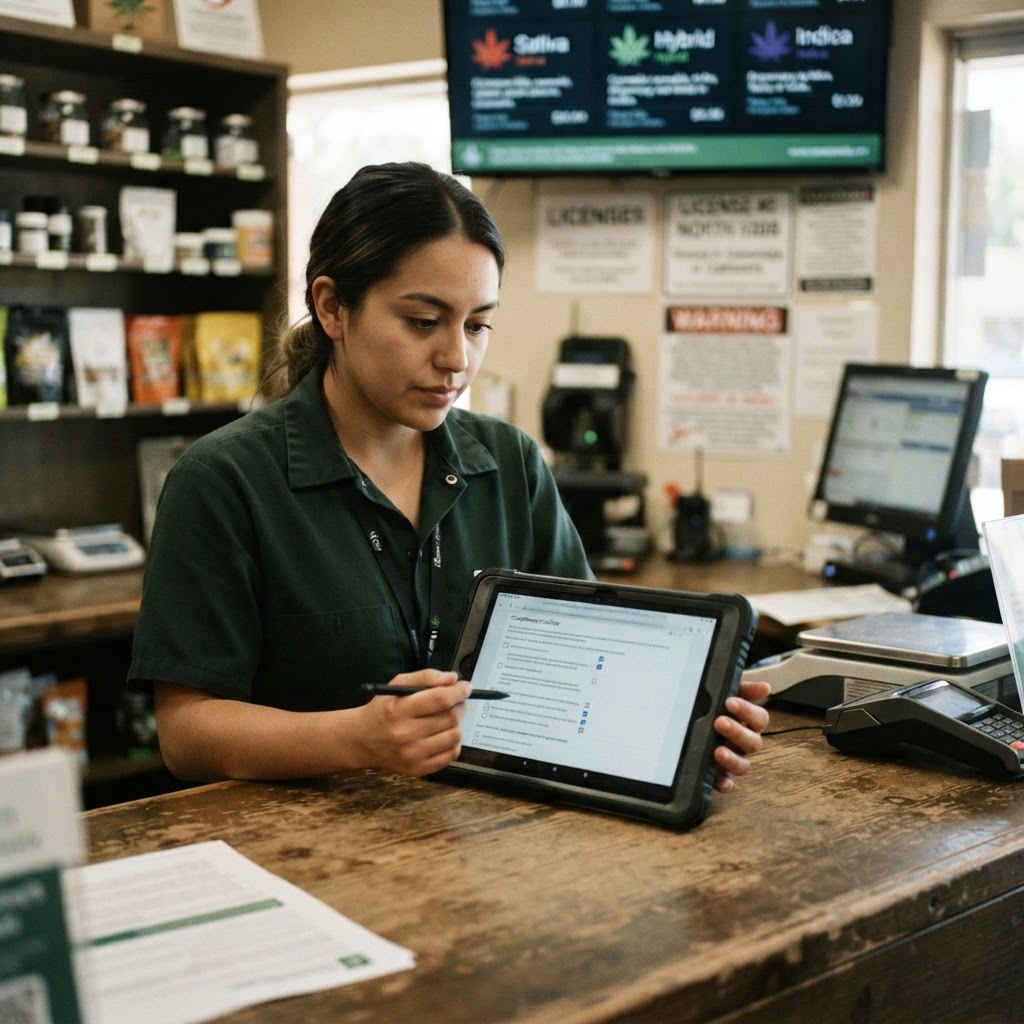
A clean listing is an operating habit, not a one-time SEO task
Google policy changes the playbook
Google's Business Profile guidelines apply to the content and representation of a business on the platform. Regulated retailers should treat the profile as a precise business record, not a place to improvise promotional copy or force product language into fields that were not designed for it.
That means the basics deserve more attention than they usually get:
- Use the real-world business name and the correct address.
- Keep primary categories and service details accurate.
- Publish current hours, holiday hours, and access information.
- Use storefront and location imagery that helps a visitor identify the business.
- Keep the website and profile aligned when services or operations change.
The recent Google Business Profile shift in cannabis local search makes that discipline even more important. The goal is not to make Google say more about cannabis products.
The goal is to make it confident about the business that provides a regulated service. That distinction protects the listing and gives customers a better chance of finding an accurate answer.
California operators also need to keep the state's advertising and marketing rules in view. The Department of Cannabis Control guidance makes clear that cannabis marketing cannot be attractive to people younger than 21, and required disclosures and audience controls still matter.
Search content is not exempt because it feels informational.
For multi-state operators, the mistake is copying one local template everywhere. State rules, municipal restrictions, service models, and platform treatment can differ. A location page should reflect the jurisdiction it serves, not a national marketing team's assumptions.
AI visibility rewards clear evidence
AI discovery is not a separate content silo. It is a consequence of making the existing site easier to understand. A useful dispensary content system has a few layers:
| Layer | What it proves | Operator check |
|---|---|---|
| Business facts | The store exists where it says it does | Name, address, phone, hours agree everywhere |
| Service facts | The store serves the query | Pickup, delivery, access, and eligibility are explicit |
| Editorial guidance | The site understands customer questions | Plain-language pages answer real pre-visit concerns |
| Trust signals | The claims have context | License information, policies, authorship, and updates are visible |
| Internal links | The facts connect | Location, service, menu, and policy pages reinforce one another |
This is also why the cannabis communications gap matters. Public relations, creator content, website copy, local profiles, and customer support all shape the same entity in the eyes of search systems. If each channel describes the company differently, the brand creates its own ambiguity.
The practical workflow is simple. Once a month, select the top customer questions from search data, support tickets, and store staff. Audit the answers across the website and profiles. Assign an owner to each fact. Record the date of the last review. Treat the content system like an operating surface, not a campaign folder.
A manager photographing the storefront, entrance, and hours sign can be more useful than another abstract cannabis graphic. The image gives a customer a way to recognize the location, and it gives the business a current asset for its local presence.

Real location details beat polished imagery that could belong anywhere
What operators should fix first
Start with the facts that can cause a failed visit. Wrong hours, an outdated address, a broken phone number, and unclear pickup instructions have a higher cost than an underused blog category.
Next, review the pages that explain the business to a first-time customer. Make each page answer one clear intent, use the language customers actually use, and link to the next useful step. Do not hide essential information inside a menu frame or a chatbot.
Then create a compliance review before publication. California's rules are one baseline, not a universal substitute for local counsel or state-specific review. Remove health claims, avoid copy that appeals to minors, and do not let generative tools invent product effects, legal status, or service availability.
Finally, measure visibility as a set of customer actions. Track branded and non-branded queries, direction requests, calls, booking or pickup starts, and assisted conversions. AI answers may not produce a neat referral line in analytics, so the business needs a broader record of how discovery turns into visits.
That is the real shift. Cannabis SEO is no longer just about winning a position. It is about making the business legible enough to survive compression.
Frequently asked questions
Yes. Organic search and local discovery remain important because paid reach is restricted for cannabis businesses. The work has to focus on accurate business information, useful customer answers, compliant content, and strong local signals rather than prohibited promotional tactics.
Google says there are no additional technical requirements for appearing in AI Overviews or AI Mode. Dispensaries should apply foundational SEO practices, keep important content crawlable, connect related pages with internal links, and make business facts easy to verify.
Usually no. The menu should remain the source for changing inventory, while durable pages explain the store, services, policies, and customer process. Duplicating fast-changing inventory in editorial copy creates stale claims and maintenance problems.
Operators need to follow Google's regulated-goods and Business Profile policies rather than assume that a normal retail tactic is allowed. Use the profile to represent the real business accurately, and have promotional content reviewed against current platform and state rules before publishing.
Review high-risk facts monthly and any time the store changes hours, address details, service coverage, or operating model. The cadence matters less than assigning an owner and recording what was checked.
Only after human review. Generative tools can introduce unsupported health claims, incorrect regulations, invented product details, and language that creates age or platform-policy risk. Use them for drafting support, not as the final compliance decision-maker. The operators who win the next search cycle will not necessarily publish the most. They will make fewer claims, support them better, and keep the business facts true wherever a customer might look.