The last free channel cannabis dispensaries have just got harder to work.
Google Business Profile (GBP) has been the primary discovery surface for dispensaries since the beginning. Cannabis operators cannot run Google Ads. They cannot run Meta Ads.
Most major platforms either reject cannabis campaigns outright or bury them under so many restrictions that paid reach becomes a fantasy. GBP was the one place where a dispensary could show up, get found, and compete for local attention without paying a dime in ad spend.
In May 2026, Google changed the rules. Three changes shipped together, and each one hits cannabis operators harder than any other regulated vertical.
Q&A is gone. Gemini artificial intelligence (AI) now auto-generates answers to customer questions using your profile signals, your website content, and indexed reviews. You can no longer post or curate answers.
AI-generated and stock photography are banned from owner-uploaded galleries and function as audit triggers for profile suppression. And a 30-day photo freshness rule means profiles without a recent owner-uploaded photo get downgraded in the Contextual Verification scoring stack.
If you run dispensary local search engine optimization (SEO), this is not a policy refresh. It is a structural reset.
What Actually Changed
Three policy changes define the May 2026 GBP update. Each is documented in the Google Business Profile Help Center and corroborated by multiple local SEO firms tracking the rollout.
The Q&A feature was officially discontinued in November 2025 when Google killed the Q&A application programming interface (API). The user-facing Q&A panel is now being replaced by "Ask about this place," a Gemini-powered system that synthesizes answers from your profile's services catalog, posts, photos, reviews, and website content.
Existing seeded Q&A persists as training signal but accepts no new entries. Operators no longer control what gets answered or how.
AI-generated and stock imagery is now banned from owner-uploaded galleries. Photos must depict the actual business.
AI-generated images from tools like Midjourney, DALL-E, or Gemini Image, and licensed stock photography from Adobe Stock or Getty, now count as policy violations. Detected fake imagery triggers a manual audit of the entire profile, with risk of temporary suppression from Map Pack results during review.
The 30-day photo freshness rule adds a measurable cadence floor. Profiles without a new owner-uploaded photo in the trailing 30 days are downgraded in the Contextual Verification scoring stack. Photo cadence is no longer a soft "engagement" signal. It is a ranking input with a hard threshold.
Two adjacent changes also shipped. Review-incentive language ("leave us a review and get 10 percent off") is now an explicit Contextual Verification suppressor. And owner responses to reviews are weighted higher, particularly when responses include specific store details that corroborate the review.
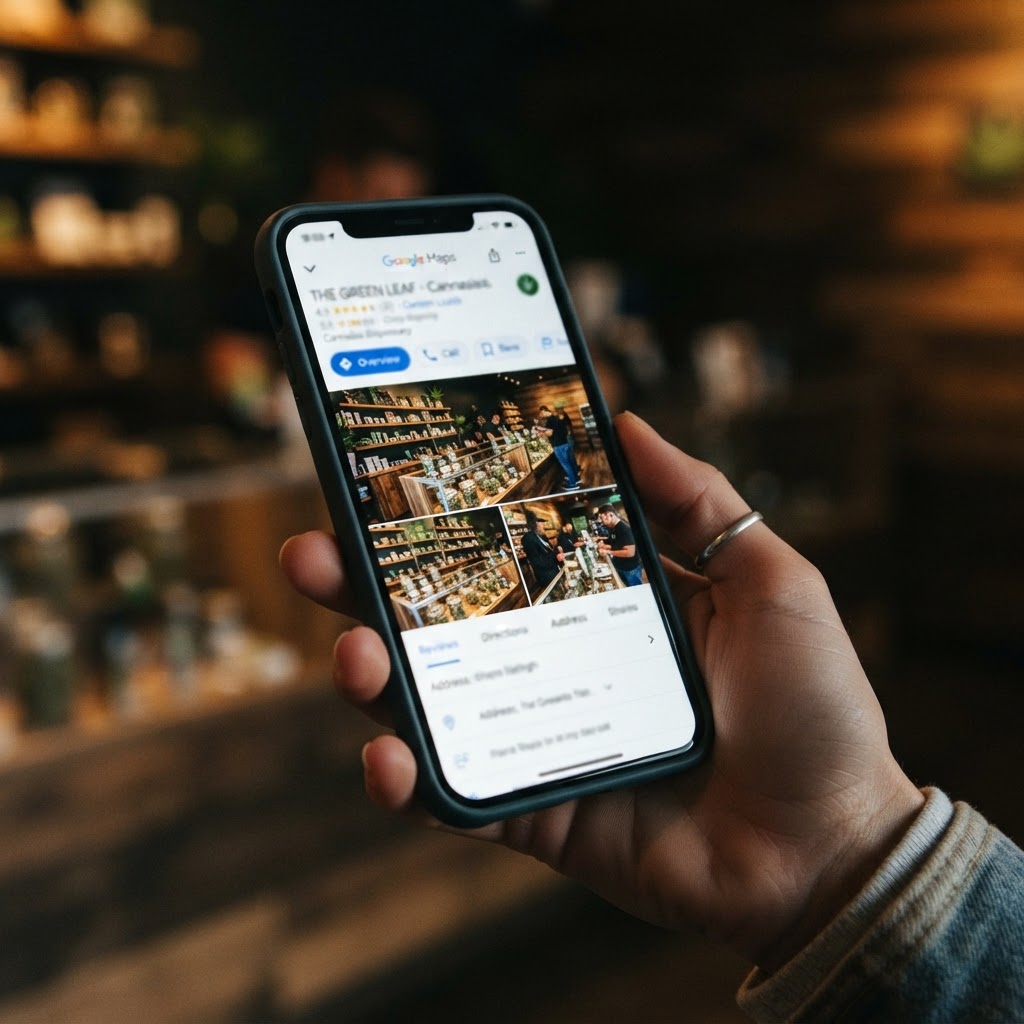
Your GBP profile's rules before and after May 2026
Why Cannabis Absorbs the Most Damage
Three structural realities make this update disproportionately painful for dispensaries.
Cannabis operators cannot run Google Ads, Meta Ads, or most major-platform paid campaigns. GBP is the discovery channel of record. A GBP scoring change that costs a standard e-commerce retailer 8 percent of local visibility costs a cannabis dispensary 30 to 40 percent because there is no paid backstop.
The downside is asymmetric. A Bud Authority analysis across 24 dispensary client profiles in May 2026 confirmed this gap.
Cannabis GBP profiles already operate under heightened scrutiny. License numbers, hours, services catalogs, and category selection are all compliance-gated. Operators tend to treat GBP as a "set it and forget it" surface to avoid drawing review attention.
The new freshness requirement is incompatible with that stance. Operators who have not uploaded a photo in six months are exactly the operators who lose Map Pack position now.
Cannabis branding restrictions push operators toward licensed stock imagery and AI-generated product hero shots. A meaningful share of dispensary GBP profiles use at least one stock or AI image on the main banner or interior shots. That is exactly the surface the May 2026 audit-trigger rule scans first.
Gemini Now Answers Your Customer Questions
This is the part that should worry dispensary operators the most.
When a potential customer searches for your dispensary on Google Maps and asks a question, Gemini AI now generates the answer. You do not get to review it. You do not get to edit it. You do not get to flag it as inaccurate.
Gemini pulls from your profile signals: services catalog, posts, photos, reviews, and indexed website content. If your website says you carry "flower, edibles, concentrates, and vapes," Gemini will answer product questions based on that. If your website is thin or outdated, Gemini fills gaps with whatever it can find.
That might be a review from two years ago. It might be a competitor's listing. It might be nothing.
For cannabis operators, this creates a specific risk. Gemini might answer questions about product availability, pricing, or effects in ways that create compliance exposure.
A recent study by 5W Public Relations found that approximately 28 percent of cannabis prompts tested across ChatGPT, Claude, Perplexity, Gemini, and Google AI Overviews produced AI engine refusals, hedges, or prominent disclaimers. That is substantially higher than any other consumer category they measured.
If Gemini is generating answers about your dispensary, and 28 percent of cannabis queries produce hedged or refused responses, you need to make sure the signals Gemini reads are clean, accurate, and compliance-safe.
When AI controls the answer, your only lever is the input. Your website, your reviews, your services catalog, and your photos are now the only voice you have in a conversation you used to own.
The 18-Day Cadence Rule
The 30-day freshness floor reads as monthly. Operating against the floor is brittle. A single missed week pushes the profile below the cadence threshold and triggers downgrade scoring before the operator notices.
The fix is an 18-day cadence. Post or upload every 18 days. This produces roughly 20 owner actions per year, buys two missed cycles before falling below the 30-day floor, and is operationally sustainable for a single-location operator with one part-time marketing hand.
Cycle through four content categories on rotation. Original product photography (real flower, real interior, real staff). Owner response to a recent review with store-specific detail. A GBP post highlighting a product launch, hours change, or community event.
A services catalog update reflecting current inventory categories. Google's scoring rewards diverse cadence over repetitive uploads. The same photo of the same display case uploaded every 18 days does not fool the system.
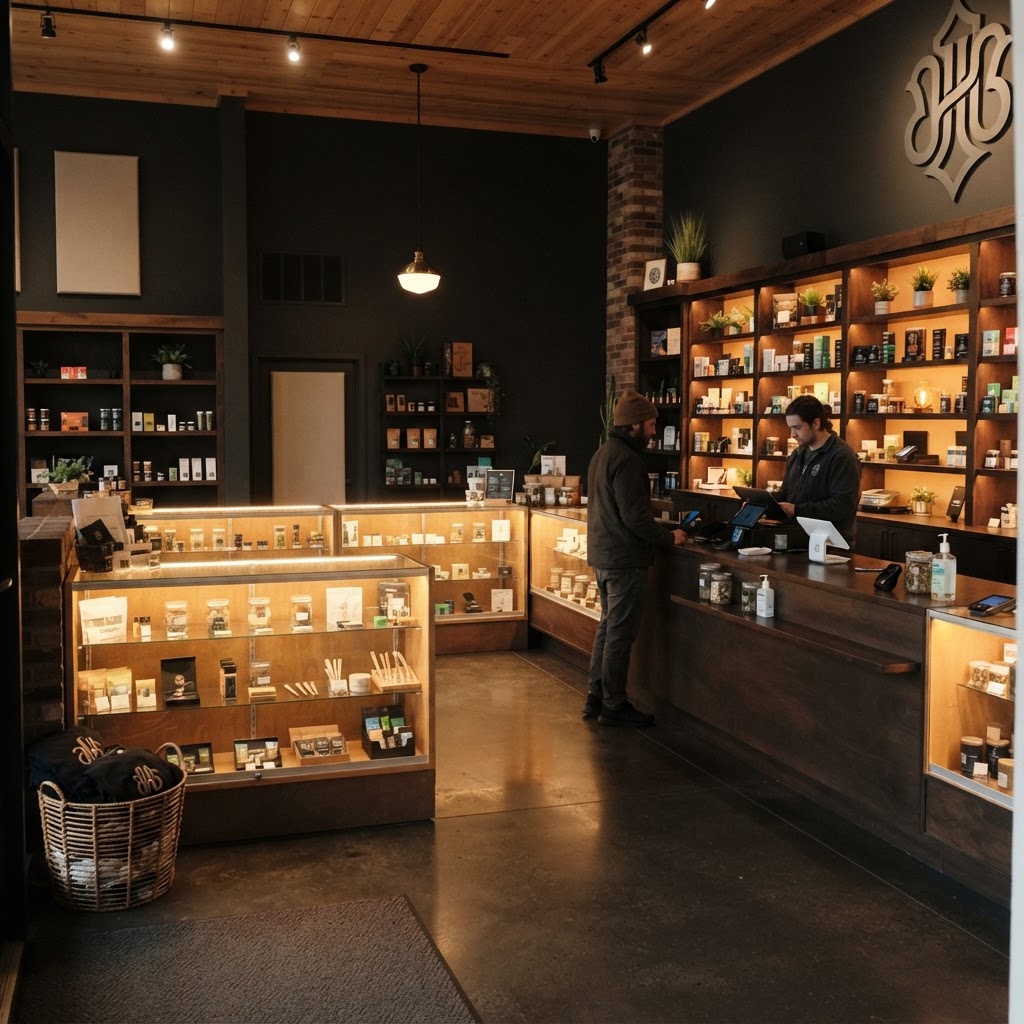
This is what a real GBP photo looks like. Not stock. Not AI. Just your actual store.
Your Dispensary GBP Audit Checklist
Run this checklist before your next 30-day cadence cycle closes. Each item is binary. Pass or fail.
Verify the business is claimed and ownership-verified. Confirm the primary category is "Cannabis store" or the state-appropriate equivalent. Audit the photo gallery for AI or stock imagery and remove every flagged asset before the audit trigger fires. Confirm the most recent owner-uploaded photo is dated within the trailing 30 days.
Verify the services catalog is complete. Flower, edibles, concentrates, vapes, accessories, delivery, in-store pickup, and medical-card support where legal. Verify name, address, and phone (NAP) match the website, Leafly, Weedmaps, and license registry. Any drift suppresses verification.
Verify hours are current including holiday and operational changes. Stale hours suppress proximity-weighted ranking. Audit the existing Q&A panel and seed canonical answers to the top 10 likely questions before Gemini AI takes over signal authority.
Audit review velocity. Target three to five new reviews per week. Confirm zero review-incentive language in solicitation. Verify every review in the trailing 90 days has an owner response with store-specific detail. Confirm the website link points to the canonical homepage with valid `LocalBusiness` schema matching GBP NAP exactly.
Verify the license number is displayed in the profile description and on the website footer. Confirm posts cadence at one post per 7 to 10 days. Run a manual Map Pack search for the primary keyword in the primary metro and confirm the profile appears in the top three.
If you have been treating GBP as a set-and-forget channel, this checklist is your wake-up call. We covered the broader Google local SEO crackdown earlier this year, but the May update is a different animal. It is not about spam enforcement. It is about Google redefining what a "maintained" profile looks like.
The AI Image Ban Hits Cannabis Hardest
Cannabis operators have a specific dependency on imagery that other verticals do not share. Strain photography is expensive and licensing is fragmented. Product packaging photography requires careful compliance review. Interior shots need to look professional without triggering regulated-goods flags.
For years, the workaround was stock photography and AI-generated hero shots. They filled the gap between what operators could afford and what GBP wanted. That workaround is now gone.
Google's photo guidelines now push hard toward reality. Photos should be well lit, in focus, not heavily altered, and should represent what it is actually like to visit the business.
As Explore Digital documented, Google does allow some AI-assisted imagery in limited contexts like Product Studio backgrounds. But that is very different from filling your GBP gallery with fake interiors, fake team photos, or AI-generated product shots.
For dispensaries, this means investing in real photography. A phone camera photo of your actual store is now worth more than a polished AI render. Google literally asks for photos that help customers decide. A real photo of your counter, your menu board, your parking lot, your staff. Those are the signals that keep you in the Map Pack.
How This Connects to the Bigger Picture
The GBP update is not happening in isolation. It is part of Google's broader push to make search results feel real, current, and trustworthy. The same force driving AI Overviews, the rise of answer engines, and the shift from SEO to generative engine optimization (GEO) is reshaping local search too.
Google wants to answer questions directly. On GBP, that means Gemini generates answers from your signals.
In search, that means AI Overviews synthesize content from indexed sources. The throughline is the same: Google is reducing the distance between the question and the answer, and operators who do not feed the system clean, current, compliance-safe signals will lose visibility to operators who do.
For cannabis dispensaries, the Google Business Profile optimization playbook needs a 2026 refresh. The old advice about posting regularly and answering questions is dead.
The new playbook is about cadence discipline, real photography, clean website signals, and understanding that Gemini is now your spokesperson whether you like it or not.
This also connects to dispensary SEO from the operator side. Local search visibility for dispensaries was never just about rankings. It was about being findable when a customer is standing on a street corner searching "dispensary near me.
" With paid ads off the table and AI now mediating the answers, your GBP profile is not just a listing. It is your entire front door.
What Happens If You Do Nothing
Dispensaries that ignore this update will see gradual Map Pack decline. It will not be sudden. The 30-day freshness rule degrades profiles incrementally. A missed month becomes a missed quarter becomes a competitor taking your slot.
The dispensaries that win the next 12 months of local search will be the ones who treat GBP as a living channel. Regular real photos. Prompt review responses with specific detail. Clean website schema. Accurate services catalogs. No AI images. No stock photography. No review incentives.
The operators who lose will be the ones who set up their profile in 2023, uploaded three stock photos, answered a few Q&A entries, and never touched it again. That profile is now actively penalized, not just passively ignored.
FAQ
No. Google discontinued the user-facing Q&A feature in November 2025 and is gradually removing it from all listings. Gemini AI now auto-generates answers using your profile signals, website content, and indexed reviews. Operators can no longer post new Q&A entries. Existing Q&A persists as training signal but accepts no new submissions.
Yes. AI-generated imagery from tools like Midjourney, DALL-E, and Gemini Image is banned from owner-uploaded galleries. Stock photography is also banned. Detected fake or stock imagery triggers a manual audit of the entire profile, with risk of temporary suppression from Map Pack results during review. Google does allow limited AI-assisted features like Product Studio backgrounds, but core gallery images must depict the actual business.
The 30-day freshness rule means profiles without a new owner-uploaded photo in the trailing 30 days are downgraded in ranking. The recommended cadence is every 18 days, which provides a buffer of two missed cycles before falling below the 30-day floor. Cycle through real product photos, review responses, GBP posts, and services catalog updates for diverse cadence signals.
Cannabis dispensaries cannot run Google Ads, Meta Ads, or most major-platform paid campaigns. Google Business Profile is their primary discovery channel with no paid backstop. A GBP scoring change that costs a standard retailer 8 percent of local visibility costs a dispensary 30 to 40 percent. Cannabis operators also have higher dependency on stock and AI imagery due to expensive strain photography and branding restrictions.
Remove them immediately. Replace every stock or AI-generated image with real photos of your dispensary: interior, exterior, product displays, staff, and counter. Use a phone camera if professional photography is not available. Google's scoring rewards authentic, current photos that represent the actual customer experience. Run a full gallery audit before the audit trigger fires and suppresses your profile.
It depends on the signals available. Gemini synthesizes answers from your profile, website, and reviews. If your website is thin or outdated, Gemini may fill gaps with inaccurate or non-compliant information. A 5W Public Relations study found 28 percent of cannabis prompts produce AI refusals, hedges, or disclaimers, substantially higher than any other consumer category. Clean, accurate, compliance-safe website content is your best lever for controlling what Gemini says about your dispensary.