AI efficiency sounds like a clean sustainability story. A chip runs a model with less power, inference gets cheaper, and the energy problem starts to relax.
That is the comforting version. The more useful version is messier: when AI gets cheaper to run, businesses usually run more of it.
This is the AI efficiency paradox. Technical efficiency improves the cost per task, but the business response can raise total demand. More product features get AI defaults. More customer journeys get generated, scored, summarized, classified, and monitored. More teams get permission to put model calls where the prior budget would have stopped them.

Cheaper AI infrastructure can move demand from one constrained budget line into every product and operations workflow.
The point is not that efficiency is fake. It is that efficiency is not the same as restraint.
Why the breakthrough story is incomplete
Intel's Hala Point neuromorphic research system shows why the optimism is understandable. Brain-inspired systems can be much more efficient on specific workloads because they process events only when there is a signal to process.
That matters for sparse workloads, edge inference, sensor processing, robotics, classification, and other tasks where a large general model is overkill.
For operators, this is good news. Smaller, more specialized systems should replace large model calls wherever the task is narrow and the quality bar is clear. A support classification task does not need the same compute profile as a strategic research task. A routing decision does not need a frontier model every time.
The problem appears when a benchmark becomes a sustainability narrative. A 70 percent or 100x efficiency claim can be true for one workload and still fail to lower the company's total AI energy use. If the cheaper workload expands across ten more product surfaces, the total bill can rise.
The IEA's Energy and AI report frames the broader pressure clearly: data centers and AI are becoming a larger electricity planning issue, and demand is tied to adoption, not only hardware efficiency. That is the part marketing teams, product teams, and executives need to internalize.
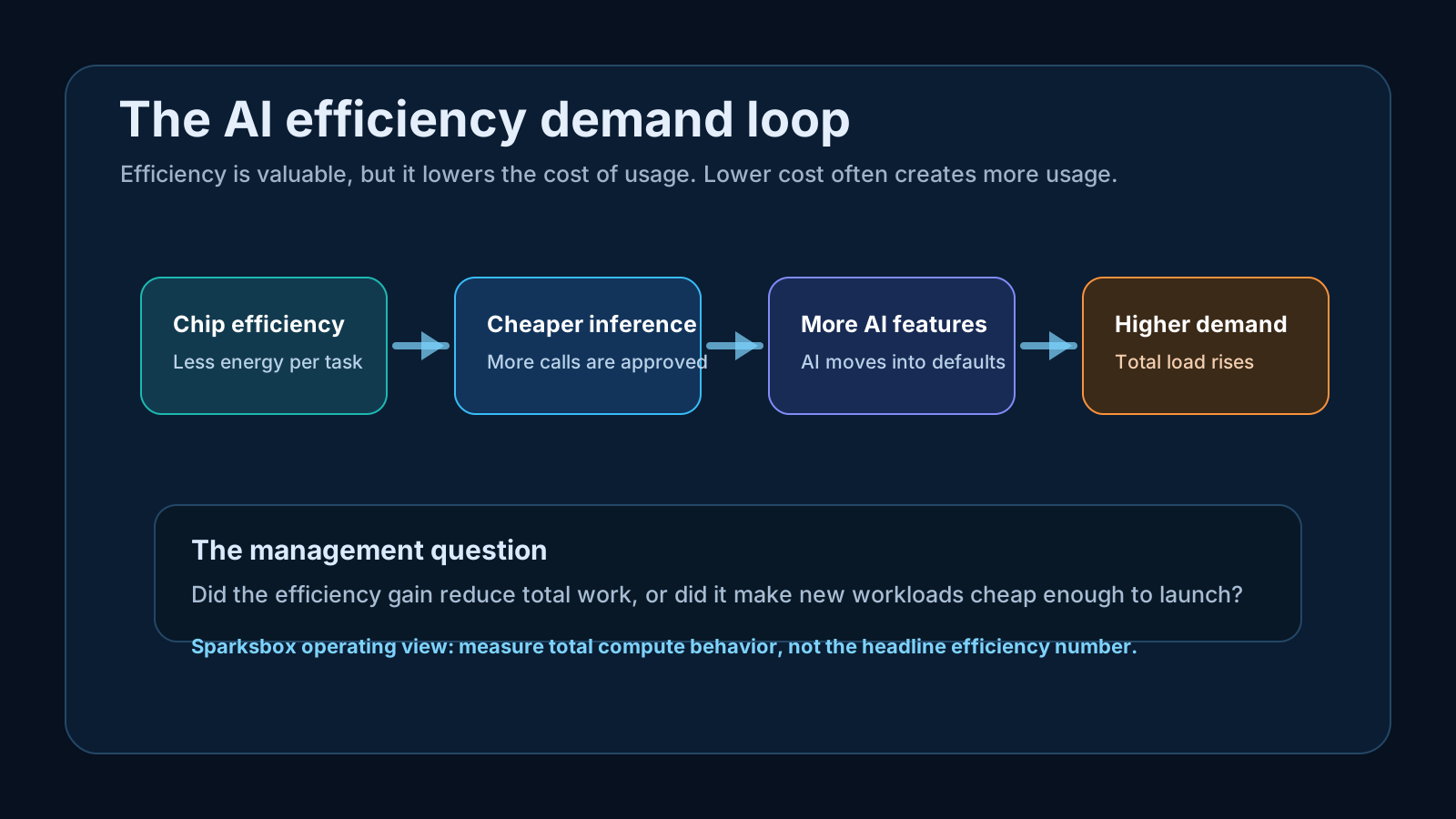
Jevons is back, this time with tokens
William Stanley Jevons observed that more efficient steam engines did not reduce Britain's coal consumption. They made coal-powered work cheaper, which expanded coal-powered industry.
AI has the same shape. The unit is not coal per engine hour. It is tokens, tool calls, embeddings, vector searches, image generations, model evaluations, and background agents. When those units get cheaper, teams stop treating them as scarce.
That changes product behavior:
- Customer support adds real-time summarization to every ticket.
- Sales operations scores every lead at every stage.
- Content teams generate more variants because marginal cost feels low.
- E-commerce tools personalize every menu, email, reorder prompt, and discount.
- Internal teams build agents that watch dashboards, write updates, and draft reports.
None of those moves is automatically bad. Some are valuable. The issue is that AI demand stops living in one innovation budget and starts hiding inside normal operations.
The operator's metric is total workload
A useful sustainability review does not ask, "Is this model efficient?" It asks, "What new work did this efficiency make possible, and do we actually need that work?"
| Question | Bad answer | Better answer |
|---|---|---|
| What changed? | Cost per call dropped | Total calls, retries, and background runs changed |
| What expanded? | AI became easier to add | Specific workflows gained model steps |
| What is measured? | Vendor benchmark | Monthly workload, latency tier, and quality outcome |
| What is retired? | Nothing | Legacy calls, duplicate summaries, and unused variants |
The most expensive AI workloads often survive because nobody owns the inventory. One team turns on chat summaries. Another adds automated reporting. A third adds semantic search. A fourth schedules weekly analysis. Each looks small. Together, they become a permanent compute layer.
This is where AI governance and marketing operations overlap. The same discipline that helps a team avoid content sprawl also helps it avoid compute sprawl: define the job, set the quality threshold, choose the smallest reliable system, and review usage monthly.
Smaller models still matter
The efficiency paradox is not an argument against smaller models, neuromorphic chips, caching, batching, or edge inference. It is an argument for using them deliberately.
For most companies, the practical path is not an abstract carbon accounting exercise. It is workload design.
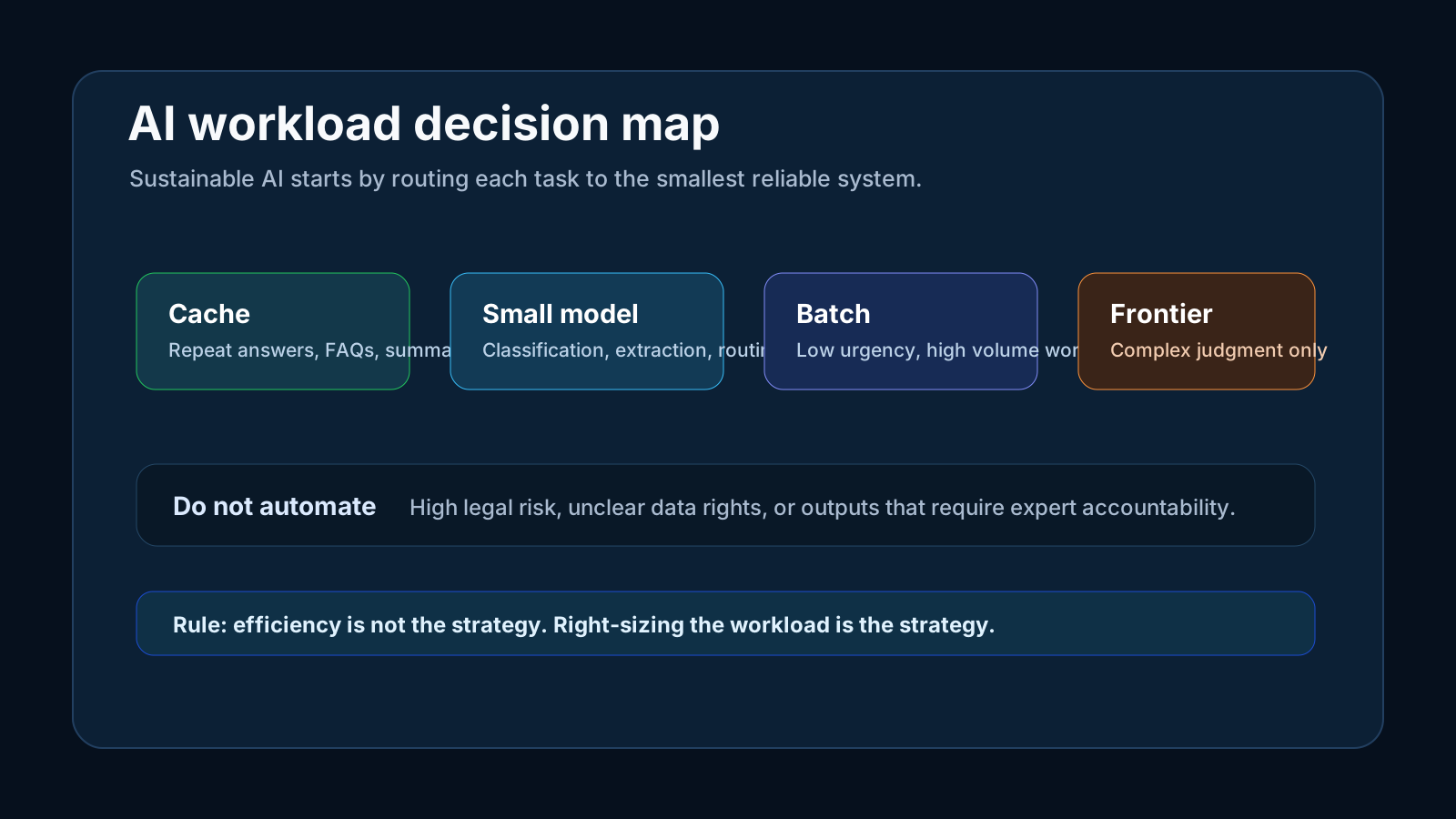
Use caching for repeat answers, evergreen FAQs, standardized policy language, and templated explanations. Use small models for classification, extraction, scoring, and routing. Use batching for low-urgency enrichment jobs. Reserve frontier models for work that genuinely requires broader reasoning, synthesis, or judgment.
This is also a cost discipline. The team that routes everything through the biggest model is usually not being strategic. It is being vague about the task.
The hidden rebound in marketing
Marketing teams are especially exposed to the rebound effect because AI lowers the cost of output. If one campaign used to have three message variants, it can now have thirty. If one landing page used to be manually edited once a quarter, it can now be dynamically rewritten every week. If one customer journey used to have five triggers, it can now have fifty.
More output does not automatically create more learning. It can also create more noise.
The same concern shows up in our work on AI content measurement gaps and AI attribution risk in cannabis. Once production gets cheap, measurement needs to get stricter. Otherwise the team confuses activity with advantage.
For regulated industries, there is a second risk. More AI-generated content means more claims to review, more disclosures to maintain, more version history to keep, and more vendor behavior to audit. Efficiency in generation can create drag in compliance.
A better AI energy review
Most teams do not need a perfect energy model. They need a useful operating review.
Start with a simple inventory:
| Workload | Current system | Monthly volume | Can it be cached? | Small-model fit | Owner |
|---|---|---|---|---|---|
| Support summaries | General LLM | 40,000 tickets | Partial | High | CX |
| Product recommendations | Recommender plus LLM | 2.1M sessions | No | Medium | Ecommerce |
| Weekly reports | General LLM | 300 reports | Yes | High | Operations |
| Creative variants | Image and text models | 8,000 assets | Partial | Medium | Marketing |
Then add three rules:
- 1Every model call needs a job description.
- 2Every recurring AI workflow needs an owner.
- 3Every efficiency gain needs a workload review, not only a cost celebration.
That last rule is the one most teams miss. The moment a vendor makes AI cheaper, someone will ask what else can now be automated. That is fine, but the answer should pass through a business filter.
What to ask vendors
Vendors will keep promoting efficiency claims. Some of those claims are meaningful. Some are benchmark theater. A serious buyer should ask for detail:
- Which workload produced the efficiency claim?
- Was the comparison against a relevant baseline?
- Does the vendor provide usage reporting by task, team, and feature?
- Can customers set hard budgets by workflow?
- Can the system route simple tasks to smaller models automatically?
- Can the customer turn off background work that is not producing value?
If the vendor cannot answer those questions, the buyer does not have an efficiency strategy. They have a cheaper meter.
The practical conclusion
AI efficiency is necessary. It is not sufficient.
The companies that get this right will use better chips, smaller models, caching, batching, and clean routing. But they will also ask a harder question: what work should not exist just because it became cheap?
That is the real sustainability discipline. It is not anti-AI. It is pro-intent.
FAQ
It can reduce energy per task, especially for narrow or sparse workloads. Total energy use can still rise if the lower cost creates more AI usage across products and operations.
It is the rebound effect applied to AI. Efficiency lowers unit cost, which can increase demand enough that total compute and energy use rise.
No. Teams should right-size workloads, cache repeat answers, batch low-urgency jobs, and use smaller models where they meet the quality bar.
Measure total model calls, recurring workflows, retries, generated variants, output quality, and business outcomes. Do not stop at cost per call.
Route each task to the smallest reliable system, then review whether the work itself is worth doing at scale.