In This Post
- Why New York's Synthetic Performer Disclosure Law targets cannabis brands harder than most
- What triggers disclosure and what the penalties actually are
- How cannabis brands using AI-generated models and imagery can comply right now
- Why a multi-state AI advertising patchwork is coming and how to prepare
On June 9, 2026, the first state-level AI advertising disclosure law in the United States went live. New York's Synthetic Performer Disclosure Law (S.
8420-A) requires any visual or audiovisual advertisement distributed to a New York consumer to include a conspicuous disclosure if the ad features a synthetic performer, defined as an AI-generated human likeness that does not depict a real person.
Cannabis brands should care about this more than almost any other consumer category. Here's why.
The Law No Cannabis Brand Can Ignore
Governor Kathy Hochul signed S.8420-A on December 11, 2025. The law took effect six months later. No phase-in period. No grace window. If your cannabis dispensary runs a social media ad featuring an AI-generated lifestyle model holding a pre-roll, and that ad reaches a single consumer in New York, you need a disclosure on it. Right now.
The mechanics are straightforward but the scope is broad. The law covers television, digital advertising, and social media content. It applies when AI is used to depict a human being, not when AI enhances a real human's appearance or when AI generates imagery that contains no human likenesses.
If your ad creative uses a real budtender photographed in your dispensary, you're fine. If you generated a model in Midjourney or DALL-E and put her in your ad, you need a disclosure.
Civil penalties are $1,000 for a first violation and $5,000 for each subsequent violation. That sounds small. It's not the fine that should worry you.
It's the enforcement precedent. Cannabis regulators in New York and other states already operate with heightened scrutiny on advertising. An AI disclosure violation gives a regulator a reason to look at everything else you're doing.
Why Cannabis Gets Hit Harder
Cannabis brands have been faster than most consumer categories to adopt AI-generated imagery, and for good reason. Traditional photoshoots are expensive.
Cannabis advertising on major platforms is already restricted, so brands have pushed into social media and programmatic channels where AI-generated creative can be produced quickly and at scale. A dispensary that can't run Google Shopping ads can still run Instagram stories with AI-generated lifestyle imagery.
That cost advantage just got a compliance tax.

Real human or synthetic performer? The law forces brands to disclose the difference.
Here's the specific problem. Cannabis brands operate across multiple states with different advertising rules. A single creative asset might run in California, New York, Arizona, and Florida.
Before June 9, the compliance checklist was already complex: state-specific advertising restrictions, platform policies, age-gating requirements, health claim prohibitions. Now add: does this creative feature a synthetic performer, and if so, is the disclosure compliant with New York law?
Most cannabis marketing teams don't have a system for tracking which creative assets use AI-generated human likenesses. The assets were produced quickly, sometimes by external agencies or freelancers, and the AI provenance wasn't recorded. That's the audit gap.
The brands that were early to AI creative workflows are the ones most exposed right now. Not because they did something wrong, but because they did something smart and the rules changed underneath them.
The Multi-State Patchwork
New York is first. It won't be last.
California already has SB 243, the Companion Chatbot Law, which requires AI disclosure for interactive AI systems and has implications for cannabis recommendation engines. That law took effect January 1, 2026.
It covers a different surface area than New York's law but the direction is the same: states are demanding transparency around AI-generated content in consumer-facing experiences.
Other states are drafting similar legislation. The 5W Cannabis AI Visibility Index 2026 found that approximately 28% of cannabis prompts produce AI engine refusals, hedges, or disclaimers, the highest rate of any consumer category measured. That refusal rate reflects the legal ambiguity AI engines see around cannabis.
State-level AI advertising laws will only deepen that fragmentation. A brand that's compliant in New York might face different disclosure requirements in Illinois or Massachusetts by next year.
For cannabis operators, this means the compliance burden isn't a one-time audit. It's an ongoing process of tracking which creative assets contain AI-generated human likenesses, which states those assets run in, and what each state requires by way of disclosure.
The brands that build this tracking into their creative workflow now will save themselves from a scramble when the next state passes a similar law. The ones that don't will be playing catch-up.
What Operators Should Do Now
Here's the practical checklist. Not theoretical. Not aspirational. What you need to do this week.
Audit every live creative asset. Pull every ad currently running on Meta, Google, programmatic, connected TV, or any other channel. Flag anything that features a human likeness. For each one, determine: is this a real person or a synthetic performer? If you can't tell, assume synthetic and add the disclosure.
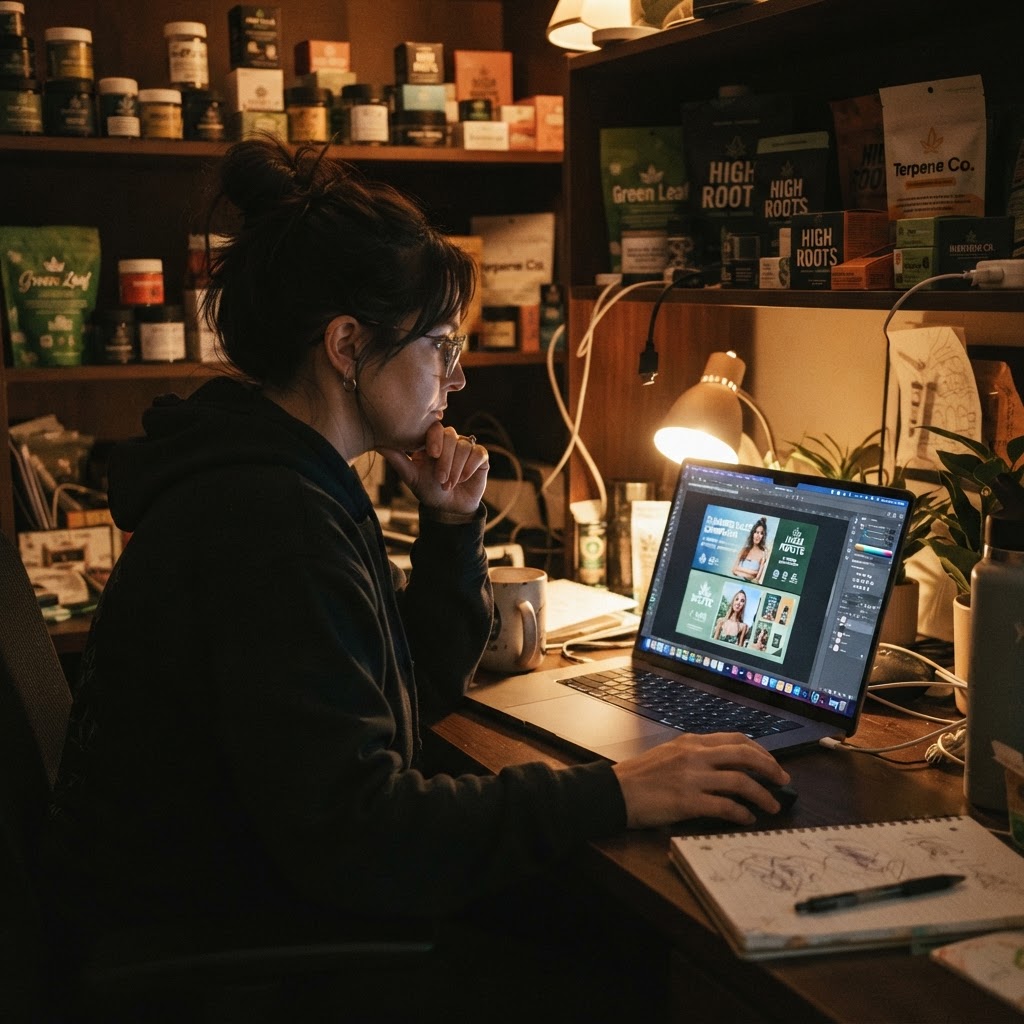
Most cannabis marketing teams don't know which assets contain AI-generated humans. That's the audit gap.
Build AI provenance into your creative workflow. Every asset your team or agency produces should be tagged at creation: AI-generated human likeness (yes or no). This needs to live in your asset management system, not in someone's memory. When a new state passes a disclosure law, you'll be able to pull a list in minutes instead of auditing every creative manually.
Update vendor and agency agreements. If you work with an external creative agency, your contract should require them to flag any AI-generated human likenesses in the work they deliver.
The compliance liability for disclosure falls on the advertiser, not the agency. Make sure your vendors know that and build it into your production briefs.
Draft disclosure language now. New York hasn't published specific guidance on what constitutes a "conspicuous" disclosure. But based on how disclosure requirements work in other advertising contexts, it should be visible, readable, and placed where consumers naturally see it before or during the ad experience.
Not buried in a footer. Not in 6-point font. Something a reasonable person would notice.
Layer this onto existing cannabis compliance. You already track state-specific advertising rules. Add a column: AI disclosure required (yes or no). For New York, it's yes.
For states without a law yet, it's no. When a new state passes legislation, flip the column. This is the kind of attribution and tracking infrastructure that most cannabis brands haven't built yet.
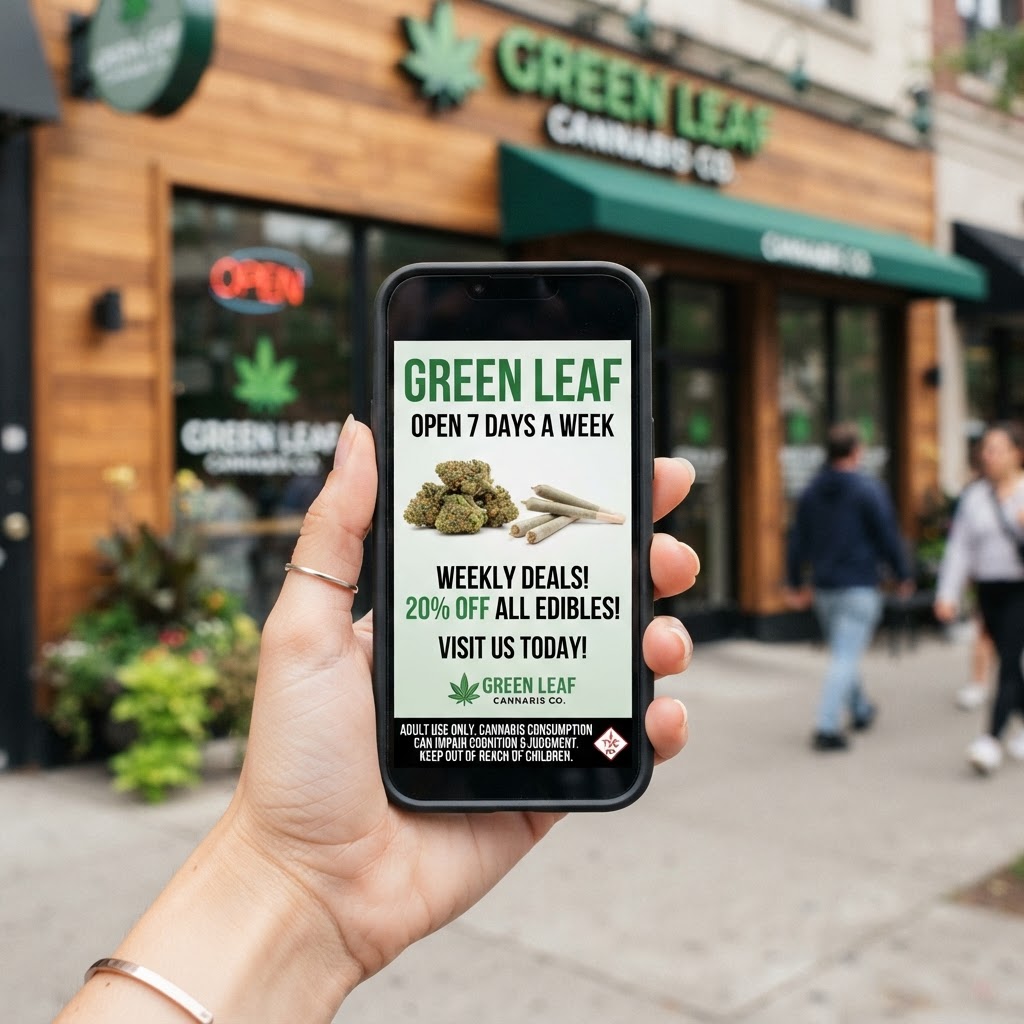
A disclosure label on a cannabis ad. Small addition, big compliance signal.
The Deeper Risk
The synthetic performer law isn't just about disclosure text on an ad. It's about the deepfake and brand impersonation risk that AI-generated content creates for cannabis brands specifically. When a regulator sees that a cannabis brand is using AI-generated human likenesses in advertising, they may start asking broader questions: Are these synthetic performers making health claims?
Are they implying product efficacy? Are they targeting the right age demographic?
Cannabis is already the most scrutinized advertising category in the country. Adding AI-generated humans to the mix gives regulators a new lens to examine everything. The disclosure requirement is the entry point. What follows could be a broader audit of how AI is used across your marketing stack.
FAQ
<details>
<summary>What is New York's Synthetic Performer Disclosure Law?</summary>
New York's Synthetic Performer Disclosure Law (S.8420-A) requires advertisers to include a conspicuous disclosure when a visual or audiovisual ad features an AI-generated human likeness that does not depict a real person. The law took effect June 9, 2026 and applies to any advertisement distributed to consumers in New York, regardless of where the advertiser is headquartered.
</details>
<details>
<summary>Does this law apply to cannabis brands based outside New York?</summary>
Yes. The law applies to any company whose ads reach consumers in New York. If your cannabis dispensary runs digital or social media ads that can be seen by New York residents, the disclosure requirement applies to you. Geographic targeting doesn't provide a safe harbor if the ad can reach New York audiences.
</details>
<details>
<summary>What counts as a synthetic performer in advertising?</summary>
A synthetic performer is an AI-generated human likeness that does not depict an actual living person. If you use AI to generate a model, spokesperson, or lifestyle figure for your ad, that's a synthetic performer.
If you use AI to enhance a photo of a real person, that's not covered. Product photography, cannabis flower shots, and abstract imagery with no human figures are also not covered.
</details>
<details>
<summary>How much are the fines for violating the law?</summary>
Civil penalties are $1,000 for a first violation and $5,000 for each subsequent violation. The fines themselves are modest, but the real risk is regulatory scrutiny. A disclosure violation gives cannabis regulators a reason to examine your broader marketing practices, which could uncover other compliance gaps.
</details>
<details>
<summary>Will other states pass similar AI advertising disclosure laws?</summary>
California's SB 243 already requires AI disclosure for companion chatbots and interactive AI systems. Multiple other states are drafting similar legislation. The direction is clear: states want transparency around AI-generated content in advertising. Cannabis brands should expect a multi-state patchwork of AI disclosure requirements within the next 12 to 18 months.
</details>
<details>
<summary>What should cannabis brands do to comply right now?</summary>
Audit all live ad creative for AI-generated human likenesses. Tag every new creative asset with AI provenance at the point of creation. Update agency and vendor agreements to require AI content flagging.
Draft disclosure language that's conspicuous and readable. Layer AI disclosure tracking onto your existing state-by-state compliance checklist so you can respond quickly as new states pass laws.
</details>
What Comes Next
The synthetic performer law is a compliance line item today. In twelve months, it will be a competitive differentiator. The cannabis brands that build AI content provenance tracking into their creative workflow will be the ones that can move fast when the next state passes a similar law. The ones that don't will be stuck doing manual audits every time a new bill passes.
New York went first. The question isn't whether other states follow. It's which one goes next, and whether your brand is ready.