Schedule III is not a visibility reset.
It may change tax pressure, research pathways, medical framing, and the questions customers ask. It does not wipe the internet clean. It does not erase the source pages, press references, state-specific explainers, location pages, menus, and education hubs that answer engines already lean on when they explain cannabis.
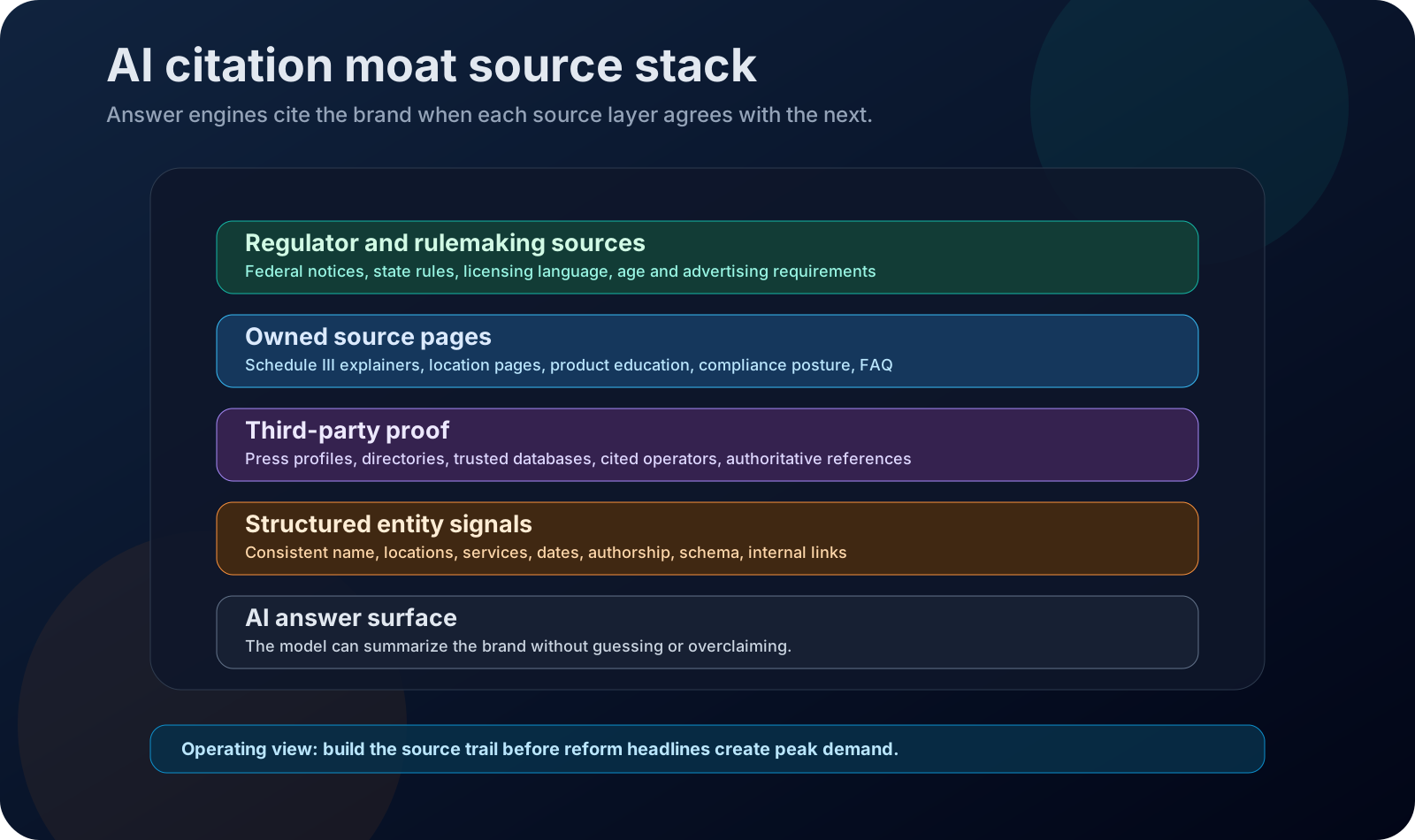
That is the citation moat. In AI search, the winner is not always the loudest brand. It is often the brand with the cleanest source trail.
The U.S. Department of Justice submitted a proposed rule in 2024 to move marijuana from Schedule I to Schedule III under the Controlled Substances Act, and the Federal Register notice became the document everyone in cannabis started watching. The industry conversation turned into a waiting room.
Waiting is the wrong posture for search.
Reform changes demand
Schedule III would matter. Cannabis operators are right to watch it closely. The proposal raised serious questions about medical research, tax treatment, controlled-substance handling, insurance, pharmacy-adjacent language, banking appetite, and the gap between federal and state cannabis rules.
But AI visibility does not wait for finality. It builds from the material already available.
When a customer asks an answer engine what Schedule III means for a dispensary, the model looks for stable explainers, recognized entities, regulator pages, state language, cited reporting, and pages that agree with other trusted pages. A thin blog post written after the headline is not the same thing as a durable evidence base.
That matters for cannabis because the category is already hedged. AI systems are cautious around legality, age gates, health language, product claims, and state differences. The cannabis brand that wants to be cited has to make the safe answer easy.

Schedule III creates new search demand, but answer engines still need trustworthy source material.
The moat is source depth
Traditional search rewarded pages that ranked. AI search rewards sources that can be summarized safely.
Those are not identical jobs.
A page can rank because it is technically optimized. A page gets cited because it contains a clean answer, named entities, clear dates, policy-safe language, and enough surrounding context for the answer engine to trust the sentence it is about to repeat.
For cannabis, that means the source layer has to cover more than brand claims:
| Surface | What answer engines need | Why it matters |
|---|---|---|
| State pages | Legal status, age rules, license context | Prevents generic national answers |
| Product education | Non-medical, compliant explanations | Reduces claim risk |
| Location pages | Address, hours, service area, menu context | Supports local discovery |
| Compliance pages | Advertising posture, age gate, disclaimers | Signals category discipline |
| Press and profiles | Third-party references | Helps entity recognition |
The operator mistake is treating Schedule III as a single article topic. It is not. It is a content architecture issue.
The timing problem
Regulatory uncertainty makes cannabis teams cautious. That caution is understandable. It also creates an opening for competitors that can publish carefully before everyone else is comfortable.
The right move is not to predict the final rule. The right move is to explain what is known, what is proposed, what remains uncertain, and what operators should watch.
That is the difference between authority and hype.
The Justice Department announcement and the proposed rule give marketers enough to build useful, cautious source pages without pretending the process is finished. A credible page can say, "The proposal would do X if finalized, but state cannabis rules would still matter.
" That sentence is safer than a victory-lap headline and more useful to an AI system.
This is where a cannabis brand's website becomes an evidence layer. Not a campaign. Not a launch asset. An operating record.
The brand that explains uncertainty clearly can become more citable than the brand that waits for certainty.
What smaller brands can still own
Large multistate operators have an obvious entity advantage. They have more locations, more press, more pages, more backlinks, and more references in third-party databases.
Smaller brands still have openings.
They can own narrower, more useful surfaces. A dispensary can explain Schedule III through the lens of one state, one city, one customer journey, one medical-adjacent question, or one store policy.
A product brand can explain what the change does not mean for product claims. A cannabis software company can explain how operators should update menus, consent flows, staff scripts, and compliance review.
The work is not glamorous. It is durable.
The answer engine test
Before publishing a Schedule III page, ask whether an answer engine could quote it without creating legal risk.
If the page overstates the change, it is risky. If it ignores state law, it is incomplete. If it turns reform into a sales pitch, it is less useful. If it uses health-claim language, it may hurt more than it helps.
The better pattern is simple:
- 1Name the status of the rulemaking.
- 2Explain the practical operator impact without pretending certainty.
- 3Separate federal scheduling from state cannabis rules.
- 4Avoid medical outcome claims.
- 5Link to regulator or government sources.
- 6Connect the topic to the reader's actual decision.
That is how cannabis SEO changes in an AI answer environment. It becomes less about publishing more pages and more about making each page easier to trust.
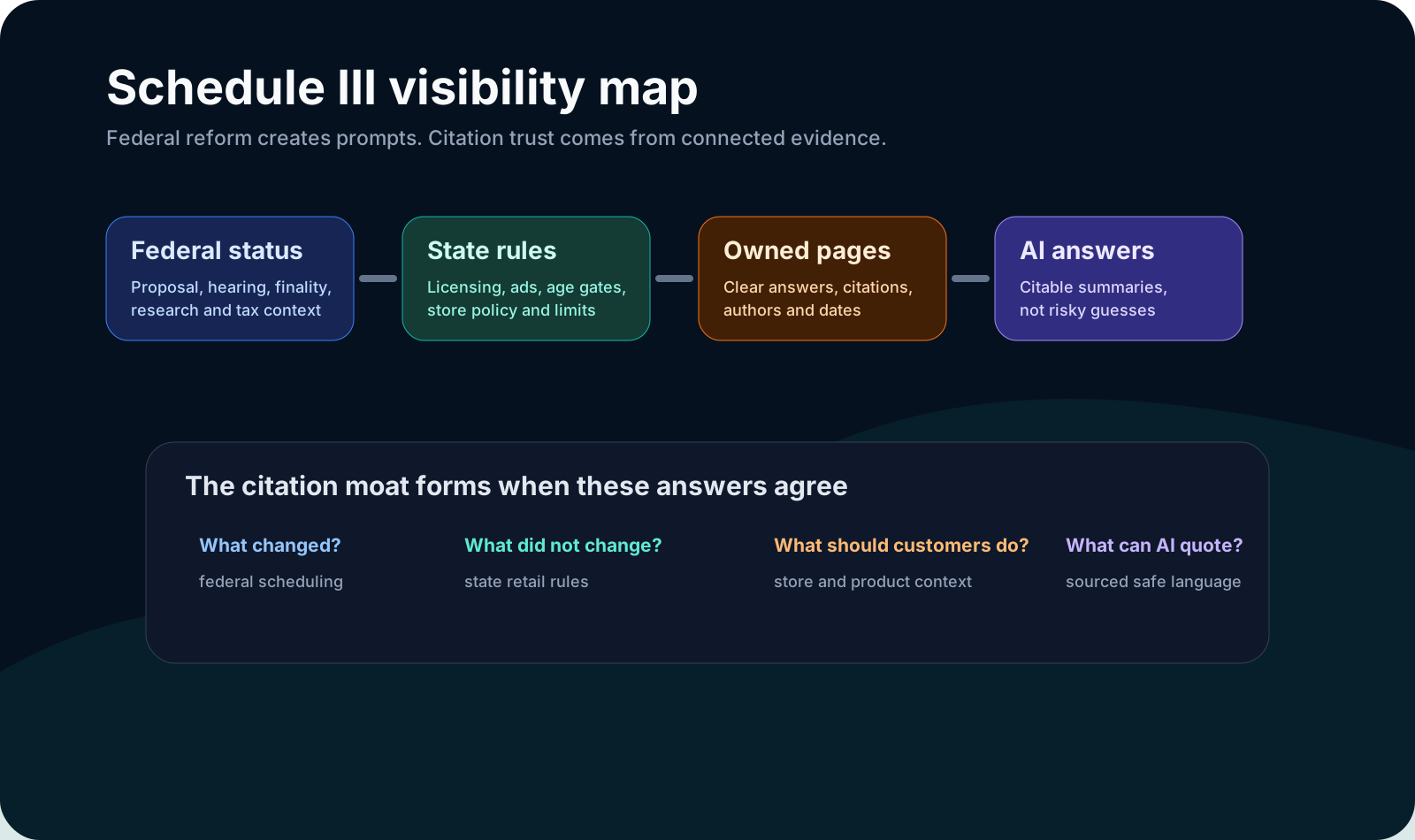
The same logic applies to internal linking. A Schedule III explainer should not sit alone. It should connect to compliance pages, state pages, product education, service pages, and location content so the site tells one coherent story. Internal links are not only for SEO crawl paths. They show how the brand organizes its own knowledge.
A practical content map
Cannabis teams do not need fifty reform posts. They need the right set of source pages.
| Page type | Working angle | Link target |
|---|---|---|
| Schedule III explainer | What is proposed, what is uncertain | Federal rulemaking |
| State impact page | What changes and what does not in one state | State regulator |
| Operator policy page | How staff answer customer questions | Compliance process |
| Product claim page | What the brand will not claim | FDA and FTC guidance |
| Local discovery page | Store rules, age gate, pickup, menu context | GBP and location page |
This is also where AI and compliance meet. A cannabis brand can use AI to draft variants, but the source page needs human review. The brand has to decide what it is willing to say in public, what it can support, and what it refuses to imply.
That is the work most brands skip. It is also the work answer engines reward.
What to do now
Do not wait for the next federal headline before improving the evidence layer.
Start with the pages that carry the most risk and the most citation value. Update state pages. Clean up location pages. Add cautious Schedule III explainers. Build internal links from cannabis compliance content to local discovery content. Make author, date, and update signals visible. Remove claims the brand cannot defend.
For brands with thin sites, start with a small proof bank: regulator links, staff-approved explanations, compliant product education, policy language, and third-party mentions. For brands with large sites, audit whether the pages agree with each other. Answer engines notice contradictions faster than customers do.

Citation advantage compounds when answer engines find repeated, consistent source signals.
Schedule III may reshape the category. It will not reward brands that have no source trail.
The moat is already being built. The only useful question is whether your site is part of it.
FAQ
No. Schedule III can create new search demand, but it does not automatically make a brand more visible. Brands still need clear, source-backed, state-aware content that answer engines can summarize safely.
Yes, if they write cautiously. The safest approach is to explain what has been proposed, what remains uncertain, and how state cannabis rules still apply. Do not write as if the process is complete unless it is.
An AI citation moat is the advantage a brand earns when answer engines repeatedly trust and cite its pages, third-party mentions, and structured source material. It compounds when the brand keeps publishing useful, accurate, and consistent information.
Start with location pages, state-law explainers, age-gate language, menu context, and customer-facing policy pages. Those surfaces answer practical questions and reduce the chance of generic or risky AI summaries.
No. It changes the emphasis. Technical SEO still matters, but AI visibility adds pressure for clean answers, entity consistency, source support, and compliant language.