AI age verification is useful. It is not a liability shield.
That distinction matters in cannabis because the retailer, not the vendor dashboard, owns the sale. If a system approves a document, a staff member still has to decide whether the transaction is compliant. The tool can support that decision. It should not replace it.
Synthetic identity risk makes this harder. Fraud no longer looks like a bad laminate and a nervous customer. It can involve real identity fragments, fabricated profile details, manipulated images, and documents that pass one check while failing the broader common-sense review.
The tool is not the standard
Identity verification vendors are often evaluated like checkout tools: speed, conversion, false positives, and customer friction.
Cannabis needs another standard: defensible compliance.
The question is not only whether the tool can scan an ID. The question is whether the operator can explain the control process when an auditor asks how age, identity, staff review, exceptions, and recordkeeping work together.
The NIST digital identity guidelines separate identity proofing into controls, evidence, validation, verification, and risk. Cannabis operators do not need to become identity architects, but the model is useful: one automated scan is not the same as an identity assurance program.

An identity dashboard is only useful when it fits inside a documented compliance process.
Synthetic risk changes the review
Synthetic identity fraud usually combines real and false signals. That creates a dangerous middle zone. Each individual signal may look plausible, but the full profile may not hold together.
That is why cannabis retailers should not evaluate age verification as a simple pass or fail screen. They need escalation logic.
| Signal | Low-risk handling | Higher-risk handling |
|---|---|---|
| ID scan passes | Staff confirms visible ID and customer | Document result |
| Face match uncertain | Pause transaction | Manual review |
| Customer behavior inconsistent | Ask for secondary review | Deny or escalate |
| System outage | Use approved manual process | Log exception |
| Repeated mismatch pattern | Review vendor and staff process | Compliance audit |
The cannabis category adds pressure because age verification is mandatory, cash and high-value transactions still exist in many markets, and staff are trained to keep lines moving. Speed can become the weakness.
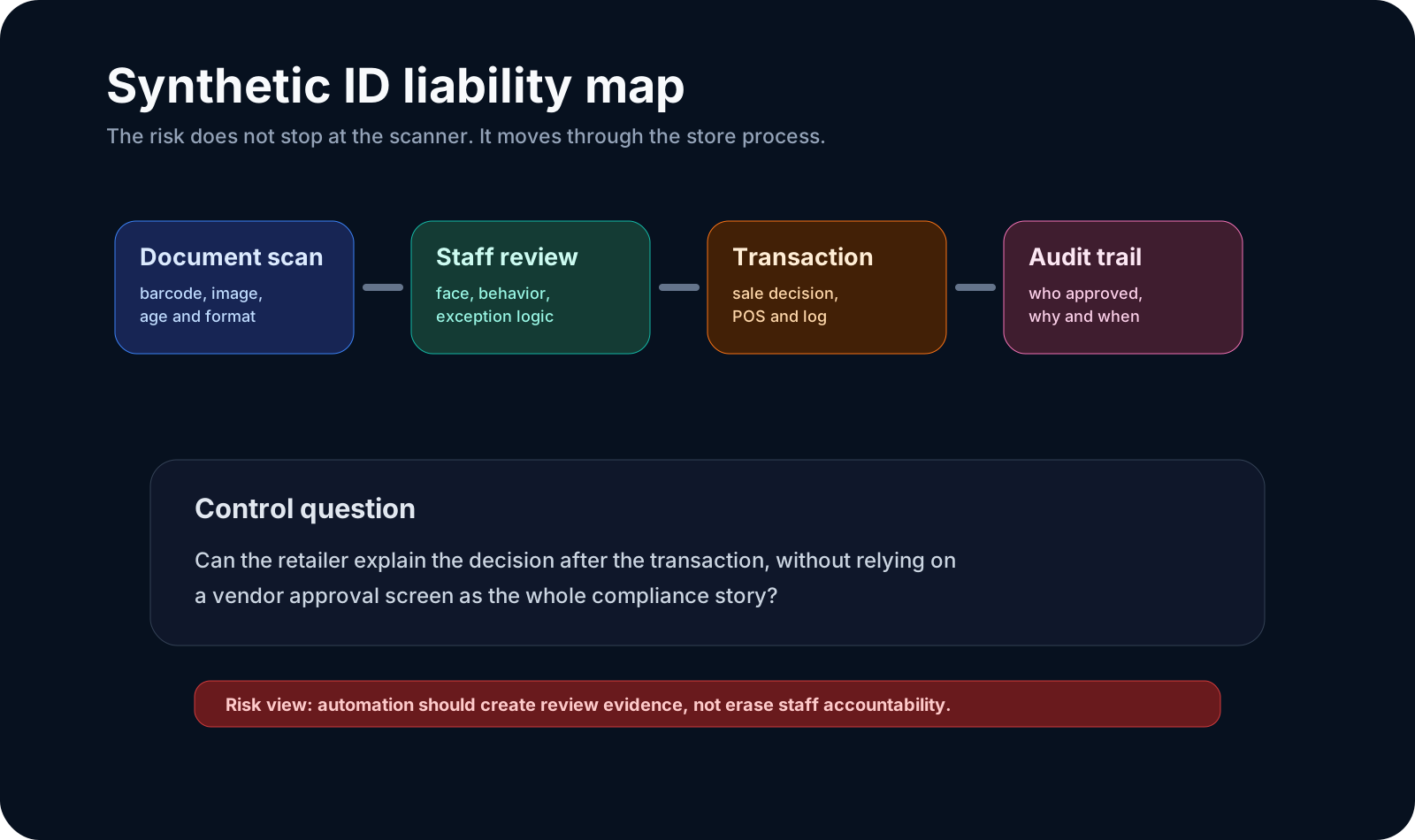
The checkout script matters
The weakest part of the system is often not the scanner. It is the moment after the scanner approves.
Staff may read an approval screen as permission to continue. A better process teaches them to read it as one signal. The customer still has to match the document. The document still has to match the transaction context. The staff member still has authority to pause the sale.
That requires a script. Not a robotic one, but a consistent one. Staff should know what to say when an ID scan is uncertain, when the customer pushes back, when the photo does not look right, when a second review is required, or when the system is offline.
If the only training is "scan the ID," the retailer has not built an AI compliance process. It has bought a checkout accessory.
The same script should decide what gets logged. A clean record does not need to store every sensitive detail forever. It should capture the decision, the exception, the reviewer, and the retention path. That is enough to support a process without turning every checkout into an unnecessary privacy archive.
State rules still matter
AI does not flatten state law.
California and Nevada cannabis operators still have to follow state licensing and retail rules. The safest source path is always the current regulator page, not a vendor sales deck.
California operators should keep the Department of Cannabis Control laws and regulations close. Nevada operators should watch the Cannabis Compliance Board laws and regulations.
This is where a lot of AI verification projects go sideways. The vendor promises a smoother age gate. The operator treats that as a compliance answer. The state still expects a compliant transaction, trained staff, and records that match the operator's license obligations.
For cannabis compliance marketing, the same rule applies: AI can help manage complexity, but it cannot decide the legal posture for the business.
Operators should also separate customer-facing speed from back-office review. The checkout experience can stay quick for ordinary transactions while exceptions route to a manager, compliance lead, or documented denial path. That design matters because staff are less likely to improvise when the escalation path is already clear.
The process should be rehearsed, not buried in a binder. A store that practices three common scenarios, uncertain match, system outage, and customer refusal, will respond better than a store that only trains on the happy path.
The vendor contract gap
Retailers should read identity verification contracts like compliance documents.
Many tools describe what they verify, what they do not verify, what risk they disclaim, what data they store, how long they retain it, and what happens when the system is wrong. Those details matter because an operator may assume the tool catches fraud when the contract only promises document processing or age estimation support.
The review should include:
- What identity signals does the system check?
- What does the vendor explicitly not guarantee?
- How are exceptions logged?
- How long is image or identity data retained?
- Can staff override the tool?
- Who reviews false accepts and false rejects?
- What evidence can the operator export during an audit?
The privacy side
Identity verification creates sensitive records.
A cannabis retailer may be collecting scans, images, time stamps, purchase context, loyalty data, and staff review notes. That is not ordinary marketing data. It can reveal age, identity, location, cannabis purchasing behavior, and potentially health-adjacent interest.
The FTC has repeatedly emphasized data minimization in sensitive-data contexts. Cannabis operators should take the hint. Collect what the process requires. Retain what the law and risk model require. Delete what the business does not need.
This is where identity fraud and privacy risk meet. More stored identity evidence can help an audit, but unnecessary retention creates breach and subpoena exposure. The right answer is not "store everything." It is a written retention policy that compliance, legal, and operations actually follow.

The final identity decision still happens at the retail counter, not inside the vendor dashboard.
What good looks like
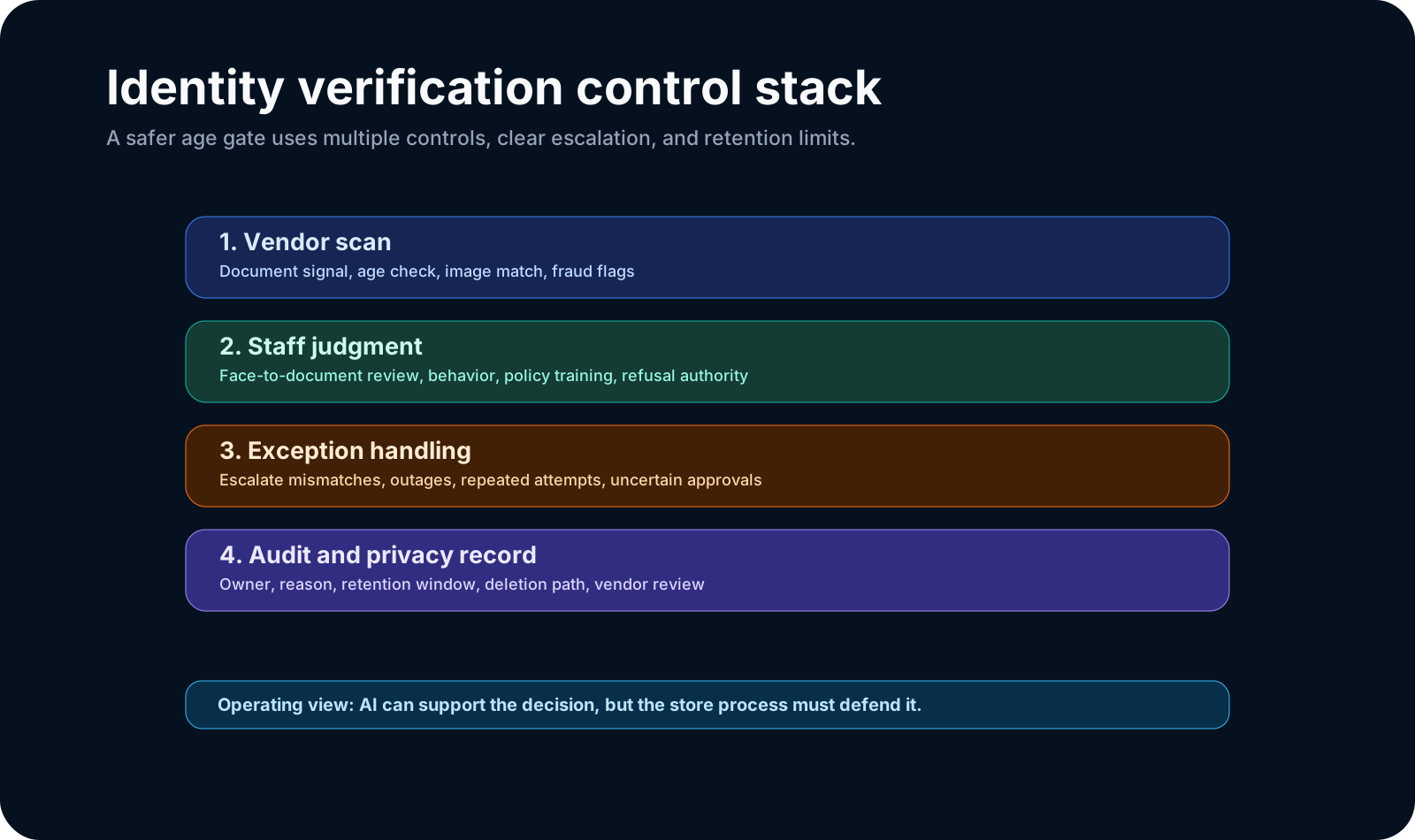
A safer cannabis AI verification process treats the system as one control in a stack.
The store trains staff on what the AI checks and what it does not. The standard operating procedure explains when to accept, escalate, or deny. Exceptions are logged. Vendor performance is reviewed. Privacy retention is defined. Marketing does not promise frictionless access if the compliance team needs slower review for certain cases.
The review also needs ownership. If every failed scan, manual override, and denied transaction sits in a log nobody reviews, the retailer is not learning. Assign a monthly owner to look for patterns: repeated failures by location, staff members who override too often, vendor false positives, outage frequency, and privacy records retained longer than policy allows.
Those patterns are where compliance improves. AI creates the signal. Operations has to turn it into a better process.
That is less exciting than a one-screen approval flow.
It is also more defensible.
The cannabis retailers that win with AI identity tools will not be the ones that remove humans from the decision. They will be the ones that make the human decision easier to explain.
FAQ
They can use it as a control, but they should not treat it as the whole compliance process. Staff training, exception handling, documentation, and state-specific rules still matter.
Synthetic identity fraud combines real and fabricated identity elements into a profile that can pass some verification checks while still being false or misleading.
Ask what the tool verifies, what it does not guarantee, how exceptions are logged, what data is retained, how staff overrides work, and what audit records can be exported.
Not automatically. It can increase privacy risk if the retailer stores unnecessary images, ID scans, logs, or purchase-linked identity records without a retention policy.
Use AI to flag and support review, keep staff judgment in the loop, document exceptions, audit the system, and minimize retained identity data.