Energy B2B marketing fails because it treats a technical buying committee like a single LinkedIn persona.
That is the wrong room.
A clean energy vendor, grid software company, storage developer, engineering firm, or power procurement advisor is not selling to one motivated lead. It is selling through engineers, finance, legal, procurement, project development, operations, and a sponsor who may only join late. Each role needs different proof.
Most energy content answers one role and leaves the rest of the committee untouched. That is why it gets polite clicks and no movement.

Energy buyers are making decisions under grid pressure, policy change, and long procurement cycles.
The buying committee is the market
The energy buyer is not a marketing abstraction. It is a working group with blockers.
Engineering wants to know if the system can work inside the actual grid, site, or interconnection constraints. Finance wants to know if the numbers hold under tax, offtake, incentive, and rate assumptions. Legal wants risk allocation. Procurement wants vendor confidence. The executive sponsor wants timing and strategic reason.
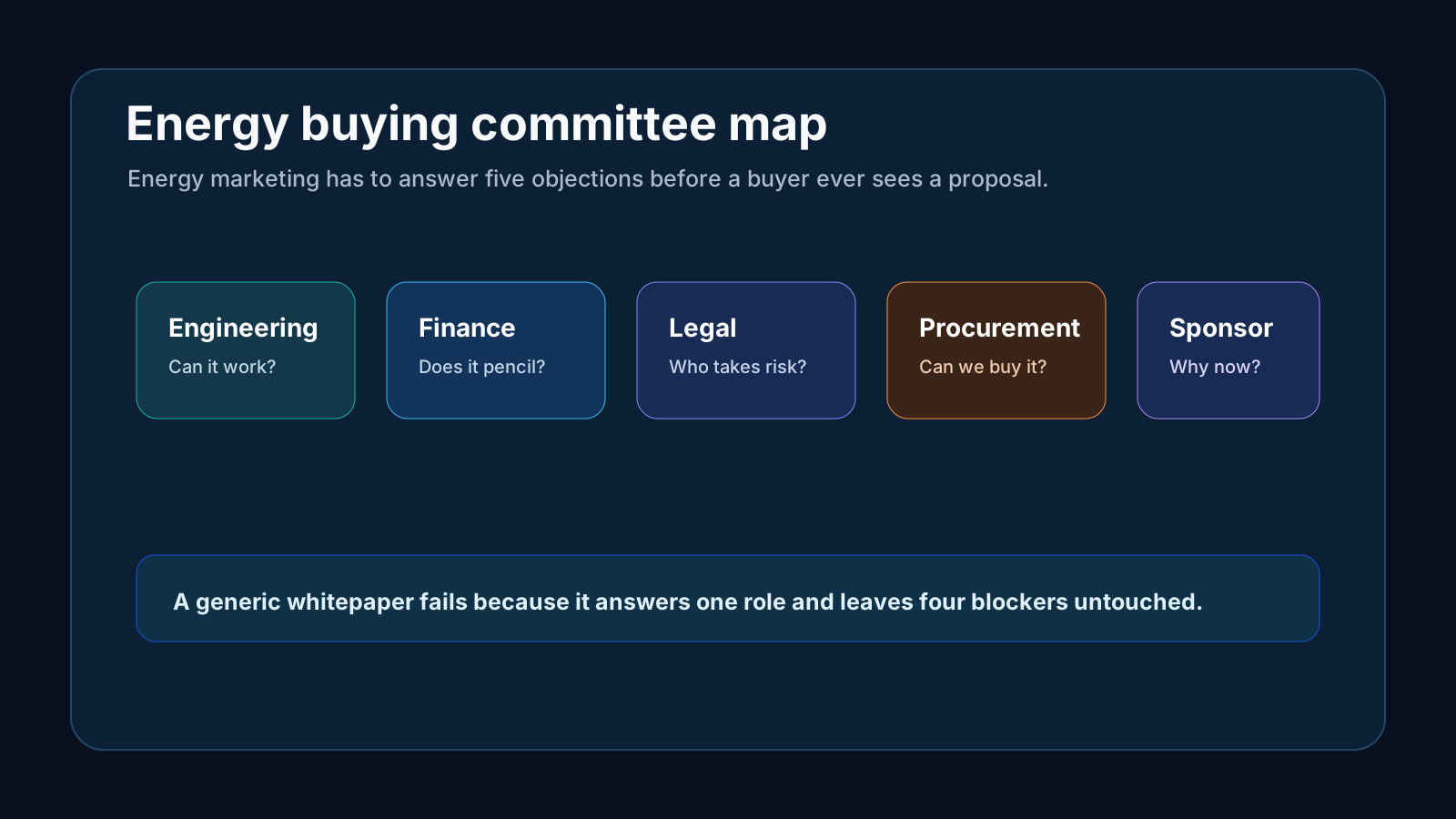
That is why generic content underperforms. "The future of clean energy" does not help a project development lead explain queue risk to finance. A regional interconnection memo might.
The best energy marketing is closer to deal enablement than awareness. It gives the committee language they can reuse internally.
Policy content only works when it affects economics
Energy marketers love policy updates. Buyers ignore most of them.
The difference is whether the policy changes project economics, timing, eligibility, or risk. The Inflation Reduction Act matters because tax credits, domestic content rules, transferability, and direct pay change deal math.
FERC Order No. 2023 matters because interconnection delays can decide whether a project exists.
If a post does not connect the rule to a decision, it is homework.
Energy content should answer:
- What changed?
- Who is affected?
- Which projects or buyers see the impact first?
- What evidence does a buyer need now?
- What should a committee decide differently?
That is the difference between thought leadership and a useful memo.
Interconnection is a content opening
Interconnection delays are not just an operations issue. They are a marketing opening because buyers are searching for clarity and getting very little practical help.
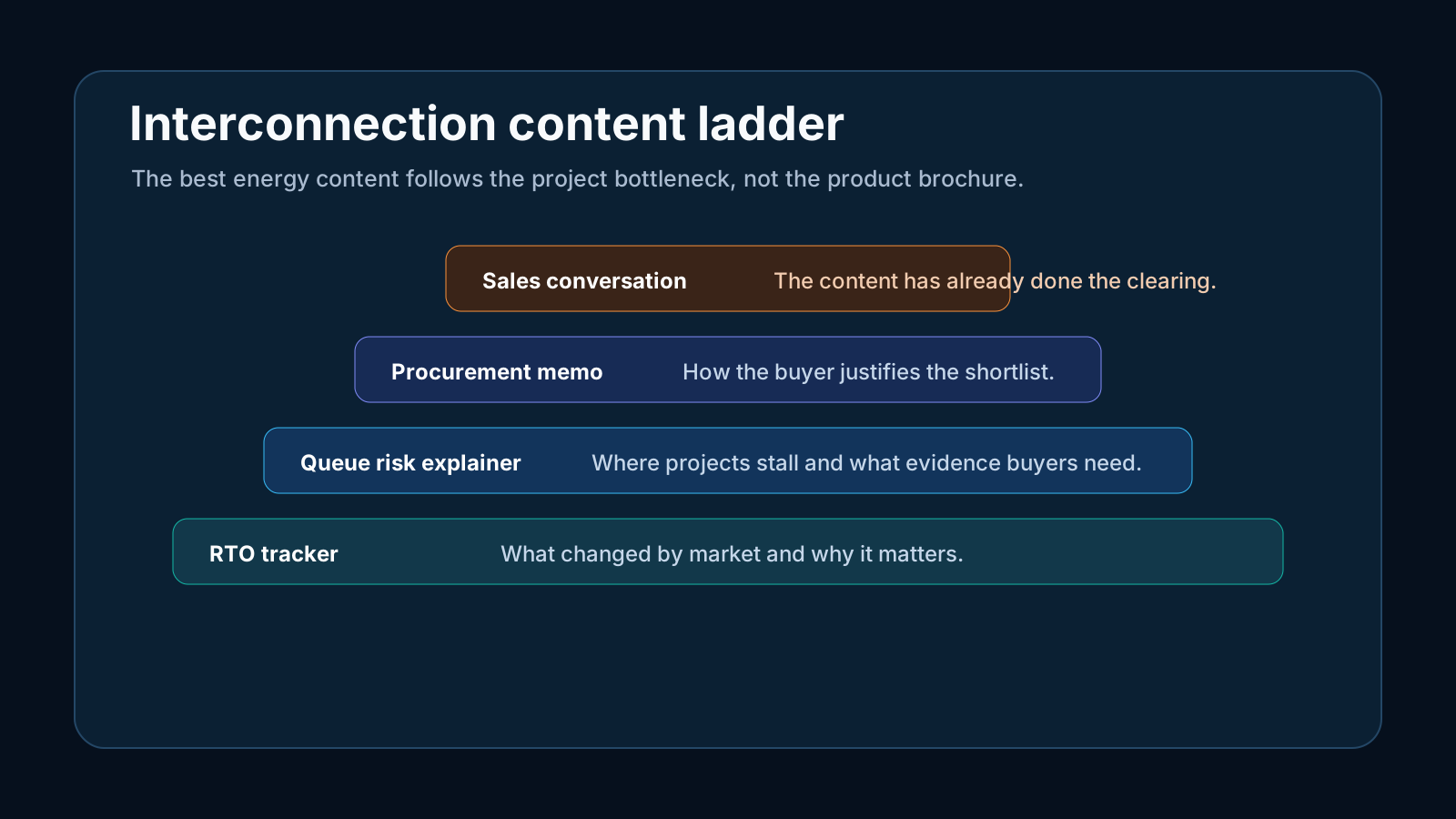
The Lawrence Berkeley National Laboratory interconnection queue work has documented the scale of the queue problem for years. Projects can sit for long periods while costs, timelines, and network-upgrade obligations shift. For vendors selling into developers, utilities, data centers, and large energy users, that uncertainty creates a content gap.

Interconnection constraints shape how energy buyers evaluate timing, risk, and vendor fit.
The strongest content is specific:
| Content angle | Weak version | Useful version |
|---|---|---|
| Queue reform | "Interconnection is changing" | What FERC Order 2023 means for PJM, MISO, or CAISO buyers |
| Project risk | "Plan ahead" | Which evidence a buyer needs before committing capital |
| Data center load | "AI uses power" | How procurement teams compare power, latency, land, and grid constraints |
| Incentives | "IRA credits are available" | How transferability changes project finance and buyer timing |
Regional content beats national content
Energy is not one market. It is regional, regulated, and constraint-heavy.
PJM, ERCOT, MISO, CAISO, SPP, and ISO-NE do not create the same buyer questions. A national post may be easy to produce, but the regional memo gets forwarded because it helps a real project team.
This is where B2B energy marketers need to stop thinking like generic SaaS marketers. Narrow is not a weakness. It is the signal.
A storage developer in ERCOT cares about very different things than a corporate buyer evaluating a clean power purchase agreement in PJM. A data center team looking at power availability cares about grid capacity, speed, local incentives, and siting constraints. A utility buyer has another procurement rhythm entirely.
The content plan should mirror those buying realities.
The sales deck is too late
Energy vendors often wait until a sales conversation to explain the hard parts. That is too late. By the time a buyer agrees to a meeting, several internal conversations have already happened. The buyer has already searched for constraints, asked peers, scanned trade media, and tried to decide whether the vendor belongs in the shortlist.
Good content gives that buyer internal ammunition before the meeting. It explains the risk in language the buyer can forward. It gives finance a way to think about timing. It gives legal a reason to ask better questions. It gives the sponsor a clearer reason to move now instead of next quarter.
That is why one useful procurement memo can do more than ten broad awareness posts. It enters the buyer's internal conversation when the vendor is not in the room.
Data centers changed the conversation
AI-driven data center demand has pulled power procurement into mainstream executive conversations. The IEA's Energy and AI report describes how data centers and AI are becoming a larger part of electricity planning.
The U.S. Energy Information Administration has also tracked rising power-sector attention around large loads and grid demand.
That creates a new audience for energy companies: tech-native buyers who care about power availability, speed, carbon claims, reliability, and procurement risk.

Energy marketing budgets should fund proof, trade media, executive distribution, and long-cycle account visibility.
These buyers do not read the same content as traditional utility audiences. They need material that connects energy constraints to business continuity, real estate, compute demand, and procurement timing. A vendor that can speak both grid and data-center language has a real advantage.
Trade media still matters
Energy buyers trust industry media because the category is technical and the stakes are high. Utility Dive, Canary Media, RTO Insider, Latitude Media, and sector newsletters often move the conversation more than a corporate blog.
That does not mean a company should outsource its thought leadership to trade publications. It means the owned channel and earned channel should work together.
Use the company site for durable source pages, explainers, tools, and data. Use trade media for reach, authority, quotes, and proof that the market recognizes the company. Use executive LinkedIn for interpretation, not press-release recycling.
The mix matters:
| Channel | Job |
|---|---|
| Owned source pages | Durable explanation and SEO |
| Executive LinkedIn | Interpretation and buyer conversation |
| Trade media | Third-party credibility |
| Webinars | Committee education when specific |
| Events | Relationship acceleration |
Measurement has to fit the cycle
Energy sales cycles can take months or longer. Standard marketing-qualified lead reporting often punishes the channels that actually create trust.
Measure account movement instead:
- Target accounts reading the right pages.
- Repeat visits from buying committee roles.
- Executive engagement from named accounts.
- Trade media mentions and citations.
- Sales calls that reference content.
- Shortlist inclusion.
- Pipeline velocity after content-assisted conversations.
This is not an excuse for vague reporting. It is a demand for better reporting. A click from a relevant account matters more than a hundred irrelevant downloads.
Build around proof
The energy companies that win will stop making broad claims and start publishing proof.
That proof can be project economics, queue analysis, procurement checklists, buyer memos, technical explainers, regulatory interpretation, or original data. The format matters less than the usefulness.
One more rule helps: do not publish anything sales cannot use. If a salesperson would never send the piece to a skeptical engineer, project finance lead, or procurement manager, the topic is probably too soft. Good energy content should make a real conversation easier the week it goes live.
Energy marketing is broken because too much of it is written for a marketing calendar. Buyers need content written for the meeting where the decision gets stuck.
Write for that meeting.
FAQ
Energy purchases involve technical risk, long timelines, multiple stakeholders, policy uncertainty, and capital decisions. Generic lead-generation tactics do not answer enough of the buying committee's questions.
Specific content works best: regional market updates, interconnection analysis, incentive guidance, procurement memos, project-risk explainers, and technical proof tied to buying decisions.
Yes, but executive interpretation usually beats company-page announcements. Buyers respond to useful analysis from credible operators, engineers, advisors, and founders.
Measure target-account engagement, buying committee activity, trade media visibility, sales conversations influenced by content, shortlist movement, and pipeline velocity.
Energy markets differ by regional transmission organization, policy, grid constraints, and buyer needs. Regional content feels useful because it matches actual project decisions.