Freight AI moved from pilot to operating pressure
AI is no longer an abstract logistics trend. Aurora announced commercial driverless trucking in Texas. C.H.
Robinson has described millions of shipping tasks handled by proprietary AI agents. FMCSA continues to track autonomous vehicle policy and safety issues. The freight stack is becoming more automated at the same time fraud and identity abuse are getting more sophisticated.
For a general retailer, this is mostly a margin and speed story. For cannabis and other regulated brands, it is also a custody story. A faster route is helpful only if the operator can prove who had control of the load, when an exception happened, what changed, and whether the product remained inside the rules.

The freight advantage is speed plus traceable custody, not automation alone.
*The freight advantage is speed plus traceable custody, not automation alone.*
The broker layer is changing first
Freight brokerage has always depended on relationship knowledge, lane pricing, carrier availability, paperwork, and exception management. AI is eating the repetitive middle of that workflow.
Quote generation, appointment scheduling, invoice auditing, document extraction, and shipment tracking are easier to automate than the messy judgment calls that happen when something goes wrong.
That split matters. A logistics partner may be excellent at AI-enabled booking and still weak at regulated exception handling. Cannabis operators should ask where the automation stops and who owns the handoff. If a carrier substitution, route change, delivery delay, or custody question appears, the AI workflow needs a human review path.
| Freight function | AI advantage | Regulated-brand risk |
|---|---|---|
| Load matching | Faster carrier discovery and pricing | Weak identity verification can enable fraud |
| Route optimization | Lower miles, fuel, and delay exposure | State transport rules may limit options |
| Document automation | Cleaner invoices and faster reconciliation | Bad extraction can create false compliance records |
| Exception alerts | Earlier warning on delays or route changes | Alerts need a human owner and action log |
| Autonomous trucking | Long-term cost and capacity shift | Rules may not allow regulated cargo without human custody |
Autonomous trucking changes the cost conversation
Aurora's driverless freight launch in Texas is not directly equivalent to cannabis transport. State-licensed cannabis distribution still has its own driver, vehicle, manifest, and chain-of-custody requirements.
But autonomous freight changes the cost expectations around the broader logistics market. When capacity gets cheaper or more predictable in adjacent categories, regulated carriers will face pressure to modernize around the parts they can automate.
That will show up in routing, dispatch, document review, maintenance scheduling, and fraud detection before it shows up as autonomous cannabis delivery. Operators should watch the technology without assuming regulations move at the same pace.
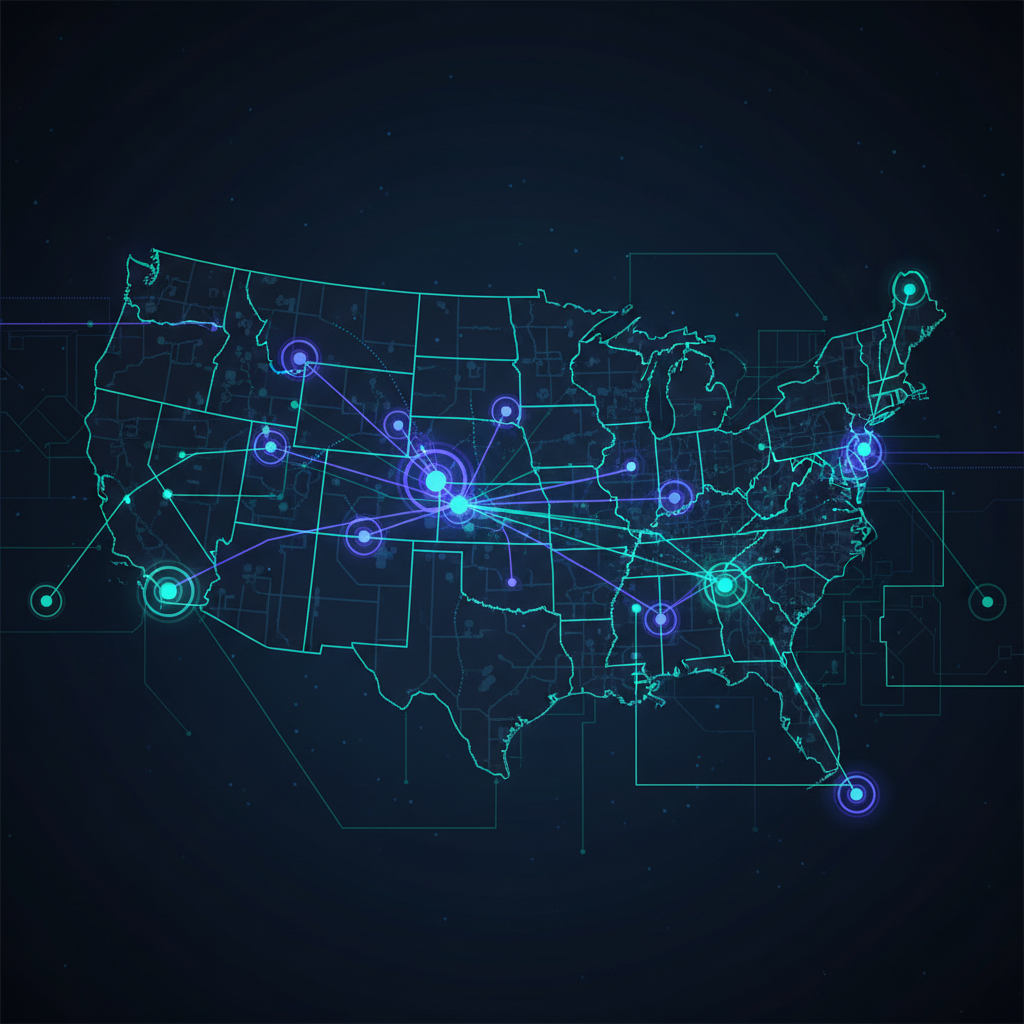
Route intelligence needs custody events and human exception review layered on top.
*Route intelligence needs custody events and human exception review layered on top.*
Cargo fraud is the part cannabis teams cannot ignore
The darker side of freight automation is identity abuse. Criminals can impersonate carriers, create convincing documents, spoof communications, and intercept loads through social engineering. AI makes those tactics cheaper and more scalable. Cannabis cargo is attractive because product value is high, routes are constrained, and many operators still rely on manual vetting.
The answer is not paranoia. It is control design. Carrier onboarding should verify identity, authority, insurance, history, and communication channels. Route changes should require confirmation through known paths. Pickup and delivery events should be logged in a system the operator can export. Exceptions should generate a record, not just a phone call.
This connects to AI vendor lock-in and compliance risk and cannabis AI inventory forecasting. Logistics data is operational data. If the vendor controls it and the operator cannot export it, the brand is exposed.
The partner questionnaire is changing
Regulated freight risk often shows up before an incident. It shows up in a partner questionnaire, an insurance renewal, a financing review, or a large retailer asking how custody records are handled. AI makes those questions sharper because automation can blur who made the decision.
If a route changed, did the AI suggest it or did a dispatcher approve it? If a carrier was substituted, which identity checks ran? If a document mismatch was cleared, who reviewed the exception?
If an alert was ignored, did the system record the reason? Those are not abstract governance questions. They are the questions a partner asks when a load is late, a product is missing, or a claim hits the insurer.
The best operators will be able to answer without hunting through email. They will keep a single logistics evidence file with route history, custody events, carrier checks, exception notes, and exportable vendor logs. That file turns AI from a black box into a controlled operating layer.
Cannabis logistics needs exception intelligence, not just route intelligence
The most valuable AI layer in regulated freight may be the least glamorous one: exception intelligence. A normal logistics platform flags a delay, missed appointment, route deviation, or document mismatch.
A regulated logistics system needs to know which exceptions matter for compliance, which require customer communication, which require a manifest update, and which need immediate human review.
That difference changes the product requirements. The system should not only say "truck delayed." It should say whether the delay affects custody, delivery window, product condition, inventory promise, or required documentation. It should also preserve the decision trail. Who acknowledged the exception?
What did they decide? Was the route changed? Was the receiving location notified? Did the manifest or track-and-trace record need an update?
This is where AI can be genuinely useful. It can summarize carrier messages, compare them with known route data, classify the exception, and surface the right playbook. But it should not silently resolve regulated custody issues.
The operator needs human approval for the decisions that can create license, insurance, or audit exposure. That pattern mirrors cannabis compliance automation liability: automate the watchtower, keep accountable people in the decision path.
In freight, speed is easy to celebrate. The better advantage is speed with a record.
What regulated brands should ask logistics partners
Ask four questions. Where does AI make decisions? Which decisions still require human approval? Can we export custody, route, and exception logs? How do you verify carrier identity when a load, route, or pickup contact changes?
The answers will tell you whether the partner is AI-native in a useful way or simply using automation to look modern. For regulated logistics, modern means faster, more auditable, and easier to defend when something goes sideways. One without the other is not enough.
FAQ
Not broadly. Autonomous trucking is advancing in general freight, but cannabis transport remains governed by state-specific licensing, driver, vehicle, manifest, and custody rules. Operators should track the technology while keeping regulated custody controls in place.
AI can help with route planning, exception alerts, document review, carrier vetting, invoice auditing, and demand-aware capacity planning. Human review should remain in place for custody and compliance decisions.
The biggest risk is an undocumented handoff: a carrier identity issue, route change, pickup change, or delivery exception that gets handled informally and cannot be reconstructed later.
2026 evidence and control update
The freight market is moving fast: Aurora's commercial driverless trucking launch, C.H. Robinson's report of millions of AI-handled shipping tasks, and FMCSA's autonomous vehicle resources all point to more automated logistics.
Cannabis still has a separate custody layer. California's delivery recordkeeping and track-and-trace requirements are the reminder: the operator needs a record when route intelligence turns into an exception decision.
| Control area | Why it matters now | What to document |
|---|---|---|
| Data source | AI quality depends on the inputs behind the answer | Vendor feed, POS field, menu source, or policy document |
| Rule layer | Cannabis rules still vary by market and channel | State rule, platform policy, age gate, claim restriction |
| Human review | Edge cases should not be decided only by automation | Reviewer, escalation threshold, approval or rejection note |
| Evidence trail | Future audits need more than screenshots | Timestamp, prompt/output pair, creative version, final URL |

