Cannabis retailers are moving toward AI shopping assistants for a simple reason: menus are too large, staff time is limited, and customers often need help before they know what to ask.
An AI budtender can make the first layer of service faster. It can search inventory, explain categories, surface deals, answer store policy questions, and help returning customers reorder. That is useful.
The risk starts when the assistant is treated as the relationship.
Cannabis retail still depends on trust. A customer is not only choosing an item from a catalog.
They are weighing comfort, uncertainty, prior experience, price, local availability, and whether the person or system guiding them sounds responsible. If AI turns that moment into a matching problem, the retailer may improve checkout speed while weakening the reason customers come back.
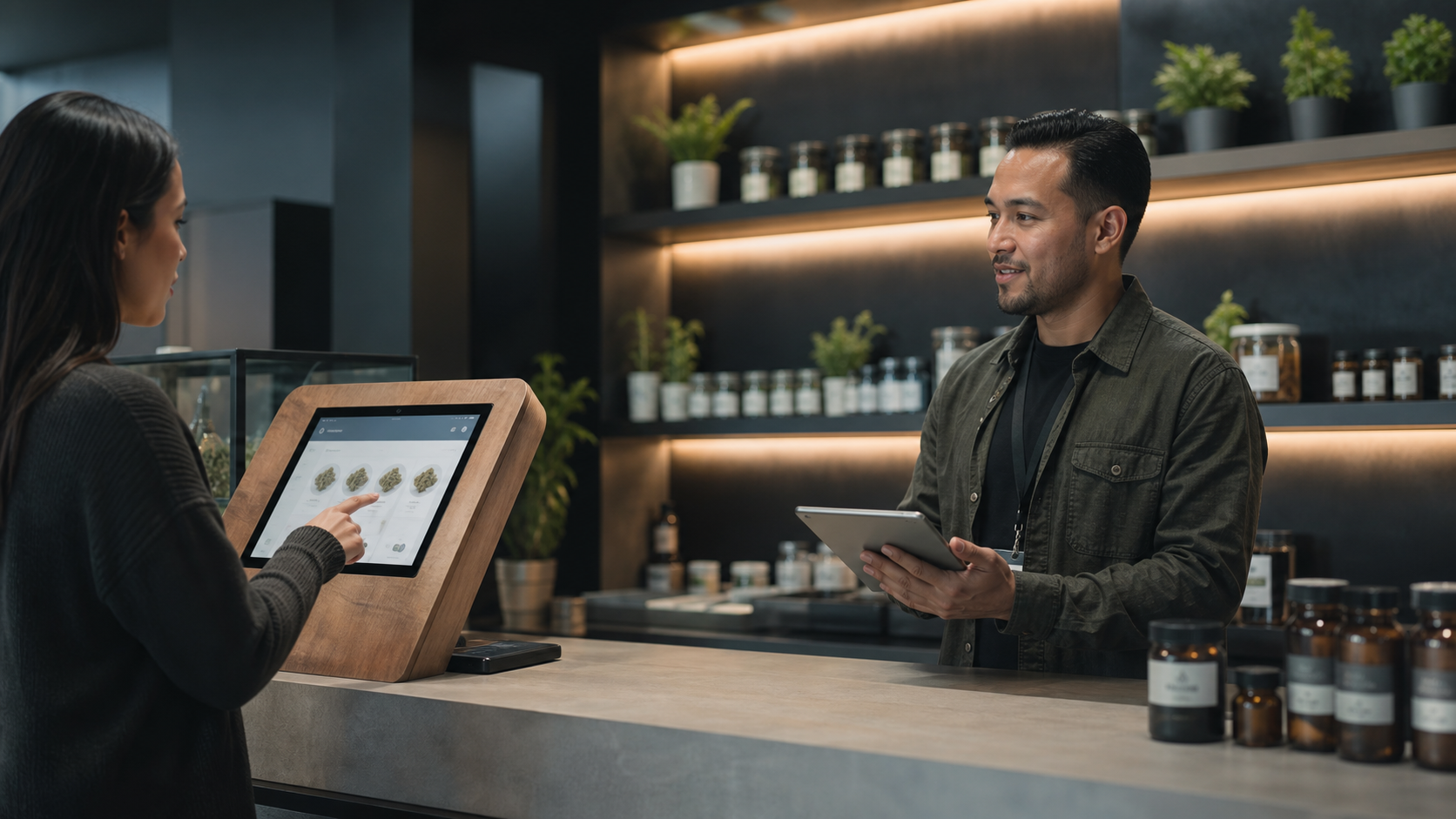
The defensible model is AI for friction, humans for judgment, relationship, and accountability.
The real job of a budtender
A good budtender does more than name a product. They read the room. They notice hesitation. They understand the difference between a confident regular and a first-time customer who does not want to sound uninformed. They know when to slow down, when to explain policy, and when to avoid claims that turn a retail conversation into a compliance problem.
That judgment is hard to automate because it is not only informational. It is social.
An AI assistant can say, "Based on your previous purchases, these options are similar." A person can notice that the customer is asking a different kind of question today and guide the conversation back to responsible, compliant ground.
That distinction matters in cannabis because the regulatory and advertising context is unusual. Operators need to account for state rules, age gating, product availability, promotion restrictions, and the risk of unsupported claims.
The California Department of Cannabis Control laws and regulations are a reminder that cannabis retail is not a normal product category, even when the interface looks like standard e-commerce.
AI can solve choice paralysis
The strongest argument for AI budtenders is menu complexity. A dispensary menu can have hundreds of SKUs across flower, pre-rolls, edibles, beverages, concentrates, vapes, tinctures, topicals, accessories, bundles, and deals. Add local availability, tax, discounts, purchase limits, and brand preferences, and the browsing experience gets messy fast.
AI can help with that. It can make the first pass less frustrating:
- Filter inventory by category, price, brand, and availability.
- Explain product formats in plain language.
- Help customers compare options without opening ten tabs.
- Remind shoppers about store policies and pickup rules.
- Route sensitive questions to staff instead of inventing an answer.
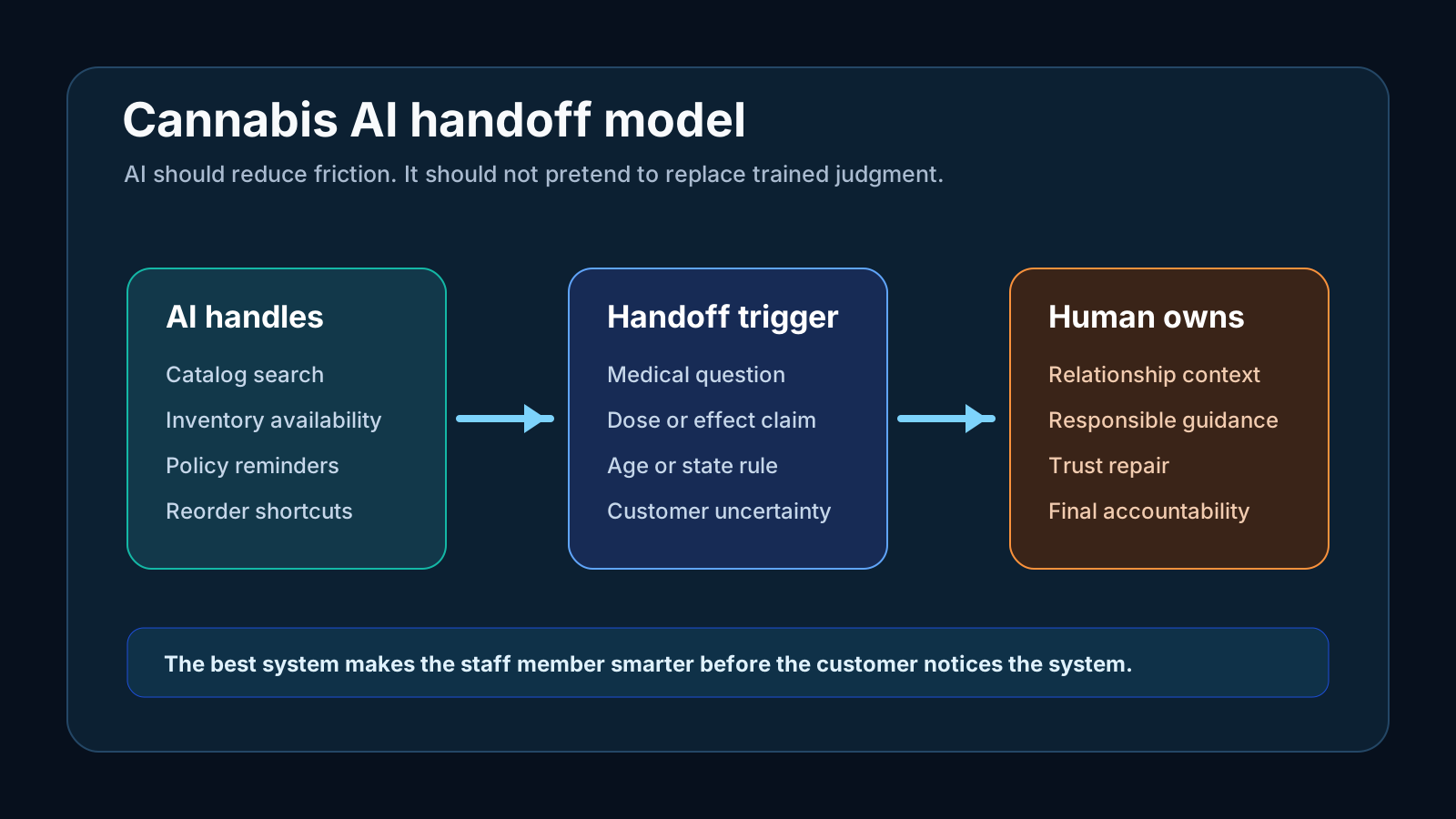
The problem is not the assistant. The problem is deploying it without a handoff model.
The compliance risk is the trust risk
Some teams separate compliance and customer experience. In cannabis, they are linked.
If the assistant makes a health-related promise, suggests use in a way the retailer cannot defend, ignores age or state constraints, or over-personalizes a recommendation without explaining the basis, the customer experience problem becomes a record. Regulators, plaintiffs, platforms, and payment partners may all care about what the system said.
The FTC's guidance on AI claims is not cannabis-specific, but the principle is relevant: do not overstate what an AI product can do, and do not use automation as a shield for claims the business cannot support. Retailers remain responsible for the systems they deploy.
The safer framing is simple: AI assists with navigation. Humans own judgment.
What the assistant should never do
An AI budtender should have hard boundaries. The exact boundaries depend on state rules, counsel, and store policy, but the operating model should be explicit.
| Customer moment | AI can help | Human should own |
|---|---|---|
| Menu browsing | Filter and compare available items | Final recommendation when the customer is unsure |
| Store policy | Explain published policy | Exceptions, disputes, or age-related friction |
| Product education | Explain categories and formats | Effect claims, use guidance, or sensitive needs |
| Loyalty | Find eligible offers | Relationship recovery and high-value customer care |
| Compliance | Show reminders and disclaimers | Escalation, documentation, and review |
This model protects both sides. The customer gets speed when the question is simple and a person when the stakes rise. The retailer gets efficiency without pretending software can carry the whole relationship.
The relationship memory problem
Personalization can make the trust gap worse if it feels too clever.
Customers may welcome a simple reorder shortcut. They may not welcome a bot that appears to infer private preferences, moods, or life circumstances from browsing data. In a regulated category, "we remember you" can be useful or uncomfortable depending on how transparent the system is.
Useful memory should feel like service, not surveillance.
Good cannabis personalization should be explainable:
- "You bought this before."
- "This product is in stock at your preferred location."
- "This is similar by category and price."
- "A staff member can help with anything more specific."
Bad personalization sounds like it knows too much and explains too little.
This is the same tension discussed in cannabis personalization liability and AI budtender human connection erosion. The more intimate the category, the more careful the automation needs to be.
Staff enablement beats staff replacement
The strongest version of an AI budtender is not the bot that keeps the customer away from staff. It is the system that makes the staff interaction better when the customer needs it.
That means the assistant should prepare the handoff. If the customer asks a sensitive question, the staff member should not receive a blank escalation. They should receive the allowed context: what the customer asked, which products were viewed, which policy reminder was shown, which answer was withheld, and why the system escalated.
This protects the customer from repeating themselves and protects the employee from guessing what the bot already said. It also turns the assistant into a training surface. Managers can review handoffs, see where customers get confused, identify product pages that need clearer language, and update policy snippets before the same issue repeats.
The business case changes when the assistant is treated this way. It is no longer a labor-replacement story. It becomes a service-quality layer, a compliance listening post, and a way to make good staff more consistent without flattening their judgment.
That is especially important for independent retailers. They may not win on menu size, price, or delivery speed. They can win on a buying experience that feels careful, human, and well run. AI should strengthen that experience, not strip it down to a faster cart.
How to audit an AI budtender before launch
The audit should include more than prompt quality. It should test the system as a retail, compliance, and trust surface.
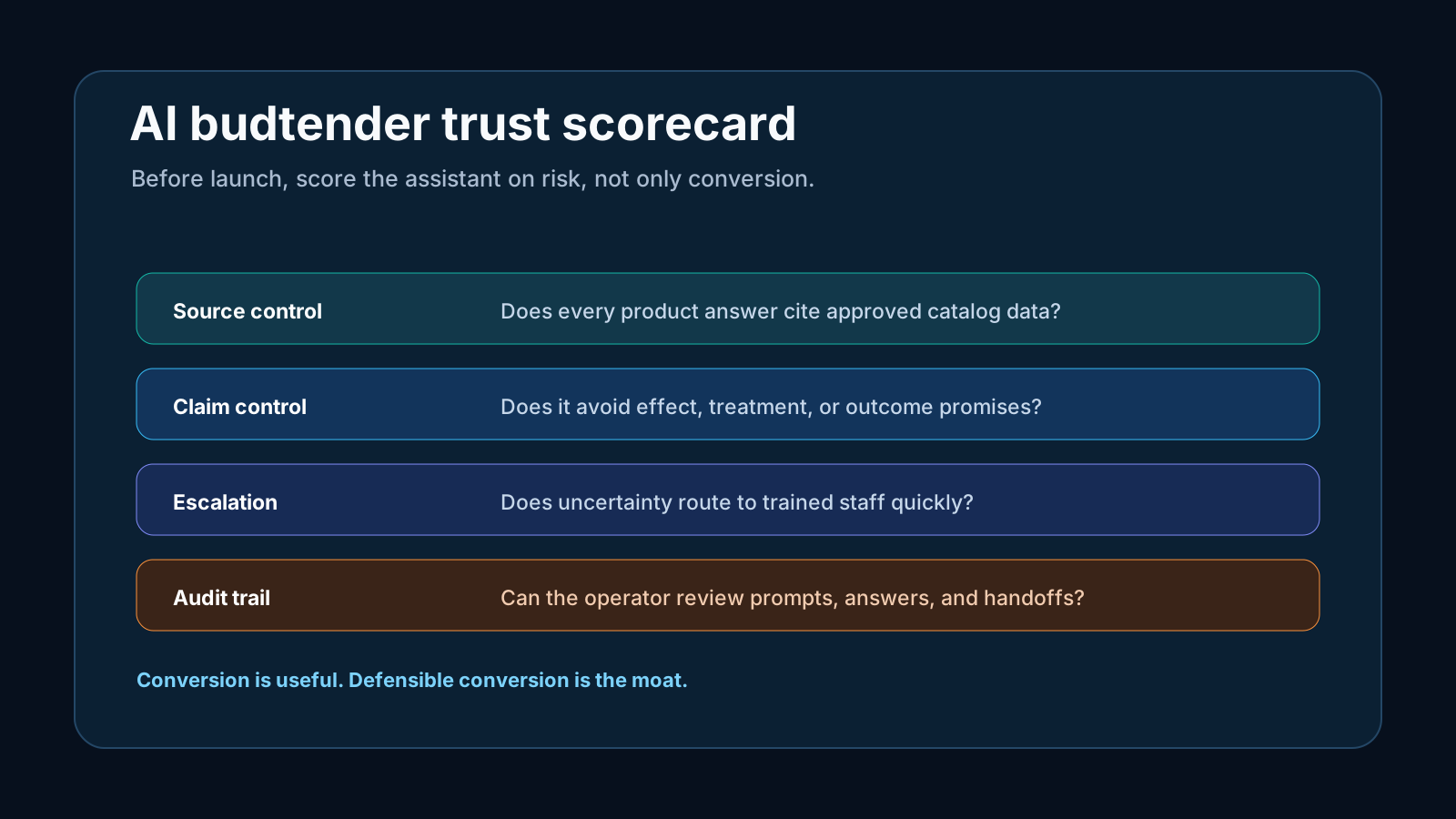
Ask five questions:
- 1What source does every answer rely on?
- 2What claim types are blocked by policy?
- 3What customer moments trigger human handoff?
- 4What logs are retained for review?
- 5Who owns the system when it gets a response wrong?
If those questions are unanswered, the assistant is not ready for customer-facing deployment.
The better retail model
The best cannabis retailers will not choose between people and AI. They will use AI to remove friction around the work humans should not have to repeat all day.
AI should help the team see the customer context faster. It should prepare a staff handoff. It should reduce menu confusion. It should make simple reorders painless. It should keep compliant policy language close to the conversation.
Then it should get out of the way.
That model is harder to sell as a shiny automation story, but it is more durable. It protects the part of retail that competitors cannot copy with the same vendor contract: trust.
FAQ
An AI budtender is a digital assistant that helps cannabis shoppers browse menus, compare products, ask store questions, or reorder. It should assist retail staff, not replace trained judgment.
They can be if they make unsupported claims, ignore state rules, personalize without transparency, or fail to route sensitive questions to staff. The operator remains responsible for the customer-facing system.
AI is best for catalog search, store policy reminders, availability checks, reorder shortcuts, and simple education about formats. Human staff should own sensitive questions and final judgment.
Measure conversion, but also handoff rate, complaint rate, claim-review issues, repeat purchase quality, and whether customers still build relationships with the store.
Start with assisted browsing and human handoff. Add personalization only after source controls, claim rules, audit logs, and escalation workflows are working.